

 Merch
Merch Medical card
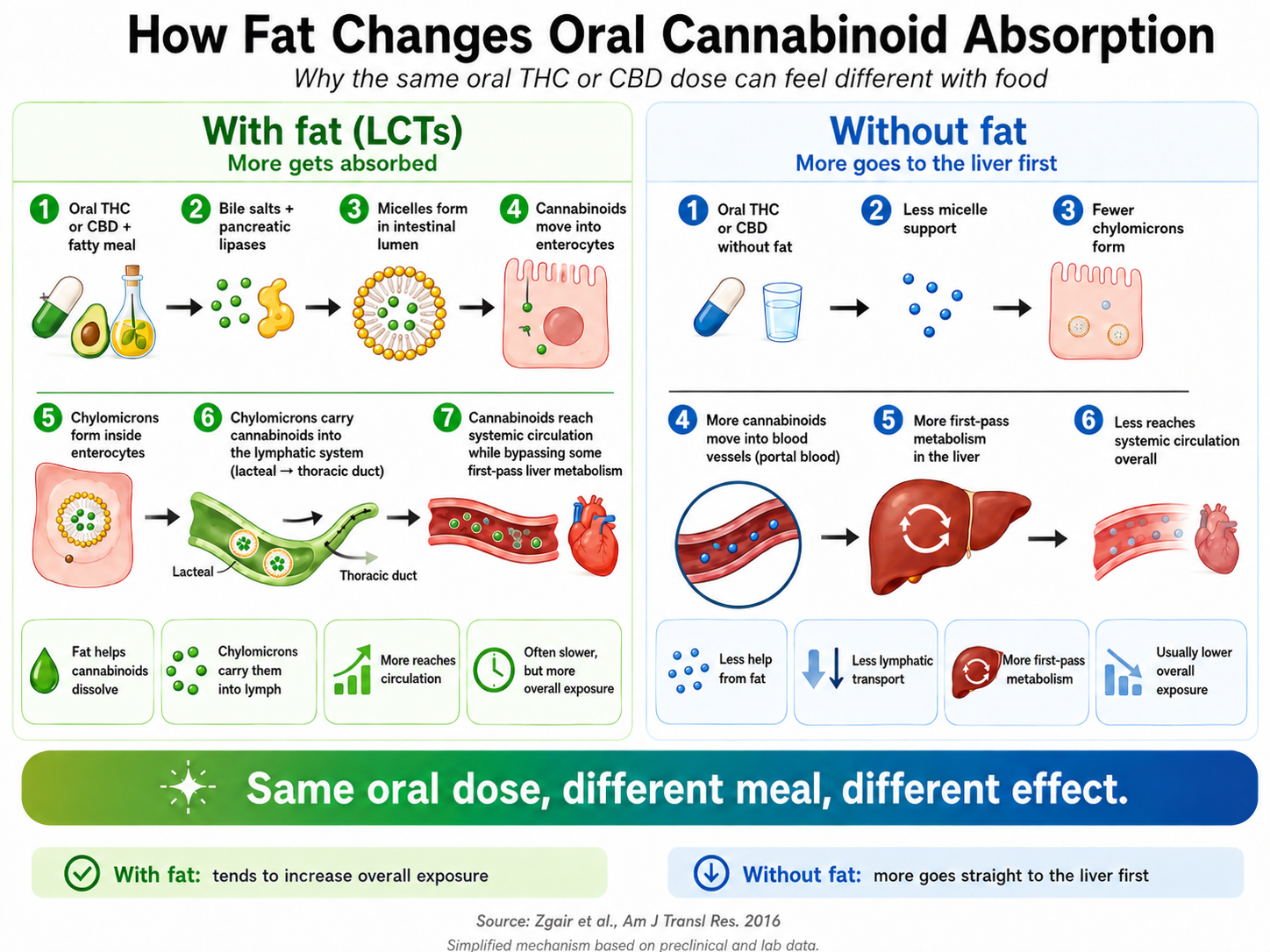
Most people who use cannabis in edible or oral form have noticed that the experience can vary depending on whether they have eaten beforehand. A dose taken on an empty stomach may feel weaker, shorter, or less predictable, while the same amount consumed after a meal (especially one rich in fat) can feel stronger, longer-lasting, or just different. This concept can be visualized in the generated image below.
People notice this all the time; but the part that gets skipped is why it happens. That is where this graphic helps. Existing research, like the 2016 study we are summarizing here, gives us a pretty good explanation for why this happens.
When cannabinoids are consumed orally, they must pass through the digestive system before entering the bloodstream. Unlike inhaled cannabis, which reaches the brain rapidly through the lungs, oral cannabinoids face a more complex journey. After ingestion they travel to the stomach and then into the small intestine, where absorption mostly takes place. Cannabinoids are fat-loving compounds (lipophilic), meaning they dissolve more easily in fats than in water. That matters a lot because it helps dictate how much actually gets absorbed into the blood and what path it takes.

In the presence of dietary fat, the digestive system produces bile acids (mostly via the gallbladder) that help break down fats into smaller components. These bile acids also facilitate the formation of structures known as micelles. Micelles are tiny, spherical aggregates that can encapsulate lipophilic substances like cannabinoids, effectively making them more soluble in the watery environment of the intestine. Think of them as your body’s shipping containers for fatty compounds. When cannabinoids are incorporated into micelles, they are better positioned to cross the intestinal lining and enter the body.
Once inside the intestinal cells, cannabinoids can follow different pathways depending on what else is in your stomach. In a fat-rich environment, they are more likely to be incorporated into chylomicrons. Chylomicrons are lipoprotein particles responsible for transporting dietary fats from the intestines into the lymphatic system. This pathway is particularly important because it allows cannabinoids to bypass the liver initially.
This pathway matters because it gives some cannabinoids a way around the liver at first. Normally, substances absorbed from the gut often travel through the portal vein to the liver before reaching the rest of the body. That is called first-pass metabolism, which basically means the liver gets first crack at breaking them down as they pass through.
But when cannabinoids are packed into chylomicrons, they can move into the lymphatic system first. From there, they eventually reach the bloodstream. That can increase overall bioavailability, meaning more of the dose may reach circulation…even if it takes a bit longer.
In contrast, when cannabinoids are consumed without accompanying fat (i.e. on an empty stomach), their absorption is less efficient. Without much dietary fat to support this process, fewer cannabinoids may be solubilized and transported across the intestinal barrier. The result is that a larger portion of the dose may pass directly into the portal vein, which carries blood from the digestive tract to the liver. In this low fat situation, cannabinoids are more likely to undergo extensive first-pass metabolism before reaching the systemic circulation, meaning the bloodstream. This can reduce the amount of active compound available and alter the balance of metabolites produced.
The process of first-pass metabolism is particularly relevant for THC, the primary psychoactive component of cannabis. When THC is metabolized in the liver, it is converted into 11-hydroxy-THC, a metabolite that is also psychoactive and may contribute to the intensity and duration of the edible experience. The extent to which THC is converted into this metabolite can vary depending on how much of the compound reaches the liver initially, among many other factors. Therefore, the presence or absence of dietary fat can influence not only the amount of THC absorbed but also the profile of its active metabolites, potentially affecting both the strength and character of the effects.
CBD, while not psychotropic in the same way as THC, is also subject to similar absorption dynamics. Cannabinoid bioavailability can be significantly enhanced when taken with fat, which may be particularly relevant for individuals using CBD for therapeutic purposes. Improved absorption may make effects more consistent, especially when someone takes CBD the same way each time.
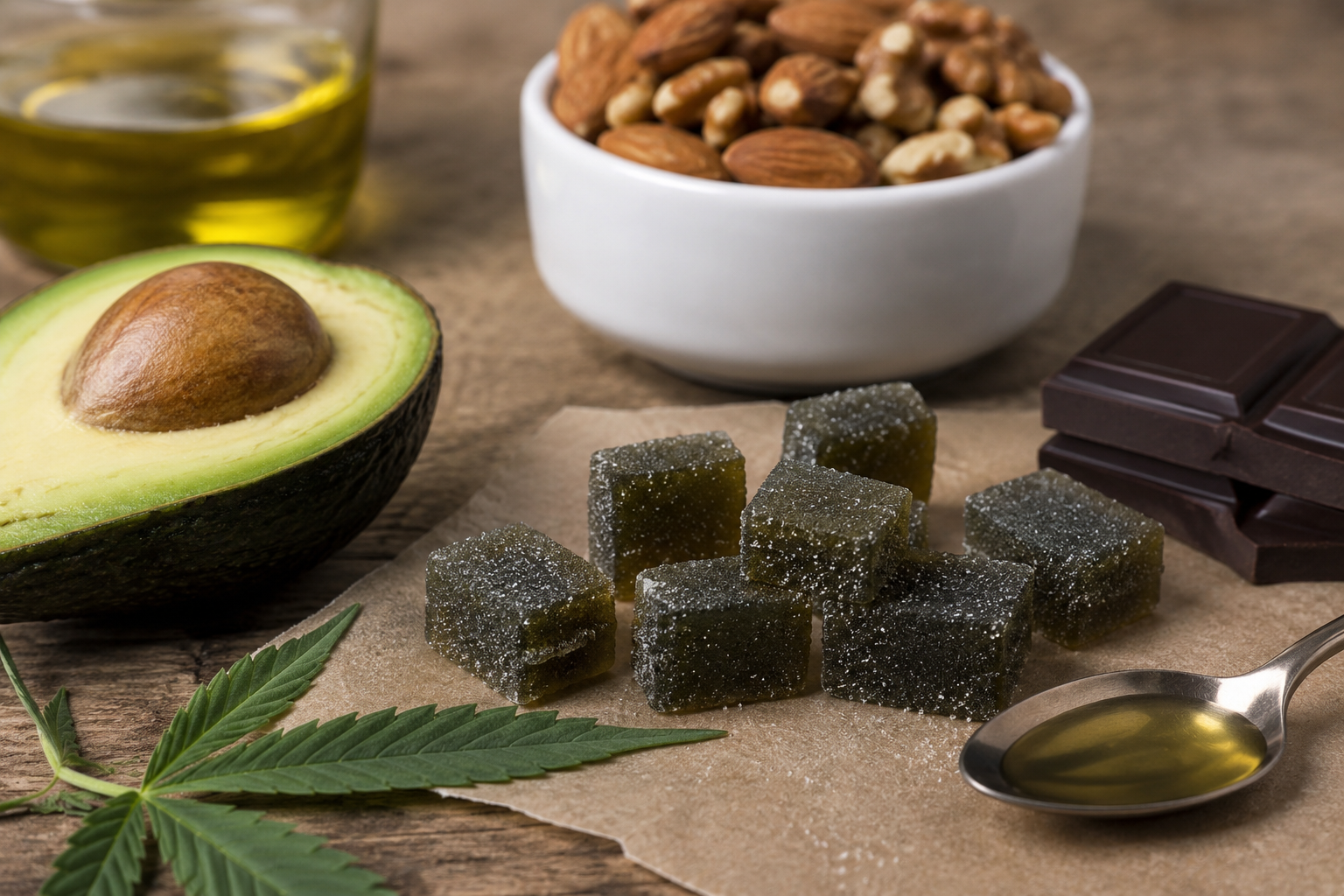
This matters even more for medical cannabis patients. Understanding how food influences cannabinoid absorption can help optimize dosing strategies. Taking cannabinoids with a meal that contains a mix of healthy fats (e.g. avocado, nuts, olive oil, or fatty fish) may improve consistency and effectiveness. Conversely, taking cannabinoids on an empty stomach may lead to more variable outcomes, which could complicate symptom management and make your experience less predictable.
It is also worth noting that not all fats are equal in their effects Long-chain triglycerides, which are common in many dietary fats and were the focus of the cited research paper, appear to be especially useful for promoting chylomicron formation and lymphatic transport. Medium-chain triglycerides, or MCTs, are different. They are common in cannabis products, especially carrier oils, but they are absorbed differently than long-chain fats and may not support lymphatic transport the same way. This distinction could influence how different formulations of cannabis products perform, especially those that use specific carrier oils.
Despite these insights, individual responses can still vary widely. Factors such as metabolism, gut health, enzyme activity, and overall diet can all influence how cannabinoids are processed. Additionally, the formulation of the cannabis product itself (e.g. oil vs capsule vs edible vs beverage) can affect how it interacts with the digestive system.
In the end, it is the interaction between dietary fat and cannabinoid absorption that highlights the importance of context when consuming oral cannabis. The same cannabinoid and the same dose can produce different effects depending on what is eaten alongside it (or if it’s been designed with emulsion technology). Fat can enhance solubility, promote absorption, and alter the metabolic pathway cannabinoids take through the body.
So yes, fat matters. But not just because cannabinoids like fat. The presence of a fat-containing meal or snack can change how cannabinoids dissolve, how they move through the gut, and whether more of the dose travels through the lymphatic system or goes to the liver first.
That is why the same oral dose can feel different depending on the meal around it. It’s the same cannabinoid and the same dose. But it’s a different route, and that can mean a very different ride.


Sign up for bi-weekly updates, packed full of cannabis education, recipes, and tips. Your inbox will love it.