

 Merch
Merch Medical card
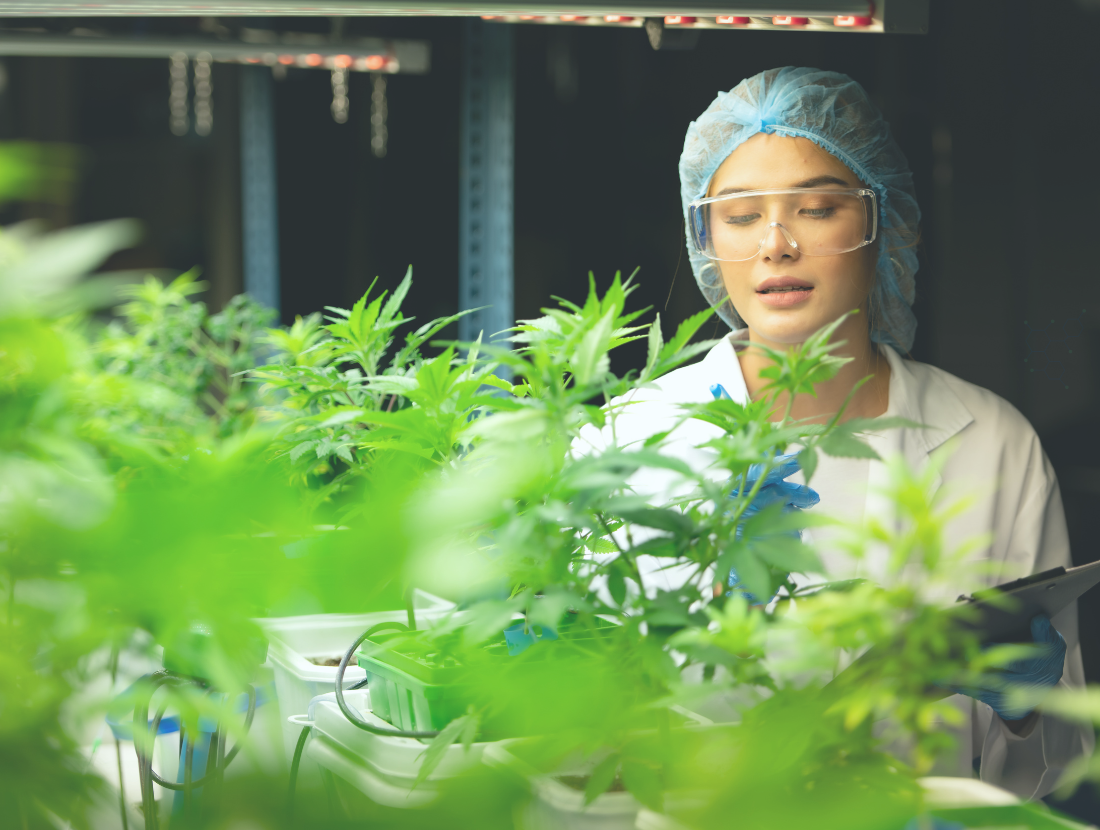
As cannabis manufacturers move beyond initial production milestones, growth depends less on demand and more on whether labor, margins, and compliance can keep up. The U.S. cannabis market is projected to reach $47 billion by 2026, but with only about 425,000 full-time jobs, many facilities remain understaffed as order volumes increase. (Report: Cannabis Industry Employs Over 440,000 Full-Time Workers, 2024)
To increase output without a proportional rise in headcount, manufacturers are adopting automation at every stage of production, from extraction to packaging.

Labor Costs Are the First Constraint Manufacturers Hit
Manual production processes incur labor costs that increase directly with output, making automation an effective way to recover margins. A widely cited pre-roll automation analysis found manual production costs about $1.60 per unit with 10% waste, compared to $0.50 per unit and 2% waste when automated equipment handles repetitive tasks. (Frye, 2024)
This margin recovery explains why facilities with a 5,000 to 10,000 square foot canopy often reach an automation inflection point as they scale. At this stage, labor and utility costs no longer rise in step with output. The same trend appears in extraction and filling operations, where hourly labor costs of $14 to $25 rapidly accumulate across multiple shifts. (Committee Blog: Navigating the 2023 Cannabis Harvest Season – Balancing Labor Costs, Worker Safety, and Automation, 2023)
Fill Accuracy Affects Compliance as Much as Product Quality
As manufacturers scale filling operations, small inconsistencies can lead to greater compliance risks, making fill precision essential. Regulators now expect tighter tolerances. Vape hardware calibrated within 0.01 ml of the target volume reduces the risk of failing potency tests and limits leaching risks from inconsistent oil contact (Live Resin Filling Challenges: Why Standard Equipment Fails and What Works Instead, 2023). Testing requirements have also become more stringent. States require third-party testing for contaminants and Vitamin E acetate.
Maryland’s standards show how detailed these requirements are, covering potency variance and residual solvents. Increasing production without matching improvements in fill precision increases the risk of failed tests, which may erode margins and buyer confidence.
Terpene Preservation Requires Temperature Discipline During Scale-Up
Terpenes degrade at relatively low temperatures, with delicate compounds like linalool and ocimene breaking down before cannabinoids are affected. (Team, 2023) Formulators typically keep cannabinoid oils between 55 and 65 degrees Celsius and add terpenes at room temperature to prevent volatilization. (Doe & Smith, 2022, pp. 123-135)
Filling at 45 to 55 degrees Celsius maintains flowability without causing degradation. As production scales, keeping consistent temperatures becomes more challenging, especially with manual filling, which introduces variable dwell times.
Temperature control is therefore critical for preserving product quality. SC Labs data shows that flavor and potency loss in vaporized products depends on how consistently temperature is maintained during filling, not just extraction. (Rowe & AbstraxTech, 2023)
Choosing Equipment That Scales With Production, Not Against It
Manufacturers evaluating cartridge filling equipment, such as the Vape Jet machine, focus on three key variables that determine scalable production: throughput, fill accuracy, and the ability to expand capacity without replacing equipment. Successful facilities approach equipment selection as part of production planning, considering future volume, labor, and testing needs rather than only current output.
Growth in cannabis manufacturing is rarely achieved through a single upgrade. Instead, it requires aligning labor allocation, fill precision, and temperature control with the facility’s rate of expansion. These factors determine whether scaling maintains quality and compliance as production increases.
References
- (April 17, 2024). Report: Cannabis Industry Employs Over 440,000 Full-Time Workers. NORML.
- Frye, G. (2024). Pre-Roll Automation for Mass Production Offers Astounding Abundance. Cannabis Tech.
- (August 31, 2023). Committee Blog: Navigating the 2023 Cannabis Harvest Season – Balancing Labor Costs, Worker Safety, and Automation. National Cannabis Industry Association.
- (2023). Live Resin Filling Challenges: Why Standard Equipment Fails and What Works Instead. Detroit Dispensing Solutions.
- Team, T. (2023). Low-Temperature Concentrates and Terpene Preservation. TerpTester.
- Doe, J. & Smith, J. (2022). Cannabis Extraction Methods: A Review of Extraction Techniques and Their Applications. Journal of Cannabis Research 5(2), pp. 123-135.
- Rowe, A. & AbstraxTech. (2023). Terpene Stability in Vape Cartridges. SC Labs.


Sign up for bi-weekly updates, packed full of cannabis education, recipes, and tips. Your inbox will love it.