

 Merch
 Medical card

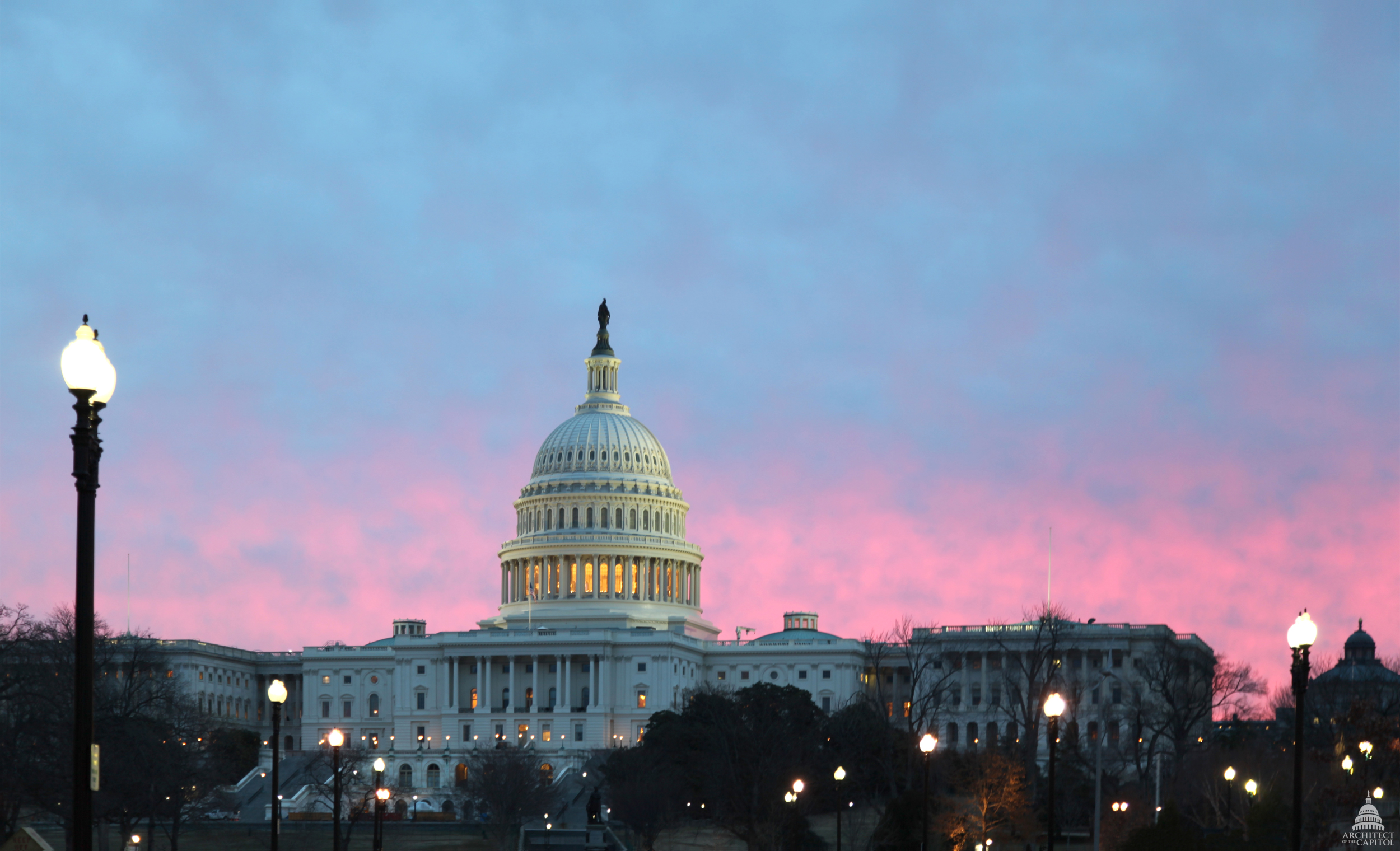
Congress has rewritten the legal definition of hemp, and the changes take effect in November and December. The aim was to shut down a market in unregulated intoxicants. On the way, the law also catches CBD and cannabis seeds. Almost no one debated it before it passed.
Update, 27 October 2026: This article was first published on 18 August. Since then, Congress has delayed most of the new rules to 11 December, the DEA’s hearing on wider marijuana rescheduling has been paused, and the FDA has still not published the guidance the law requires. These developments are covered in the final section. Earlier passages describe the position as it stood in August, with corrections and clarifications made in place.

In law, policy and regulation, cannabis makes for an apt case study. Its history is often two steps forward and one step back, full of confusing half-measures and rules that often don’t seem to make much sense. Germany, for example, legalised possession and home-growing in April 2024. It then stalled indefinitely on the commercial market that was supposed to follow.
Germany now has legal cannabis but no licensed shops. Adults can grow their own or join a non-profit cannabis club, but commercial retail remains out of sight. Thailand built Asia’s first open cannabis market, then reversed course in June 2025, reclassifying cannabis flower as a controlled herb that can only be sold on prescription. Contrary to popular belief, the Netherlands has only ever tolerated coffeeshop sales. Only since April 2025 has it been trialling a legal supply chain in ten municipalities. Then there’s the United States, which has spent years cultivating (pun intended) one of the most tangled versions of all, and is about to tangle it further.
Tangled Up in Green
The landmark 2018 Farm Bill was championed by Mitch McConnell, the Kentucky Republican and former Senate leader, who retires when his term ends in January 2027.
In essence, the 2018 law legalised hemp by drawing a single line. A cannabis plant was legal “hemp” if it contained no more than 0.3% delta-9 THC by dry weight. Everything else was still marijuana. McConnell represents Kentucky and its many farmers, and he was thinking of agriculture, not intoxicants. Yet the bill unintentionally created a loophole big enough to house a multibillion-dollar industry.
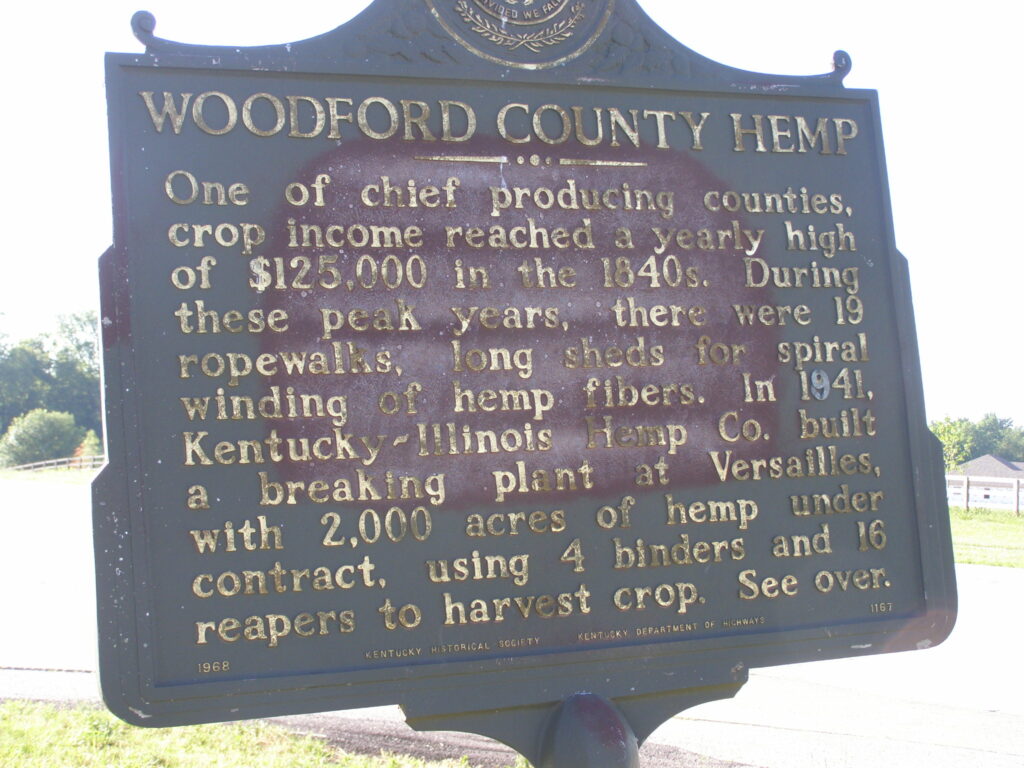
Because the line was drawn only at delta-9 THC, anything intoxicating that wasn’t delta-9 fell within the legal definition of hemp. On cue, the ears of chemists and entrepreneurs across the country perked up. The result was a wave of products that were technically hemp but, for all intents and purposes, still got people high: delta-8, delta-10, high-THCA flower and hemp-derived THC drinks. Anyone who has been to Austin as a bored young 20 year old will know the type of products I’m talking about.
The test had a second weakness. It measured THC as a share of dry weight, a standard designed for plants in a field rather than products on a shelf. A 50-gram chocolate bar at 0.3% delta-9 THC could legally contain around 150 milligrams of THC. That is fifteen times the 10mg serving common in state-licensed markets.
Put simply, an entire market grew in the gap between what the 2018 law said and what Congress, McConnell included, says it meant. Eight years later, that market faces its biggest hurdle yet. McConnell has helped close the gap, or rather slam it shut. Defending the change on the Senate floor last November, he said the new language “merely clarifies the original intent of the 2018 farm bill.”
Section 781 of the FY2026 Agriculture Appropriations Act was enacted on 12 November 2025 as Division B of Public Law 119-37. It rewrites the definition of hemp in three significant ways.
- Total THC replaces delta-9: The plant limit now counts THCA, which converts to THC when heated. That closes the THCA-flower loophole.
- A per-container cap: Finished products are capped at 0.4 milligrams per container. The cap covers total THC plus any other cannabinoids with similar effects, or marketed as having them. A “container” means the innermost packaging in direct contact with the product. Intermediate products, such as extracts sold for further manufacture, are capped at 0.3% by concentration.
- No synthesised cannabinoids. Products are excluded if they contain cannabinoids the plant cannot produce naturally, or natural cannabinoids synthesised outside the plant. This is the delta-8 category.
Federal law defines hemp by exception from marijuana. Anything outside the new, far narrower definition is therefore set to become marijuana – which, for now, remains a Schedule I controlled substance.
| When | What changes | Legal status (as of 27 Oct 2026) |
|---|---|---|
| 12 November 2026 | Products containing synthesised cannabinoids, or cannabinoids the plant cannot naturally produce, cease to be hemp | Enacted (P.L. 119-37) |
| 11 December 2026 | Total-THC plant test; 0.4mg-per-container cap on final products; 0.3% cap on intermediate products; exclusion of seeds from high-THC plants | Enacted; delayed from 12 November by P.L. 119-103 |
| Due 10 February 2026 | FDA lists of naturally occurring, THC-class and “similar effect” cannabinoids, plus guidance on “container” | Overdue; not published as of the CRS’s 28 September update, and we have found no publication since… |
Hard to Explain
As things stand, someone can get stoned from a random bottle of iced tea bought at a gas station, without the age controls, testing or labelling that state-legal cannabis has to meet. In my opinion, a policy that allows that should be scrutinised and ultimately revised. That seems uncontroversial, and I’d imagine plenty of reasonable people across the cannabis world knew this side of the intoxicating-hemp free-for-all would one day end.
The case for acting was not only theoretical. A Washington State Liquor and Cannabis Board research brief counted 3,358 delta-8 THC exposures reported to US poison centres in 2022. It also found that, on the 2024 data it cites, 21 states allowed intoxicating hemp products with few restrictions. In August, 35 state and territorial attorneys general urged Congress to “reject any effort to reopen the loophole that Congress acted decisively to close.” They warned that a delay “will almost guarantee that these state efforts at regulation will be thrown into chaos.”


But a policy that is right about the problem isn’t necessarily right about the solution. The industry says the new rules threaten hundreds of thousands of jobs. Whatever the exact figure, Congress has applied a blunt instrument to a complex market.
The impact on CBD shows that complexity. The U.S. Hemp Roundtable, the industry’s main trade group, claims that more than 90% of non-intoxicating hemp-derived products, such as CBD oils, contain more total THC than the 0.4mg cap allows. The ban on intoxicating hemp would then catch a large share of ordinary wellness CBD. The administration appears to agree. The President’s December 2025 executive order acknowledged that “some full-spectrum CBD products will once again be controlled as marijuana”. In April, on Truth Social, he urged Congress to “ensure that Americans can continue to access the full-spectrum CBD products they have come to rely on.”
In my view, that is the right instinct. A product does not become dangerous because it contains more than 0.4mg of THC. Nor is it comparable to the intoxicants the law was aimed at.
Cannabis seeds also deserve attention. Since the 2018 Farm Bill, seeds have been treated as legal hemp, a position the DEA confirmed in a January 2022 letter. Section 781 quietly reverses this. From 11 December, “any viable seeds from a Cannabis sativa L. plant that exceeds” 0.3% total THC are excluded from hemp. In other words, the test is the THC content of the parent plant, not of the seed.
Industrial hemp seed is unaffected. But most seeds sold to people growing cannabis for its THC come from high-THC plants. On the face of the statute, those seeds become marijuana, exposing much of the seed and genetics trade, including interstate shipping, to federal drug law. How hard this will be enforced is another matter. The Congressional Research Service notes that the Justice Department has never enforced marijuana law comprehensively. We have found no DEA or USDA guidance on seeds.
It’s worth pausing on what that means in practice. Not everyone will agree that cannabis seeds should be federally legal. But a seed is not intoxicating. You cannot get high on it. It sits in a packet until someone with skill, patience and roughly six months to spare grows it into a plant. Treating that seed as legally equivalent to a high-THC vape is not regulation matched to risk, and the same goes for many of the CBD products the law sweeps up.
We the People
Another key issue is too often overlooked: Section 781 was never debated on its own merits. The hemp language moved quietly through the routine agriculture-appropriations process in both chambers. It was Section 781 of the Senate committee’s bill (S. 2256), reported in July 2025, and the House version carried a similar provision.
That bill never reached the Senate floor on its own. Instead, the language was folded into the must-pass package needed to end the 43-day shutdown, the longest in US history. A vote against it was a vote to keep the government closed.
So a redefinition that reclassifies a multibillion-dollar industry became law without a standalone vote on the merits. As far as we can find, no hearing was dedicated to it either. On the Senate floor, the whole question took a few minutes. Rand Paul, Kentucky’s other senator, rose to strip the provision out. “Instead of a clean CR,” he said, “this bill contains language that has been air-dropped in that will destroy hemp farming in Kentucky and across the United States.” He also objected to the vehicle itself: “To add insult to injury, we are given this legislation in an appropriations bill. We have Senate rules against this.”
Jeff Merkley of Oregon backed him. “CBD derived from hemp has been approved by the FDA for treating seizures. It is a legal medicine,” he said. “We would wipe out an industry that we have spent more than a decade creating.” (The FDA-approved CBD medicine, Epidiolex, was separately removed from federal drug control in 2020, so it is not threatened by the new definition. Merkley’s point concerned the wider CBD market). McConnell then moved to table the amendment, and the Senate agreed, 76 to 24. That was not a judgment that the policy was sound. It was a procedural vote to set the amendment aside and move on.
This is not how the policy process should work. Whatever one thinks of the issue, an industry that its own trade groups value at around $28 billion should not have its legal foundations rewritten in a few minutes of floor time, without meaningful consultation.
Spending-bill riders skip most of the scrutiny that technical regulation needs, and it shows. Congress left the FDA to work out which cannabinoids the cap covers and what counts as a “container”. That work was due within 90 days, by 10 February 2026, and as of late October it still hadn’t appeared. Was the necessary expertise really involved before the law was written? Probably not.
How Soon Is Now?
We’re in one of the most significant and volatile periods the US cannabis industry has seen in decades, and no one is quite sure what happens next. It is still worth asking what a sensible outcome might look like.
For a start, Congress should do now what it neglected last November. It should hold proper hearings and debates and consult the industry and its stakeholders. An agreement reached that way could let McConnell and his allies regulate the genuinely harmful consequences of the 2018 law with the seriousness they deserve: the synthetics, the unlabelled gas-station intoxicants, the sales to minors.
It could also separate those consequences from products that carry categorically different risks, and opportunities, for the American economy and its people. A framework like this would fit the administration’s own direction of travel. In a December 2025 executive order, President Trump directed the Justice Department to complete rescheduling marijuana to Schedule III. The same order told officials to “work with the Congress to update the statutory definition of final hemp-derived cannabinoid products” so that full-spectrum CBD could stay on sale. Both are reasonable aims, and pursuing them would be better than a simple, regressive move back towards blanket prohibition.
What has happened since August
The delay is now law. When this article was first published, the Senate had voted to push most of Section 781 back by a month, but that still needed the House and the President. The House approved the stopgap funding bill on 1 September, and it became Public Law 119-103 on 2 September. The ban on synthesised cannabinoids still takes effect on 12 November. Everything else, including the 0.4mg cap and the seed exclusion, now starts on 11 December.
Rescheduling has moved, but only partly. In April the Justice Department placed FDA-approved marijuana products, and products regulated under a state medical marijuana licence, in Schedule III. It also opened a hearing on rescheduling marijuana more broadly. On 29 September, the DEA’s chief administrative law judge paused that hearing to consider a new Government Accountability Office report. Anything that becomes marijuana on 11 December falls into this shifting picture.
The fixes are stalled. According to the Congressional Research Service, pending bills run from outright repeal (H.R. 6209, Nancy Mace’s American Hemp Protection Act) to a further two-year delay (H.R. 7024 and S. 3686). They also include Andy Barr and Angie Craig’s Lawful Hemp Protection Act (H.R. 9830), which would regulate rather than ban, and S. 4315, which would defer to state definitions. The House-passed FY2027 agriculture spending bill contains no further delay. The wider farm bill, the other obvious vehicle, has stalled in the Senate.
With less than seven weeks until 11 December, none of these bills has a clear route to becoming law. For an industry that has struggled to organise and lobby as effectively as its opponents, that is a problem.
The international examples at the top of this piece share something with Washington’s approach. Definitions are doing the work that regulation should. Congress has drawn a line and left existing drug law to deal with whatever falls on the wrong side of it. Europe is now drawing the line very differently. The test for the US is whether it builds a regulatory system for hemp products before 11 December or leaves the matter to drug law.
Sources & Further Reading
- Public Law 119-37, Division B, §781 (enacted 12 November 2025): the amended statutory definition of hemp. Text via Congress.gov (H.R. 5371)
- Public Law 119-103 (2 September 2026): the Continuing Appropriations and Extensions Act, 2027, which delayed most of the new definition to 11 December 2026. Congress.gov (H.R. 6500)
- Congressional Research Service, “Changes to the Statutory Definition of Hemp and Implications for Agricultural Policy” (IF13136, updated 28 September 2026): effective dates, overdue FDA lists and pending bills. Congress.gov
- Congressional Research Service, “Changes to the Federal Definition of Hemp: Legal Considerations Under the Controlled Substances Act” (LSB11381, December 2025): enforcement, seeds and CBD. EveryCRSReport
- Congressional Record, 10 November 2025, Senate, pp. S8125 onwards: the debate on Senator Paul’s amendment and the 76–24 vote to table it. Congress.gov
- Executive Order 14370, “Increasing Medical Marijuana and Cannabidiol Research” (18 December 2025). WhiteHouse.gov
- Letter from 35 state and territorial attorneys general to Congress (4 August 2026): the states’ case against delay. PDF via Arkansas Attorney General
- Washington State Liquor and Cannabis Board, “Intoxicating Hemp Products” research brief: health data and the state regulatory patchwork. PDF
Images: the US Capitol at dawn, by the Architect of the Capitol, via Wikimedia Commons (public domain); Woodford County Hemp marker, by Chris Light, via Wikimedia Commons, licensed under CC BY-SA 4.0.


Sign up for bi-weekly updates, packed full of cannabis education, recipes, and tips. Your inbox will love it.