

 Merch
Merch Medical card
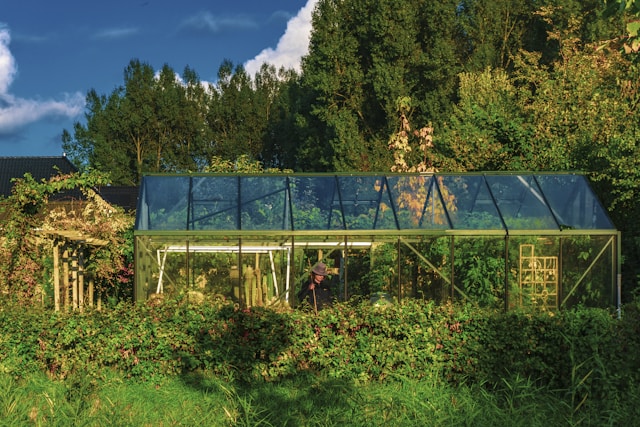
Organic outdoor and greenhouse gardens for the home grower — a big-picture guide to building a living, regenerative backyard ecosystem.
Before you map out your plans for growing cannabis at home in 2026, ask yourself one honest question: do you want six plants in containers, or a living ecosystem that feeds your household season after season? That question isn’t just philosophical. It reflects a real shift underway right now, as more growers move away from the yield-first mindset toward something slower and far more rewarding. Regenerative home growing means treating your soil, your plants, and your garden’s biology as a connected system rather than separate problems to manage.

Why 2026 Is a Good Year to Start Growing Cannabis at Home
Climate windows are shifting. In many regions, growing seasons are stretching longer, making outdoor cannabis growing viable for more months of the year. At the same time, consumer interest in “clean” cannabis grown without synthetic inputs and with traceable soil biology is higher than it’s ever been. Regenerative practices are no longer reserved for certified farms. They’re showing up in backyards.
Home growers are uniquely positioned to lead this shift. Unlike commercial operations locked into industrial metrics, a backyard or greenhouse garden can experiment freely. You can skip a row, try a no-till bed, build a compost pile, and simply see what happens. That freedom is the real competitive advantage of growing at home. If you’re newer to cultivation and want a solid foundation before diving into regenerative methods, The Cannigma’s home grow guide is a good place to start.
Outdoor and Greenhouse Cannabis Growing: Two Approaches, One Mindset
Organic cannabis growing outdoors and inside a small greenhouse aren’t competing strategies — they’re two lenses on the same philosophy, and many home growers use both.

Outdoor cannabis growing gives you the full cycle: sun, rain, soil biodiversity, pollinators, and seasonal rhythms. Plants grown in living soil cannabis gardeners build over multiple seasons tend to develop rich terpene profiles shaped by their environment. The tradeoff is less control over humidity, temperature swings, and pest pressure during wet spells.
Greenhouse cannabis growing sits in the middle ground. You get an extended season, a more stable microclimate, and a contained space that makes integrated pest management for cannabis far easier to implement. Many experienced home growers start seedlings under glass, then move healthy plants outdoors once conditions stabilize. The greenhouse becomes a training ground as much as a growing space.
The best cannabis gardens aren’t built in a single season. They’re built through observation, patience, and a willingness to treat the soil as something worth caring for.
Learning to Observe, Not Just React
One of the most valuable skills a home grower can develop is simply learning to look closely. Most problems in an organic cannabis garden announce themselves days or weeks before they become serious, if you know what to watch for.
Weekly check-ins don’t need to be complicated. Bring a hand lens. Take photos. Notice leaf color (yellowing between veins often signals a nutrient imbalance), leaf texture (sticky or stippled surfaces may indicate mites or thrips), and node spacing (tight nodes suggest good light; long stretches suggest the plant is reaching). Keep a simple pest log and track what you see across multiple weeks.
Pest scouting protocols like yellow sticky cards placed near canopy level give you an early warning system without requiring any expertise. A few minutes of observation per week builds a picture of your garden’s patterns across seasons, which is far more useful than reactive treatments applied in a panic.
Organic Cannabis IPM: A Smarter Approach to Cannabis Pest Management
Organic cannabis pest control is really about relationships: between plants, soil, insects, and fungi. The goal isn’t elimination of all pest life but rather creating conditions where populations stay naturally in balance.
That means building cannabis soil biology first. Fungal-dominant soils support healthy root networks and help plants take up nutrients more efficiently. It means companion planting cannabis with species that attract beneficial insects like ladybugs, lacewings, and parasitic wasps. And it means knowing your thresholds. UC Davis research on hemp and cannabis IPM confirms that low pest pressure rarely justifies a treatment response, especially when beneficial populations are already present and active.
When pest pressure does build, a layered approach drawn from professional IPM frameworks for controlled-environment agriculture works well even at home scale. That means starting with the least disruptive intervention: a well-timed foliar spray of diluted neem oil or insecticidal soap, applied in early morning, well before any harvest window. Reserve stronger treatments for confirmed outbreaks rather than precautionary use.

Regenerative Cannabis Practices for Home Growers: A Seasonal Checklist
You don’t have to rebuild your whole garden at once. Regenerative cannabis farming principles can be layered in gradually over multiple seasons, each one building on the last. Regenerative farms across the industry report more drought-resilient plants, richer cannabis terpene profiles, and lower long-term maintenance costs — and a well-managed beneficial insects cannabis garden makes all three outcomes more achievable.
Regenerative Practices to Add This Season
- Start one no-till cannabis bed and observe how the soil structure changes over time
- Set up a compost bin using plant waste, kitchen scraps, and leaf litter
- Install rain barrels to capture runoff and reduce your water footprint
- Apply a 3-inch mulch layer around plants to retain moisture and suppress weeds
- Add a perennial flowering border to invite beneficial insects year-round
- Try a simple compost tea cannabis soil drench or foliar application for low-cost biological support
- Plant cover crops in your off-season beds to rebuild soil biology
Connect With Other Growers
One of the most underrated resources for any home grower is the community of organic home growers already experimenting with closed-loop, regenerative systems. These communities share seasonal observations, soil test results, and IPM successes in ways that no single guide can replicate. If you’re just starting out, finding even one local grower further along in this process can shorten your learning curve significantly.
Your 2026 Planning Checklist
Before you order seeds or start your first seedlings, work through these questions. There are no wrong answers. The goal is to go into the season with intention rather than just hope.
Questions to Answer Before You Plant
- What do I most want to learn this growing season?
- How much compost and mulch can I realistically make or source?
- Where will I start my first no-till bed this year?
- How will I set up a weekly cannabis pest scouting routine I’ll actually stick to?
- Do I want an outdoor bed, a greenhouse setup, or a combination of both?
- Which companion plants will I add to support pollinators and beneficial insects?
The home grower in 2026 has something no commercial operation can easily replicate: time, curiosity, and the freedom to treat each plant as an experiment rather than a unit of production. Start with the soil. Learn from your bugs. Watch your plants the way you’d watch anything you care about. The harvests will get better every year.
Frequently Asked Questions
Is organic outdoor growing harder than growing in a greenhouse?
- Outdoor growing exposes plants to weather, pests, and seasonal variables you can’t fully control, while a greenhouse offers more stability and makes pest intervention easier.
- Neither is harder — they require different skills. Many home growers use both, starting seedlings under glass before moving plants outside.
What’s the easiest first step toward regenerative home growing?
- Start a compost bin using kitchen scraps, leaf litter, and spent plant material to build the soil biology that underpins everything else.
- Add a mulch layer and try one no-till bed — these three practices cost almost nothing and create compounding benefits season after season.
How do I know if my cannabis plants have a pest problem worth treating?
- Look for actual damage: stippled or yellowing leaves, webbing on foliage undersides, or sticky residue on stems. Low populations with healthy beneficial insects present are often self-correcting.
- If you do intervene, start with diluted neem oil or insecticidal soap applied in early morning, well before any harvest window.
Does organically grown cannabis actually taste or smell different?
- Many growers report that cannabis raised in living soil expresses more complex terpene profiles than plants grown on synthetic nutrients, though formal research is still developing.
- Results vary by cultivar and climate, but investing in soil biology over multiple seasons tends to produce noticeable improvements in aroma and flavor.
Sources
- Growing Cannabis in a Greenhouse: A Beginner’s Guide. ILGM.
- Growing Cannabis Outdoors: Tips and Tricks. SunMed Growers.
- Organic Cannabis Pest Control: How to Keep Bugs Off Your Nugs. Homestead and Chill.
- Integrated Pest Management for the Beginner Cannabis Grower. ILGM.
- IPM Programs for Controlled Environment Agriculture. Certis EU / AgriLife Organic.
- Integrated Pest Management. UC Davis Hemp Agronomy Program.
- Pest Scouting and Monitoring. Hawthorne Gardening Co.
- What Is Regenerative Cannabis Farming? Farmacy.
- How Regenerative Farms Are Changing the Cannabis Industry. EnviroCann.
- Building a Thriving Community of Organic Cannabis Home Growers. Regen Soil.


Sign up for bi-weekly updates, packed full of cannabis education, recipes, and tips. Your inbox will love it.