

 Merch
Merch Medical card
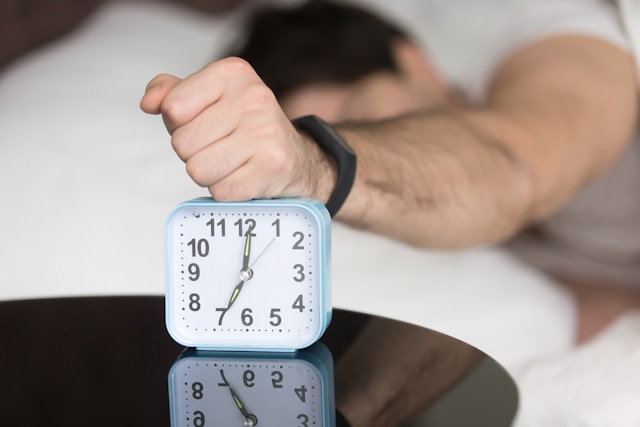
An evidence-informed guide to adjusting sleep, mood, and energy around daylight savings by aligning cannabis timing, dose, and cannabinoid profile with circadian biology — because the government took your hour and you want it back.
Want the science behind why daylight savings hits so hard? Start with our companion piece: Daylight Savings Time Is Chaos. Your Endocannabinoid System Is Already Losing Sleep Over It.

So you’ve read about what daylight savings does to your endocannabinoid system. You know your anandamide is off schedule, your SCN is unhappy, and your circadian clock is filing a formal complaint. Now what?
If you’re a cannabis consumer, you may have already wondered whether the plant that helped you sleep through a thunderstorm last July could help you survive the biannual government-mandated jet lag. The relationship between cannabis and sleep is genuinely complicated on a normal week — add a circadian disruption and it gets more nuanced still. The answer is: maybe, with some important caveats about what you use, when you use it, and how much. Cannabis isn’t a circadian reset button. But used thoughtfully, it may be a useful lever — one of several — during the three-to-five days your body needs to adjust.
Why Timing and Dose Matter More Than You Think
Research on cannabinoids and the SCN — the brain’s master clock — shows that cannabinoids can modulate light-dependent entrainment of circadian timing, which means they’re not just making you sleepy. They’re interacting with the actual machinery your body uses to track time. That interaction is dose-dependent and direction-dependent, and it’s the foundation for thinking about cannabis chronopharmacology rather than just “take this to sleep.”
Low and high doses can work in genuinely opposite directions. Low-dose THC tends toward stimulation; higher doses tend toward sedation. Reviews of cannabinoids and sleep consistently show that acute low-to-moderate THC can shorten sleep onset, while chronic or high-dose use is associated with disrupted sleep architecture and next-day grogginess. The dose-response curve here isn’t subtle.
“Less is genuinely more around circadian transitions. Cannabis as a sledgehammer is unlikely to outperform cannabis as a surgical instrument.”
Picking Your Cannabinoid: A Quick Reference
Not all cannabinoids do the same thing to sleep. Research on cannabinoids as chronobiotics highlights how different compounds interact with clock mechanisms at different times of day. Here’s a simplified overview for the time-change window:
| Cannabinoid | What the evidence suggests | Best use timing |
|---|---|---|
| CBD | May ease pre-sleep anxiety; modest sleep efficiency improvements at higher doses (around 150 mg) in some trials. Doesn’t appear to suppress REM. | Morning for anxiety; 60–90 min before the new target bedtime |
| THC | Shortens sleep onset at low-moderate doses; suppresses REM and may worsen sleep over time at higher or chronic doses. | 30–60 min before the new (earlier) bedtime; use sparingly |
| CBN | Preclinical models suggest sleep-promoting potential, though robust human trials are still lacking. Often found in aged cannabis products. | Evening use; treat as emerging, not established |
| Terpenes | Myrcene (earthy) and linalool (floral) are associated with relaxation in circadian-adjacent research, though direct human evidence is limited. | Evening; consider as a secondary selection factor |
A Day-by-Day Cannabis Strategy for the Spring Change
Research on cannabis and circadian entrainment supports gradual adjustment over abrupt shifts. The goal is to nudge your internal clock forward in small increments, not to knock yourself out and hope for the best. Here’s a loose framework — not medical advice, but a science-informed starting point.
3–4 Days Before the Change
Start shifting your target bedtime 15 minutes earlier every night. If you typically use cannabis in the evening, shift that window forward by the same increment. Keep doses lower than your normal baseline — this is a recalibration phase, not a sedation phase.
Morning CBD or a low-cannabinoid product, paired with immediate light exposure after waking, may help signal the new “day start” to your SCN.
The Night Before and Night Of
This is peak disruption territory. Avoid high-potency products or anything that reliably gives you next-day fogginess — chronic heavy use is consistently associated with disrupted sleep architecture, and this is the week you can least afford it. A low-to-moderate dose combination of THC and CBD, timed 30–60 minutes before your new target bedtime, is a more measured approach.
The Week After
If you’re still struggling three to four days post-change, research on cannabis and sleep architecture suggests inconsistency in outcomes — meaning heavy reliance at this stage is more likely to work against you than for you. Consider stepping back to CBD-only, and lean harder on the non-cannabis pillars below.


Cannabis Is One Lever. Use the Others Too.
Even the most enthusiastic reading of the cannabis-and-sleep literature lands in the same place: cannabis is a short-term, context-dependent tool, not a circadian solution. The non-negotiable pillars remain:
- Morning light exposure: Get outside within 30 minutes of waking. Natural light is the most powerful entrainment signal your SCN has. Cannabis cannot substitute for this.
- Consistent meal timing: Your peripheral organs have their own clocks. Eating at consistent times reinforces the central signal from your SCN.
- Screen reduction in the evening: Blue light delays melatonin onset. Pair this with your evening cannabis ritual if you have one.
- Exercise timing: Morning or early afternoon exercise reinforces the new schedule. Evening high-intensity exercise can push your circadian phase later.
The Tolerance Warning Nobody Puts in the Marketing
Emerging research on cannabis and circadian gene expression raises a question the industry hasn’t fully grappled with: chronic heavy cannabis use may blunt the circadian signals your body relies on for clock entrainment. That means the very tool you’re reaching for during a circadian disruption could, over time, make your circadian system less resilient.
The positioning that makes the most scientific sense is low-dose, time-limited use around the adjustment window — not a new nightly habit built around the time change. Your endocannabinoid system already knows what time it is. The goal is to support it, not override it.
Cannabis and sleep research keeps circling the same conclusion: timing, dose, and duration matter more than simple use or no-use decisions. Around daylight savings, that means short-term, low-dose use aligned with your shifting bedtime window — not a new nightly ritual. Think of cannabis as one instrument in a larger adjustment toolkit, not the whole band.
Cannabis and Sleep: Your Daylight Savings Questions Answered
Can cannabis actually help with daylight savings time adjustment?
Cannabis may help ease the daylight savings adjustment — but only in a supporting role, not as a clock-reset tool.
- Cannabinoids can modulate SCN activity and circadian timing, so there’s a plausible mechanism.
- Evidence is strongest for low-dose use easing sleep onset — not for resetting the clock outright.
- It works best alongside light exposure, consistent meal timing, and good sleep hygiene — not instead of them.
What’s the best time of day to use cannabis during the adjustment window?
- Evening use — timed 30–60 minutes before your new target bedtime — is most supported for sleep-onset purposes.
- Morning CBD may help manage daytime anxiety from disrupted sleep without pushing your schedule later.
- Avoid high-dose or late-night use, which can suppress REM and leave you foggier the next day.
Which cannabinoid is best for sleep?
There’s no single best option, but the differences between cannabinoids are meaningful enough to factor into your choices.
- THC shortens sleep onset but suppresses REM at higher doses. CBD may ease anxiety without disrupting sleep stages.
- CBN shows early promise in preclinical models but lacks robust human data — treat it as emerging, not established.
- Terpenes like myrcene and linalool are associated with relaxation, though direct human sleep evidence is limited.
Is there any risk to relying on cannabis every time change?
- Chronic heavy use is associated with disrupted sleep architecture and greater nocturnal wakefulness over time.
- There’s emerging evidence that sustained heavy use may blunt the circadian signals your body relies on for clock entrainment.
- Low-dose, time-limited use during the adjustment window is a meaningfully different proposition than building a new nightly habit around the clock change.
References
- Cannabinoids Excite Circadian Clock Neurons — Demonstrates cannabinoid modulation of SCN activity and light-dependent circadian entrainment. PMC.
- Aging Circadian Rhythms and Cannabinoids — Reviews cannabinoids as chronobiotics with bidirectional clock-shifting effects and low-dose hormetic potential. Neurobiology of Aging.
- (Endo)cannabinoids and Circadian Rhythm, Implications for Sleep — Overview of how endocannabinoids rhythmically regulate sleep-wake cycles. Fundación Canna.
- Cannabis and Sleep: Benefits and Risks — Balanced overview of short-term vs. chronic cannabis effects on sleep parameters. Sleep Foundation.
- Effects of Cannabinoids on Sleep and Their Therapeutic Potential — Reviews acute THC’s sleep-onset benefits and chronic-use disruptions. Frontiers in Pharmacology.
- Cannabis Use and Sleep: Expectations, Outcomes, and the Role of Expectancies — Highlights subjective benefits alongside longer-term sleep quality trade-offs. Journal of Clinical Sleep Medicine.
- Cannabis and Sleep Architecture: A Systematic Review and Meta-analysis — Shows dose-dependent inconsistency in sleep outcomes. Journal of Clinical Sleep Medicine.
- Cannabidiol for Moderate-Severe Insomnia: A Randomized Controlled Pilot Trial — Documents modest CBD effects on sleep efficiency and subjective well-being. JCSM / AASM.
- Chronic Cannabis Use and Sleep Architecture: A Cross-Sectional Study — Long-term daily use linked to greater nocturnal wakefulness and disruption. Sleep / Oxford Academic.
- Cannabis and Circadian Rhythms: Changing the Tone of Clinical Study Design — Synthesizes exogenous cannabinoid effects on circadian entrainment and clock gene expression. PMC.


Sign up for bi-weekly updates, packed full of cannabis education, recipes, and tips. Your inbox will love it.