

 Merch
Merch Medical card
A receptor-level investigation of what happens when a serotonergic psychedelic encounters the endocannabinoid system — and what the science can and can’t yet explain.
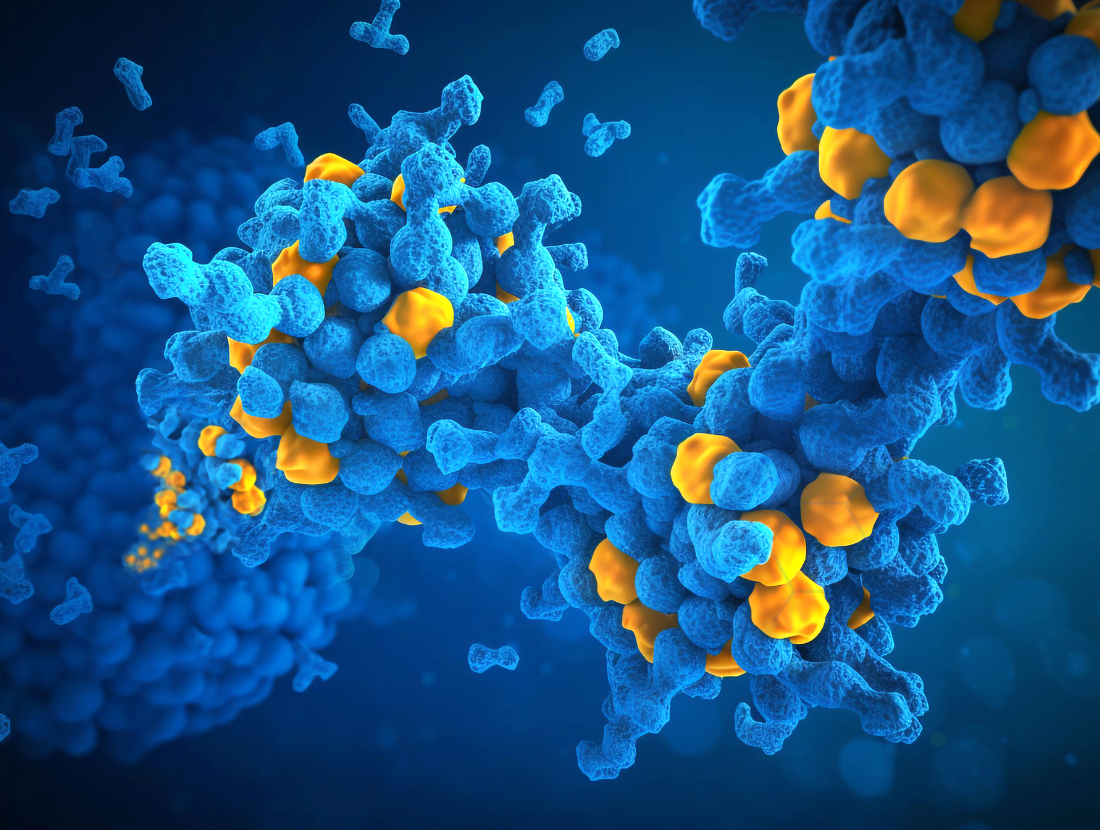
LSD and cannabis are two of the most widely co-used psychoactive substances in the world, yet controlled research on their combined effects in humans is nearly nonexistent. At the center of the LSD-cannabis interaction is a single protein: the serotonin 5-HT2A receptor, where both substances converge through distinct but overlapping pathways that affect perception, memory, and cortical signaling. Festival surveys and harm reduction studies fill some of the gap between receptor pharmacology and lived experience, but the deeper question — what is physically happening in the brain when both substances are active — has only recently begun to yield answers.
How LSD Works in the Brain: The 5-HT2A Receptor
LSD exerts its effects primarily as a potent partial agonist at the serotonin 5-HT2A receptor, which is densely expressed in the prefrontal cortex and across sensory networks. A landmark neuroimaging study by Preller et al. confirmed that LSD-induced changes in global brain connectivity, as well as the drug’s subjective effects, are attributable to this receptor: pretreatment with a 5-HT2A antagonist blocked both the connectivity changes and the experience itself.


This matters for cannabis users because the 5-HT2A receptor is also the central point of convergence between the serotonin and endocannabinoid systems. THC and LSD reach this receptor through entirely different routes, but they arrive at the same address.
Cross-tolerance clarification: A 1969 clinical study by Isbell and Jasinski established that LSD-tolerant individuals show no cross-tolerance to THC, indicating the two drugs operate through distinct primary mechanisms. Distinct pathways to the same receptor can still produce meaningful interactions, however, and the absence of cross-tolerance is not evidence of absence of interaction.
The LSD-Cannabis Connection: CB1 and 5-HT2A Receptor Heteromers
The most specific mechanistic finding in this literature comes from preclinical research on CB1/5-HT2A receptor heteromers. Viñals et al. (2015) demonstrated that cannabinoid CB1 receptors and serotonin 5-HT2A receptors physically couple to form functional heteromeric complexes in brain regions involved in memory. In mice lacking the 5-HT2A receptor, THC’s amnesic effects disappeared while its analgesic properties remained intact, indicating that the memory impairment depends on the heteromer specifically.
When both receptors are stimulated together, this heteromer alters downstream G-protein signaling in ways neither receptor achieves in isolation. Costimulation reduces cell signaling, and an antagonist at one receptor can block signaling at the interacting receptor, pointing to a genuine pharmacological bridge between the cannabis and serotonin systems.
Evidence boundary: CB1/5-HT2A heteromer data is primarily from mouse models. A 2018 study by Moreno et al. found that chronic cannabis users showed elevated heteromer expression in human olfactory neuroepithelium cells, with expression levels correlating with cannabis consumption amount and negatively correlating with working memory performance. This is the closest available human-proxy data, but olfactory tissue is not brain tissue. Translating these findings to the context of an LSD experience in humans requires caution.
Does CBD Counteract LSD? What the 5-HT2A Evidence Shows
THC and CBD interact with the 5-HT2A receptor in different ways, which has direct relevance for cannabis product selection. A 2025 study by Billard et al. found that CBD acts as a negative allosteric modulator of the 5-HT2A receptor, antagonizing LSD-mediated Gq signaling in cell preparations while leaving a separate downstream pathway (beta-arrestin2 recruitment) intact. This biased signaling finding suggests that CBD may selectively blunt one component of LSD’s mechanism without affecting another.
CBD also acts as an agonist at the 5-HT1A receptor, which exerts an inhibitory influence over 5-HT2A signaling in the human brain. Whether these pharmacological properties translate to a meaningfully different psychedelic experience from high-CBD cannabis compared to high-THC cannabis remains untested in humans. The in vitro findings establish a plausible mechanism; they do not confirm a real-world effect.
LSD Mobilizes the Endocannabinoid System
The relationship between these two systems runs in both directions. A comprehensive review by Haj-Dahmane and Shen documented bidirectional crosstalk between the endocannabinoid and serotonin systems, showing that activation of the 5-HT2A receptor stimulates the synthesis and release of the endocannabinoid 2-AG. By activating 5-HT2A, LSD may mobilize endocannabinoid tone as a downstream effect.
The reverse also holds: Franklin and Carrasco (2013) found that cannabinoid receptor agonists upregulate 5-HT2A receptor protein levels, mRNA expression, and 5-HT2A-mediated signaling in the prefrontal cortex. Chronic cannabis use may prime the 5-HT2A system before a single dose of LSD is ever consumed. Recent electrophysiology research adds another layer: 5-HT2A activation triggers retrograde endocannabinoid signaling that selectively reduces GABA release at specific inhibitory interneurons in the medial prefrontal cortex. LSD’s activation of 5-HT2A, in other words, reaches into the endocannabinoid system to reshape cortical inhibitory circuits.
Cannabis and Psychedelic Experiences: What Human Survey Data Shows
The strongest human data on psychedelic and cannabis co-use comes from a 2022 prospective survey study by Kuc et al. of 321 participants who completed validated questionnaires before and after a planned psychedelic experience. LSD was the most common psychedelic used (50.2% of participants). Cannabis co-use was associated with more intense mystical-type, ego dissolution, and visual experiences in a linear dose-dependent pattern.
The relationship for challenging experiences was different: a quadratic (U-shaped) curve, with low-dose cannabis associated with less challenging experiences and higher doses associated with more. This dose-response shape is a critical nuance. Cannabis does not uniformly intensify a psychedelic experience; the direction of the effect on difficulty depends on quantity.

A 2024 mixed-methods field study by Piercey et al. among festival attendees extended these findings on cannabis and psychedelics qualitatively. In their sample of psychedelic co-use participants, the most common motivation for adding cannabis was tension reduction and balancing of drug effects (50% of respondents). Adverse reactions included increased anxiety, dissociation, and confusion. Adverse event data from the Global Drug Survey carries its own signal: among individuals seeking emergency medical treatment after LSD use, cannabis was potentially implicated in approximately 50% of those cases. The association is correlational, not causal, but it belongs in any harm-reduction conversation about co-use.
HPPD Risk: What Cannabis Users and LSD Users Should Know
Hallucinogen persisting perception disorder (HPPD), in which perceptual disturbances re-emerge after drug cessation, is documented in association with cannabis independent of classic psychedelics. A systematic review of HPPD literature by Orsolini et al. found cannabis among the triggers in multiple case reports, with some patients developing persistent perceptual distortions from cannabinoids alone, without prior hallucinogen exposure. Whether co-use of cannabis and LSD specifically elevates HPPD risk beyond either drug in isolation remains an open question; no controlled study has addressed it.
Why Human Data on LSD and Cannabis Co-Use Is Still Missing
Cannabis users have historically been excluded from psychedelic clinical trials, which means the controlled human co-administration data needed to test these receptor-level hypotheses does not exist. The mechanism is increasingly well-characterized in animal models and cell preparations. Human observational studies are filling in the subjective picture. For cannabis harm reduction researchers and clinicians, this gap is consequential: the pharmacology points toward a meaningful interaction, but the controlled evidence needed to characterize its scope in living humans remains absent.
Frequently Asked Questions
Does cannabis amplify an LSD experience?
Survey data suggests cannabis intensifies some aspects of a psychedelic experience, particularly visual effects and ego dissolution, in a dose-dependent way. However, the effect on difficult or challenging aspects follows a U-shaped curve: low doses may reduce challenge while higher doses may increase it. Cannabis does not uniformly intensify the experience in one direction.
Do LSD and THC share a receptor in the brain?
Both THC and LSD interact with the 5-HT2A serotonin receptor, though via different routes. LSD directly activates the receptor as a partial agonist. THC interacts with it indirectly through CB1/5-HT2A heteromers, physical complexes in which the two receptor types couple together in brain regions involved in memory and cognition.
Does CBD affect LSD differently than THC?
Preclinical evidence indicates CBD acts as a negative allosteric modulator at the 5-HT2A receptor, selectively blunting one downstream signaling pathway that LSD activates. This mechanism has been demonstrated in cell preparations only. Whether it produces a meaningfully different experience in humans from high-CBD versus high-THC cannabis has not been tested in clinical research.
Can cannabis cause HPPD on its own?
Clinical case literature documents cannabis as an independent trigger for HPPD in a subset of patients, including cases without prior exposure to classic hallucinogens. Whether co-using cannabis and LSD raises HPPD risk beyond either drug alone is unknown; no controlled study has examined this specific question.
What are the risks of mixing LSD and cannabis?
Controlled safety data on mixing LSD and cannabis does not exist. Observational research links cannabis co-use to adverse outcomes in a meaningful proportion of LSD-related emergency medical cases. Given the dose-dependent nature of the interaction, the absence of human clinical data, and the individual variability involved, caution is well-supported by the available evidence.


Sign up for bi-weekly updates, packed full of cannabis education, recipes, and tips. Your inbox will love it.