

 Merch
Merch Medical card
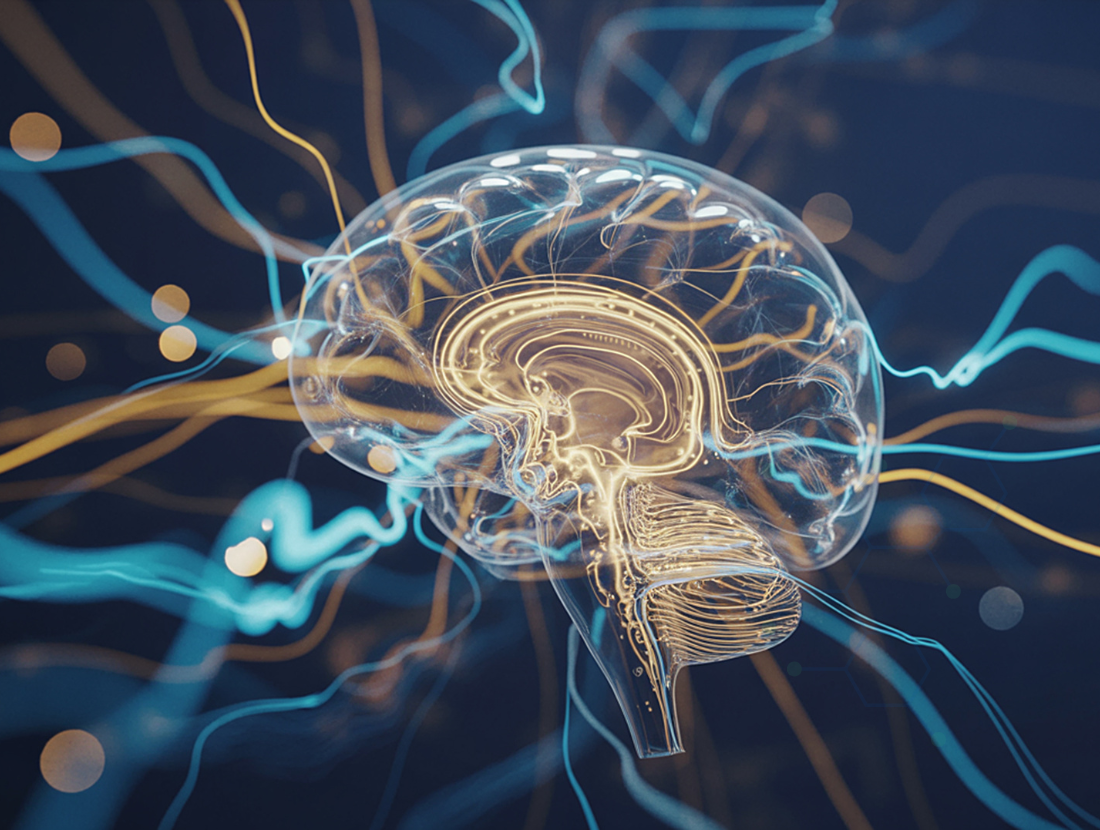
From receptor crosstalk to co-use data, a grounded look at how cannabis and psychedelics intersect in the brain and in practice.
Cannabis and psychedelics have long shared cultural space. Increasingly, they share scientific attention. Researchers are finding that the two don’t occupy separate pharmacological lanes — they interact at the receptor level, shape each other’s subjective effects, and may even influence each other’s long-term use patterns. The evidence is early and often preclinical, but it’s specific enough to be worth understanding.
Key Takeaways


- THC and classic psychedelics act on receptors (CB1 and 5-HT2A) that physically couple in brain cells, producing effects neither substance achieves alone.
- Low doses of cannabis during a psychedelic session may reduce challenging experiences; high doses appear to increase them.
- Naturalistic data suggests psychedelic use correlates with reduced cannabis use, though no clinical trials have tested this directly.
- Cannabis users are routinely excluded from psychedelic-assisted therapy trials, creating a significant gap between the research population and real-world users.
How Cannabis and Psychedelics Interact at the Receptor Level
THC binds primarily to CB1 receptors, a cornerstone of the endocannabinoid system. Classic psychedelics — psilocybin, LSD, mescaline — act mainly on 5-HT2A serotonin receptors. The two receptor types don’t just coexist; they physically couple to form heteromeric complexes in brain regions involved in memory and perception. A foundational study published in PLOS Biology found that co-stimulation of CB1 and 5-HT2A receptors reduces cell signaling and alters G-protein coupling in ways that neither receptor produces on its own. The same molecular complex that mediates THC’s memory-impairing effects also contributes to some of its analgesic properties.
A 2018 human cell study extended these findings, showing that people who use cannabis express significantly more CB1-5HT2A heteromers in olfactory neuroepithelial cells, with heteromer density correlating positively with cannabis consumption and negatively with attention and working memory scores. This is human tissue data, not neuroimaging during live co-use — but it points to a plausible mechanism for why the two substances don’t simply add their effects together.
CBD adds another layer. Unlike THC, CBD binds directly to serotonin receptor subtypes including 5-HT1A and 5-HT2A — the primary target of LSD and mescaline — though its effects at 5-HT2A differ considerably from those of classic psychedelics and produce markedly different outcomes.
Cannabis and Psychedelic Co-Use: What the Data Actually Shows
A 2022 prospective online survey of 321 participants found that cannabis use dose-dependently increased mystical-type experience, ego dissolution, and visual alteration during psychedelic sessions. Challenging experiences followed a more complicated pattern: low doses of cannabis were associated with fewer difficult moments, while high doses correlated with more, including elevated scores on an “insanity” subscale. That non-linear relationship is the most important empirical finding in the co-use literature. Flattening it to “cannabis intensifies psychedelics” gets the story wrong.
Cannabis Co-Use in the Field
A 2024 mixed-methods harm reduction study of festival attendees in Colorado found that cannabis was commonly used alongside psilocybin and MDMA to both enhance the experience and manage acute anxiety. Some participants described it as helpful with psilocybin but counterproductive with LSD — beliefs that researchers noted lack scientific backing. The perception gap between what users believe and what evidence supports is worth understanding.
Can Psychedelics Reduce Cannabis Use?
A Johns Hopkins survey of 444 people who attributed a reduction in substance use to a psychedelic experience found that, before the psychedelic experience, 96% met criteria for cannabis use disorder; afterward, 27% did. Greater dose, insight, and mystical-type effects correlated with larger reductions. The caveat is significant: the sample was recruited specifically because participants had already experienced a reduction. Selection bias is severe, and the data cannot be used to estimate what psychedelics might do in an unselected population.
A 2023 systematic review confirmed that, as of its publication, no clinical trials had examined classical psychedelics specifically for cannabis use disorder treatment. The pharmacological rationale for a psilocybin and cannabis interaction exists — chronic cannabis use upregulates 5-HT2A receptor activity, which is the primary target of classic psychedelics — but whether this translates to therapeutic benefit remains an open question, not an established finding.
Psychedelic-Assisted Therapy and Cannabis: A Critical Research Gap
Modern psychedelic-assisted therapy trials for PTSD and depression have produced compelling Phase 2 and Phase 3 results, with psilocybin and MDMA both advancing through clinical evaluation. Most of those trials exclude heavy cannabis users, citing compounded risks — including cardiovascular concerns and psychosis vulnerability — that high-potency cannabis use may amplify when combined with psychedelic-level doses.
The therapeutic significance of a psychedelic session depends in part on the intensity of the mystical experience it produces. A 2025 meta-analysis found that mystical experience intensity reliably predicts long-term clinical outcomes across depression, anxiety, and substance use conditions. If cannabis modulates that experience, even dose-dependently, the downstream therapeutic effect could shift in either direction. No controlled study has examined this directly — and the people most likely to encounter this question are systematically absent from the trials.
Cannabis vs. Psychedelics: Different Effects on the Brain
Psychedelics and cannabis produce distinct neurological signatures. A 2024 Nature study using longitudinal precision fMRI found that a single high dose of psilocybin produced more than three times greater disruption of brain network connectivity than methylphenidate, with some changes persisting for weeks. A systematic review of Default Mode Network effects confirmed that psilocybin, LSD, and ayahuasca each reduce resting-state connectivity within the DMN while increasing connectivity between canonical networks — a pattern associated with the dissolution of rigid self-referential thinking.
Cannabis does not produce this pattern. Preclinical evidence suggests cannabis may prune neurons rather than promote the synaptic growth and dendritic branching associated with psychedelic neuroplasticity. These are different biological processes with different therapeutic implications — a distinction that often gets lost in coverage that treats both substances as similarly “consciousness-expanding.”
Cannabis and Psychedelic Reform: Parallel Paths, Shared Lessons
The policy landscape is moving. A 2025 commentary in Addiction noted that the push to regulate psychedelics bears structural parallels to the cannabis legalization movement, including local deprioritization of enforcement, voter initiatives in Oregon and Colorado, and an expanding gap between legislative momentum and clinical evidence. The cannabis experience offers a direct cautionary frame: commercial acceleration ahead of the science created overpromising that took years to correct. Psychedelic policy is at a similar inflection point.
A 2024 review in the Journal of Psychopharmacology proposed that high-THC cannabis itself may produce psychedelic-like effects at sufficient doses, and suggested the compound could serve as an active comparator in psychedelic clinical trials. That framing would put cannabis at the center of psychedelic research rather than excluded from it. The science isn’t there yet, but the question is live.
Frequently Asked Questions: Cannabis and Psychedelics
Does cannabis enhance the psychedelic experience?
Cannabis can intensify certain aspects of a psychedelic session, but the relationship depends on dose. Low doses may reduce challenging experiences, while high doses appear to increase them — including a measurable rise in disorientation and psychological difficulty. The enhancement is not linear.
Do THC and psychedelics interact in the brain?
Yes. THC’s primary receptor (CB1) and the main receptor for classic psychedelics (5-HT2A) form heteromeric complexes in specific brain regions. Co-stimulation of both receptors alters cell signaling in ways distinct from either substance alone, which is likely part of why combined use produces effects that aren’t simply additive.
Can psychedelics help with cannabis use disorder?
Naturalistic survey data suggests a correlation: people who use psychedelics report reduced cannabis use afterward. However, no clinical trial has tested this directly, and the existing surveys carry significant selection bias. The pharmacological rationale for a therapeutic effect exists, but the clinical evidence does not yet.
Are cannabis users excluded from psychedelic therapy trials?
In most current trials, yes. Heavy cannabis users are excluded due to concerns about compounded risks, including cardiovascular effects and psychosis vulnerability. This creates a meaningful gap: a large portion of the population interested in psychedelic-assisted therapy uses cannabis regularly, yet this group is absent from the data generating the evidence base.
Do cannabis and psychedelics affect the brain the same way?
No. Psychedelics like psilocybin disrupt Default Mode Network connectivity and appear to promote neuroplasticity, with some functional changes persisting for weeks after a single dose. Cannabis does not produce the same DMN disruption, and preclinical evidence suggests it may have opposing effects on neuronal pruning. These are distinct mechanisms with different therapeutic implications.


Sign up for bi-weekly updates, packed full of cannabis education, recipes, and tips. Your inbox will love it.