

 Merch
Merch Medical card
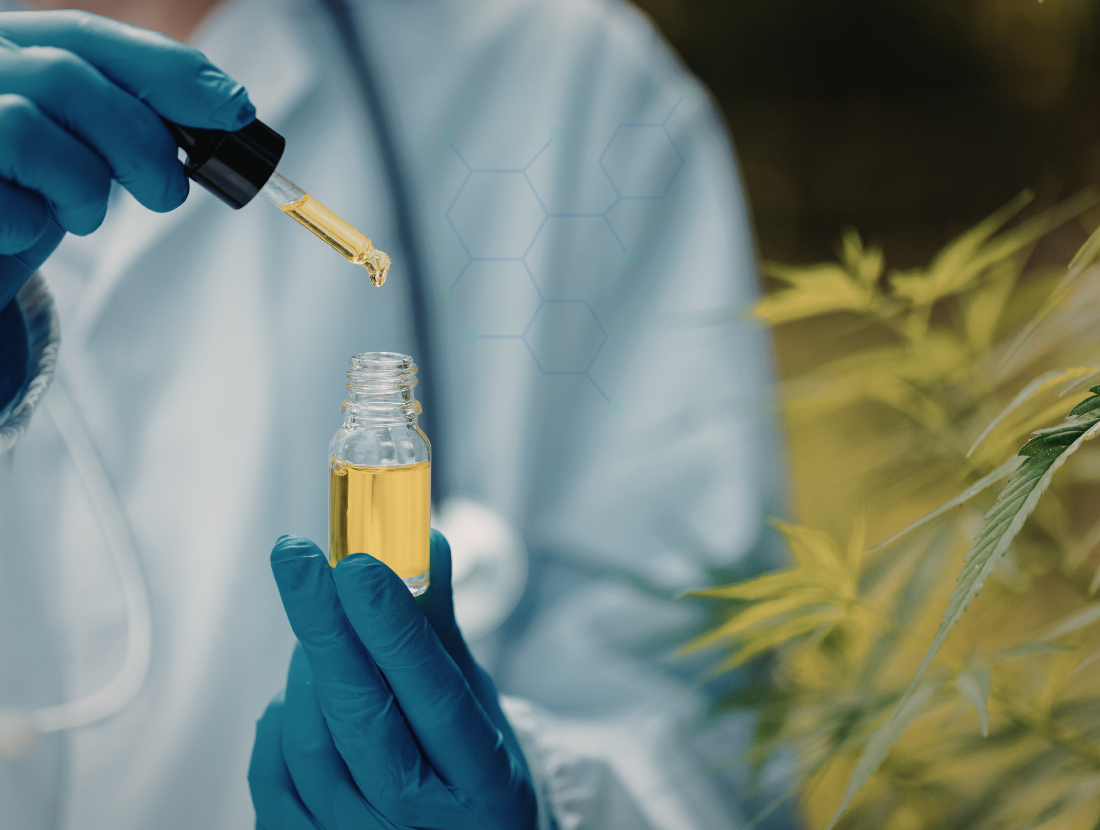
Two production technologies are converging in cannabis beverages and edibles. Here is what peer-reviewed research says about cannabis bioavailability, live rosin extraction, and what “water-soluble” actually means.
Fast-acting cannabis edibles and beverages promise to solve one of the most persistent problems in the edibles category: you take a dose, wait an hour, feel nothing, take more, and two hours later it hits hard. That experience follows directly from cannabinoid chemistry. THC and CBD are fat-soluble compounds in a body that runs on water. Oral cannabis bioavailability for THC sits at just 4–20%, meaning most of what you eat never reaches your bloodstream. Two separate production technologies — solventless live rosin extraction and cannabinoid nano-emulsification — are now converging in a new tier of live rosin edibles and infused cannabis beverages. Understanding each one helps you read product labels and manage expectations more accurately.

Why Cannabis Edibles Have a Bioavailability Problem
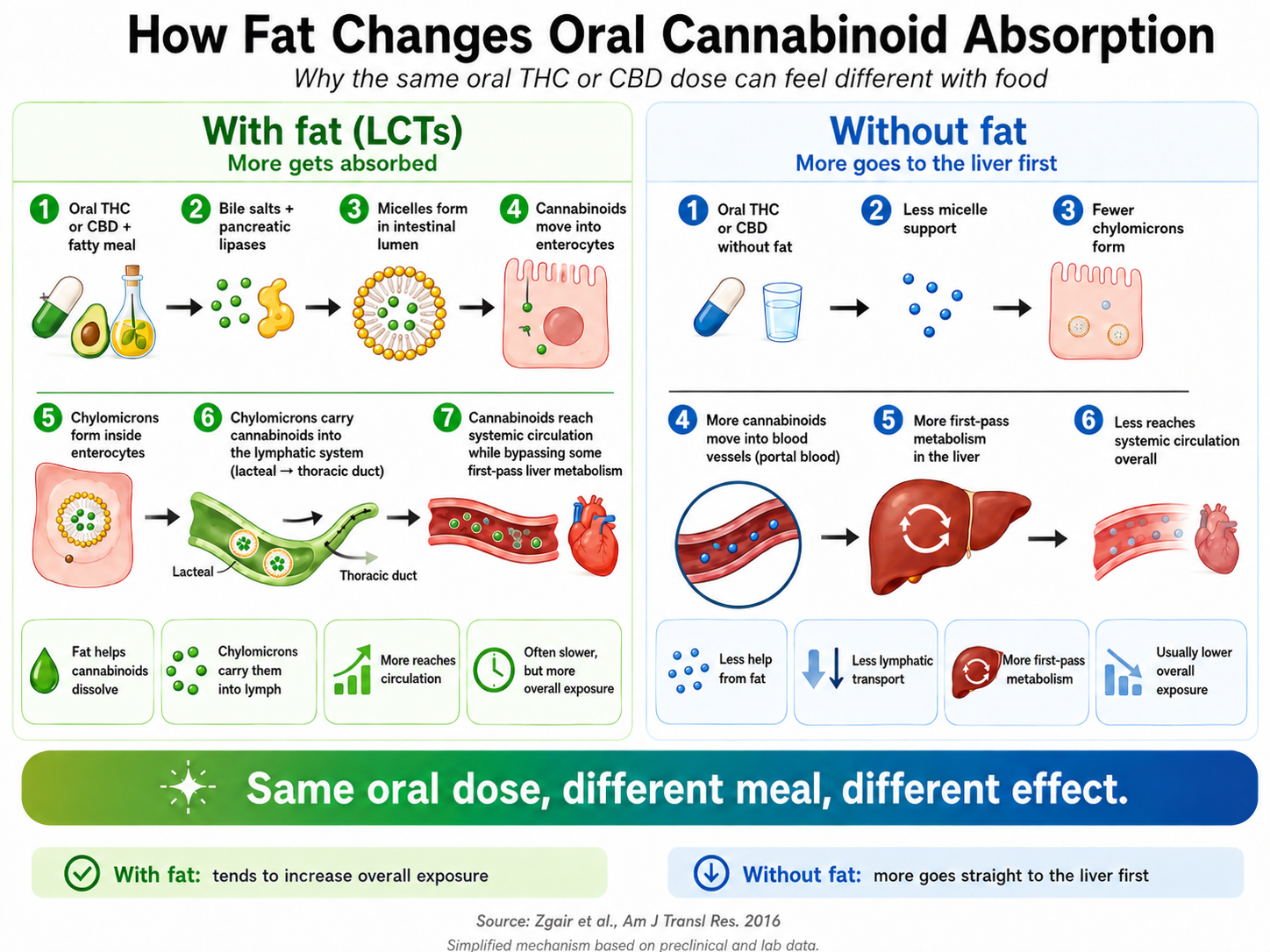
Lipophilicity is the core issue. THC and CBD resist absorption into the water-based human digestive system. Research on cannabinoid pharmacokinetics identifies poor cannabis bioavailability — as low as 6% for oral THC in some studies — as a function of variable gastrointestinal absorption, degradation in the stomach, and significant first-pass metabolism in the liver.
That first-pass metabolism introduces a secondary factor: 11-OH-THC. When the liver processes an oral dose of THC, it converts a portion to this active metabolite. Peer-reviewed pharmacokinetic data shows the ratio of 11-OH-THC to parent THC is greater than 1:1 following oral ingestion, compared to less than 1:20 following inhalation. Because 11-OH-THC is more potent per molecule than the parent compound, edible effects can feel qualitatively different from inhaled cannabis — not just slower in onset, but more intense in character. Predicting that experience is difficult, because the absorption itself is variable.
How Nano-Emulsification Makes Water-Soluble Cannabis Work
Nanoemulsification is a physical process. It breaks cannabis oil into droplets typically ranging from 20 to 200 nanometers in diameter. Cannabinoids encapsulated at that scale have dramatically more surface area available for interaction with gastrointestinal membranes, and the droplets disperse in water-based liquids — which is the origin of the “water-soluble cannabis” label you see on product packaging.
That label is technically imprecise. The cannabinoids themselves remain fat-soluble. Nano-emulsification encapsulates them in a water-compatible droplet system; it does not chemically alter the molecules. The practical effect is genuine: the encapsulated cannabinoids behave like water-soluble compounds in the gut, improving absorption rates.
Producers use high-pressure homogenization or ultrasonic cavitation (sonication) to achieve nanoscale droplet sizes. Food science research on oral cannabis formulation documents one key processing risk: overheating during ultrasonication can degrade cannabinoids, terpenes, and other bioactive compounds, so temperature control during production is a meaningful quality variable.
What Clinical Research Shows About Fast-Acting Cannabis Edibles
The pharmacokinetic data on nanoemulsified cannabis is promising but early. A 2025 crossover trial with 14 healthy volunteers found that a self-nanoemulsifying THC/CBD powder formulation significantly improved peak blood concentration (Cmax) for both THC and 11-OH-THC compared to standard oil drops. A 32-participant randomized triple-blind parallel study comparing a cannabis nanoemulsion to MCT oil showed improved Cmax, faster time to peak concentration, and a shorter absorption time-lag. A separate 2025 crossover in 12 healthy men found that a bioavailability-enhanced CBD capsule reached approximately 5.7 times the Cmax of a standard isolate capsule.
A note on the evidence: Most trials in this area are small, and some are industry-funded. The first systematic review of CBD pharmacokinetics in humans concluded that open-label studies and crossover trials with small sample sizes do not yet support firm conclusions about oral cannabinoid delivery. Higher blood concentrations in a pharmacokinetic trial are also not the same as a stronger or more predictable subjective experience.
Live Rosin Edibles: The Extraction Science Behind the Price
Live rosin is a solventless concentrate produced by pressing ice water hash made from fresh-frozen cannabis. The process uses heat, pressure, and ice water — no chemical solvents. Producers flash-freeze plants at sub-zero temperatures immediately after harvest, which preserves volatile terpenes that drying and curing would otherwise degrade. The “live” designation reflects that terpene preservation, not a separate class of cannabinoids.
Yield economics explain the price premium on live rosin edibles and concentrates. Ice water hash extraction produces roughly 10–20% from flower, and pressing that hash into rosin yields 70–90% from hash. The overall return from starting material runs around 3–8%. Producers need more plant material per unit of concentrate, and that input cost flows through to the shelf price.
One context point worth keeping: residual solvent limits in competing extract formats vary widely by state — California allows up to 5,000 ppm of butane in tested products, while Massachusetts allows 12 ppm. Properly tested solvent-based extracts in compliant markets are not the same risk category as unregulated products, so the “no solvents” value proposition is partly about consumer preference for process purity rather than a settled safety comparison. For cannabis beverages specifically, the solventless sourcing argument may carry more weight, since the finished product format amplifies any off-flavors from residual solvents.
Full-Spectrum Live Rosin and the Entourage Effect: What Research Supports
Live rosin frequently appears on labels as “full-spectrum,” which carries the implication of entourage effect benefits. A 2021 study in Scientific Reports identified CB1 and A2a receptors as terpene targets, providing mechanistic support for the idea that terpenes and cannabinoids interact at the receptor level. That is meaningful preclinical evidence.

A 2023 scoping review presents a more cautious read: some researchers find no basis for expecting net beneficial effects from the entourage effect, and note that interactions between cannabis compounds may augment negative effects as well as positive ones — a pattern some researchers call the “contra-entourage effect.” The mechanistic evidence supports the hypothesis; consumer-level clinical outcomes remain poorly mapped.
Live Rosin Nanoemulsion: When the Two Technologies Converge
Cannabis beverages and premium edibles are now combining live rosin with nanoemulsification, creating a product tier that claims both terpene richness and fast onset. The cannabis beverages category has grown 8.2% year-over-year, and live rosin-infused drinks have appeared as top sellers in several state markets. Cannabis bioavailability — already improved by nanoemulsification — is a key part of the sales pitch for this emerging format.
One question peer-reviewed research has not yet answered: does a live rosin nanoemulsion preserve more terpenes than a distillate-based nanoemulsion? High-shear processing strips terpenes. Producers typically add 2–3 times the intended final terpene concentration to compensate for losses during processing and storage. Whether the “live” starting material advantage survives commercial-scale emulsification is both commercially important and scientifically unresolved. The controlled comparison does not yet exist.
Fast-Acting Edibles and Dosing: Why Onset Speed Changes the Equation
Nanoemulsified products may produce noticeable effects in 15–30 minutes rather than 60–120 minutes. That shorter window compresses the most common edibles mistake. Consumers accustomed to waiting two hours may redose before the first dose has fully expressed. With fast-acting products, that miscalculation plays out much faster.
Treat your first experience with any nanoemulsified product as a calibration dose. Start with the minimum serving on the label, and wait at least 45 minutes before considering more. The pharmacokinetic gains documented in clinical trials tell you absorption is faster — not that the dose-response relationship has changed in your favor.
Frequently Asked Questions
What does “water-soluble cannabis” actually mean?
Water-soluble cannabis is a product category in which cannabinoids are encapsulated in nanoscale oil droplets that disperse into water-based beverages. The cannabinoids themselves remain fat-soluble. Nano-emulsification makes them water-compatible, not chemically water-soluble — a distinction the label rarely explains.
What is cannabis bioavailability and why does it matter for edibles?
Cannabis bioavailability refers to the proportion of cannabinoids that reach the bloodstream after consumption. For oral THC, research puts that figure between 4% and 20% — far below inhaled cannabis. Low bioavailability means variable effects and unpredictable onset, which is the core problem that nano-emulsification aims to address in fast-acting edibles.
How long do fast-acting cannabis edibles take to kick in?
Nanoemulsified products may produce noticeable effects in 15 to 30 minutes. Standard oil-based edibles typically take 60 to 120 minutes. Individual response varies based on metabolism, food intake, and cannabis use history.
Is live rosin better than other cannabis concentrates?
Live rosin uses no chemical solvents and preserves more volatile terpenes than concentrates made from dried and cured plant material. Whether those preserved terpenes produce meaningfully different consumer outcomes is a question the clinical evidence has not fully answered.
Does nano-emulsification change how cannabis effects feel?
The primary documented changes are pharmacokinetic: faster onset and higher peak blood concentration. The relationship between those pharmacokinetic gains and subjective experience in real-world settings has not been mapped in large-scale clinical trials. Higher Cmax is not the same as “more high.”
What is 11-OH-THC and why does it matter for edibles?
11-OH-THC is the active metabolite the liver produces when it processes an oral dose of THC. It is more potent per molecule than parent THC and occurs at a greater than 1:1 ratio following oral ingestion, compared to less than 1:20 following inhalation. This metabolite shift contributes to why edible cannabis effects can feel more intense and qualitatively different from inhaled cannabis.


Sign up for bi-weekly updates, packed full of cannabis education, recipes, and tips. Your inbox will love it.