


 Merch
Merch Medical card
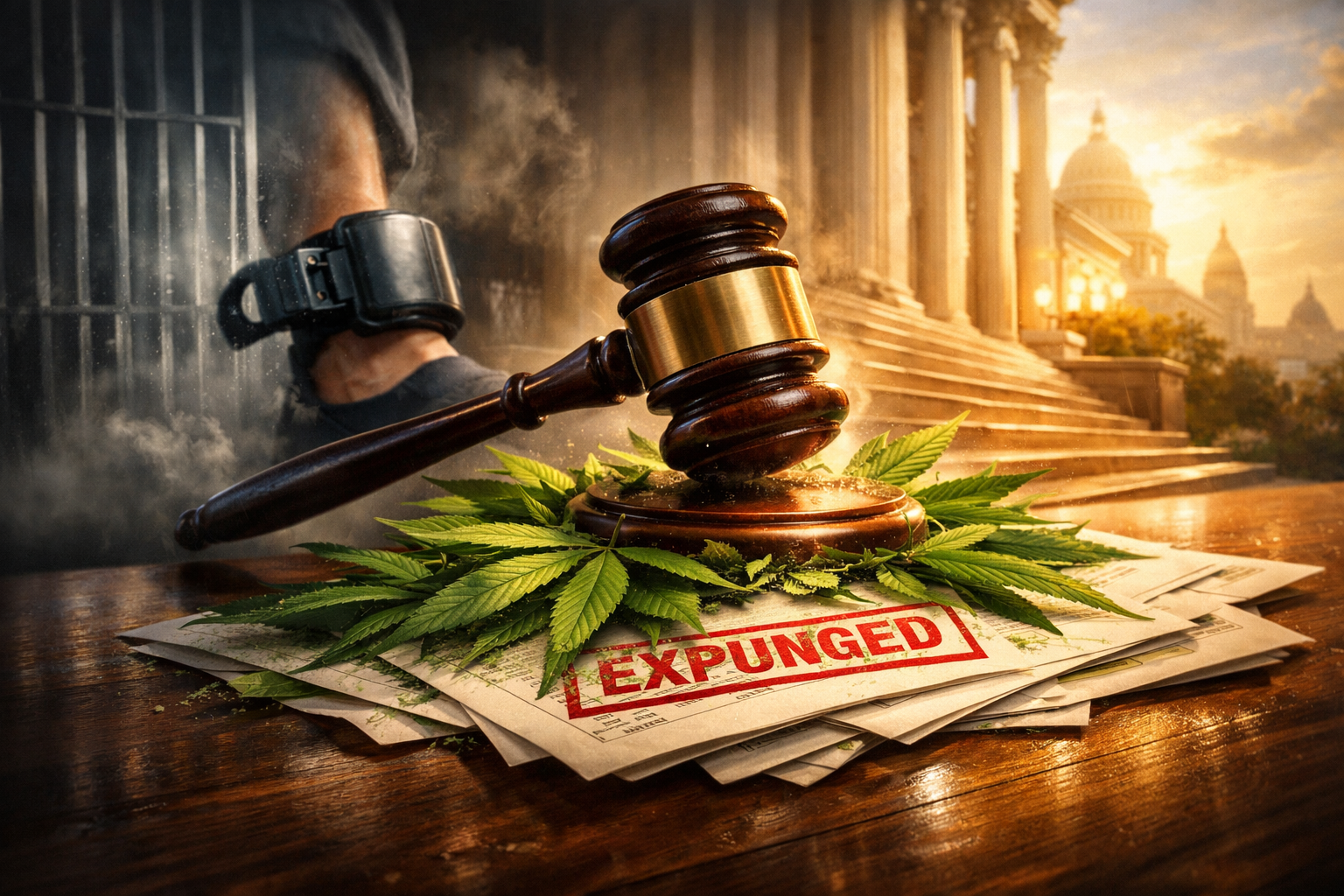
When states regulate recreational or medical cannabis, cannabis criminal justice reform happens automatically—something remarkable that has nothing to do with tax revenue or social equity programs. The moment a governor signs cannabis regulation into law, the legal foundation beneath thousands of criminal convictions suddenly shifts. People who were prosecuted under state prohibition yesterday are no longer violating state law today. This shift doesn’t just change the future—it actively rewrites the past.
Cannabis regulation acts as an immediate statutory catalyst for criminal justice reform, legally invalidating past state-level convictions and forcing the system to respond. Unlike funded initiatives that depend on budget allocations and program development, regulatory language operates on the legal framework itself, making continued incarceration or criminal records legally untenable the moment the statute takes effect.


Automatic Cannabis Expungement: How Regulation Clears Records
The most transformative aspect of cannabis regulation isn’t what it permits—it’s what it mandates the government must undo. In states with automatic expungement provisions, legislative requirements force prosecutors to identify and clear records without waiting for individuals to petition the courts. This approach to cannabis record expungement shifts the burden entirely.
California’s approach illustrates this power. When the state passed AB 1706 in 2018, it didn’t just allow people to request record relief—it required the California Department of Justice to automatically review and clear eligible convictions. The result? Nearly 200,000 convictions were dismissed through a state-initiated process that shifted the burden from individuals to the government.
Illinois took this concept even further. Through its Cannabis Regulation and Tax Act, the state embedded automatic expungement directly into the regulatory framework. Over 780,000 cannabis convictions have been automatically expunged through this cannabis law reform—a scale impossible to achieve through petition-based systems.
Why Cannabis Expungement Through Regulation Outperforms Petition Systems
The difference between automatic and petition-based expungement systems reveals why regulation itself is the crucial variable. States that require individuals to petition courts see uptake rates below 10%, creating a justice gap where those with resources and knowledge benefit while others remain burdened by records.
Automatic systems embedded in regulatory statutes flip this dynamic entirely. Research analyzing California’s shift from petition-based (Prop 64) to state-initiated relief (AB 1793) found that regulatory design—not individual initiative—determined who actually received justice. When the law mandates action, the government bears the administrative burden of making things right.
Marijuana Resentencing: How Cannabis Reform Frees the Incarcerated
Cannabis regulation doesn’t just clear records—it empties cells. Many regulatory statutes include marijuana resentencing provisions that work immediately upon passage. Qualitative research from California documented cases where incarcerated individuals were released “the next day” following regulation, with ankle monitors immediately removed once the state-level legal basis for their confinement disappeared.
The impact on prison populations is measurable. Statistical analysis found approximately 4,000 fewer people in prison as a direct result of marijuana regulation statutes—not through parole board decisions or clemency processes, but through the automatic legal invalidation of cannabis-related sentences under state law.
The Role of Advocacy Organizations
While regulation provides the statutory mechanism for release and expungement, advocacy organizations work to ensure no one is left behind in the transition. The Last Prisoner Project has become a leading force in cannabis conviction relief, identifying individuals still serving sentences for cannabis offenses in states with regulated programs. They provide legal representation, connect impacted individuals with resentencing opportunities, and advocate for policy improvements to address gaps in existing regulatory frameworks.
These organizations fill a critical gap between what regulation permits and what actually happens on the ground. They navigate the complex bureaucracy of record clearing, help individuals understand their eligibility under new statutes, and push courts to expedite cases that have languished despite regulatory changes. Their work demonstrates that while regulation creates the legal pathway for justice, active advocacy ensures those pathways lead to actual freedom.
Missouri’s Constitutional Mandate: Speed Through Regulation
Missouri’s experience demonstrates how strong regulatory language accelerates justice. When voters approved Amendment 3 in 2022, regulating adult-use cannabis through a constitutional amendment, they didn’t just create a regulated market—they constitutionally mandated expungement. The state’s approach to automatic cannabis expungement became one of the fastest in the nation. Courts cleared over 100,000 records in just the first few months, showing how regulatory specificity dictates the pace of reform.
The constitutional nature of Missouri’s regulation matters. Because the expungement mandate was embedded in the state constitution rather than regular statute, it couldn’t be delayed by legislative inaction or budget constraints. The regulation itself became the enforcement mechanism.
The Ripple Effect: Cannabis as Regulatory Blueprint
Cannabis regulation’s success in driving criminal record expungement has inspired broader “Clean Slate” legislation. California’s experience with cannabis expungement directly informed SB 731, which extends automatic record relief to a wider range of offenses. When regulation proves it can force systemic change efficiently, it becomes a model for addressing other justice issues.
New York’s Marijuana Regulation and Taxation Act included automatic expungement language from the start, learning from other states’ experiences with cannabis policy reform. The pattern is clear: well-designed regulation doesn’t just permit reform—it compels it.
Cost-benefit analyses show that maintaining outdated criminal records imposes economic and social costs the state must ultimately bear. Cannabis regulation addresses this not through funding programs, but by legally invalidating the basis for those records at the state level.
Cannabis isn’t just everywhere—it’s a catalyst for cannabis criminal justice reform. By fundamentally changing what’s prohibited under state law, regulation forces every system that enforced prohibition to adapt. Courts must resentence. Prosecutors must dismiss. Records must clear. This isn’t social equity waiting for funding—it’s statutory justice taking immediate effect.


Sign up for bi-weekly updates, packed full of cannabis education, recipes, and tips. Your inbox will love it.