

 Merch
Merch Medical card
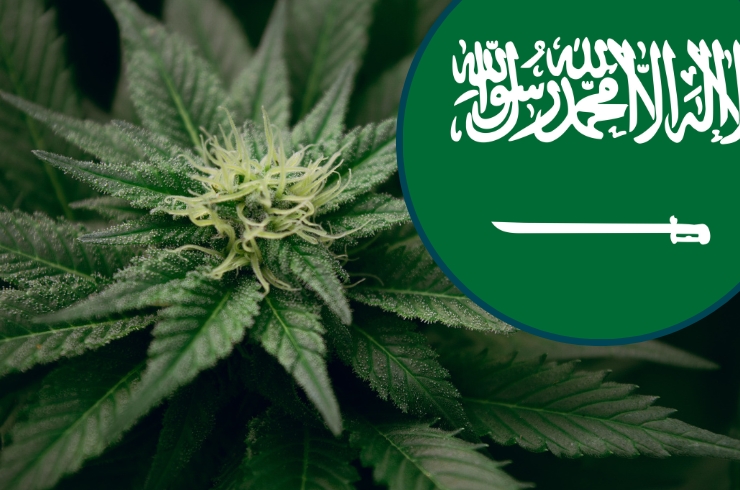
No, weed is not legal in Saudi Arabia. Cannabis in every form is banned, including CBD, and there is no medical programme or tolerated amount. The UK government describes Saudi Arabia’s approach to drugs as zero tolerance, and smuggling drugs, including hashish, can carry the death penalty.
This guide explains Saudi Arabia’s cannabis laws, the penalties, the CBD position, and what happens to visitors who are caught.

Is weed legal in Saudi Arabia for recreational use?
Recreational weed is illegal in Saudi Arabia. Cannabis is controlled under the Law of Combating Narcotics and Psychotropic Substances, issued in 2005, together with its implementing regulations from 2010. That law replaced an earlier royal order that many older guides still cite.
The schedules to the law, published by the Saudi Food and Drug Authority, list cannabis, cannabis resin, and extracts and tinctures of cannabis as narcotic drugs. THC itself is scheduled as a psychotropic substance. There is no legal market and no decriminalised quantity.
Is weed illegal in Saudi Arabia even in private? Yes. The ban covers use, possession, purchase and supply wherever they take place, including in a private home or a hotel room.
What are the penalties under Saudi Arabia weed laws?
Penalties under Saudi Arabia weed laws escalate from prison for use and possession to the death penalty for smuggling and dealing. The distinction the law draws is between consumption on one side and trade on the other.
For users, penalties include imprisonment, and foreign nationals who are convicted can also be deported. The UK Foreign, Commonwealth and Development Office states that possessing even small amounts can bring a prison sentence of up to five years and a fine of 30,000 riyals. The statute text itself could not be verified, so treat that figure as the FCDO’s summary rather than the law’s exact wording.
For dealing and smuggling, the death penalty is available and used. According to an AFP tally, Saudi Arabia carried out a record 356 executions in 2025, of which 243 were for drug-related offences. Amnesty International recorded 96 executions between January and late June 2026, 61 of them drug-related, including people executed for smuggling hashish.
Foreign nationals are heavily represented. Amnesty found that 78% of the people executed for drug offences in 2025 were foreign nationals, and several 2026 executions involved hashish smuggling by non-Saudis.
Penalties at a glance
| Conduct | Governing law | General penalty |
|---|---|---|
| Use of cannabis | Law of Combating Narcotics and Psychotropic Substances, 2005 | Imprisonment; deportation for foreign nationals |
| Possession | Law of Combating Narcotics and Psychotropic Substances, 2005 | Imprisonment; deportation for foreign nationals |
| Dealing and smuggling, including hashish | Law of Combating Narcotics and Psychotropic Substances, 2005 | Long prison terms, and the death penalty |
Is medical marijuana legal in Saudi Arabia?
Medical marijuana is not legal in Saudi Arabia. There is no medical cannabis programme, and cannabis medicines cannot be brought in on a foreign prescription.
This applies to visitors carrying their own treatment. The US State Department states that Saudi Arabia does not allow the importation of marijuana or CBD products, even if prescribed by a medical provider.
Other prescription medicines can be brought in, but only under strict conditions. Visitors need a prescription or medical report issued within the last six months, and a supply no longer than the visit or one month, whichever is shorter. The medicines must be declared at the port of entry, and many common drugs need prior approval through the Saudi Food and Drug Authority.
Is CBD legal in Saudi Arabia?
No, CBD is not legal in Saudi Arabia. Here the official guidance names CBD explicitly. The US State Department lists marijuana, cannabis and CBD products and derivatives as illegal in Saudi Arabia, with penalties that can include many years in jail or death.
Some websites describe CBD in Saudi Arabia as a grey area because the Saudi schedules do not list it by name. That reading is wrong in practice. The schedules cover cannabis extracts and THC, many CBD products contain traces of THC, and the import ban applies even with a prescription.
For expatriates and visitors, the rule is simple: do not pack CBD oil, gummies, balms or vapes, even if they are sold legally where you live.
Can you smoke weed in Saudi Arabia as a tourist?
No. Tourists and residents are subject to exactly the same law. The UK Foreign, Commonwealth and Development Office describes Saudi Arabia’s approach in its Saudi Arabia travel advice as zero tolerance for drug offences, and warns that dealing and smuggling can result in a death sentence.
What happens if you smoke weed in Saudi Arabia? You can face arrest, prosecution, imprisonment and, as a foreign national, deportation. Detention before trial can be long, according to the FCDO.
There is a less obvious risk too. The US State Department warns that a blood test detecting substances taken before you travelled can still lead to arrest. Using cannabis legally at home shortly before a trip is therefore not risk-free.
Consular help cannot change this. An embassy can visit a detained national and help find a lawyer, but it cannot overturn a Saudi court’s decision or prevent a prosecution.
The bottom line on cannabis in Saudi Arabia
Weed is illegal in Saudi Arabia under the 2005 narcotics law, with no medical programme and no tolerated amount. Use and possession lead to prison and, for foreigners, deportation, while smuggling and dealing can carry the death penalty, and executions reached a record in 2025, driven by drug cases.
CBD is explicitly banned, including on prescription. For anyone travelling to Saudi Arabia, the only safe choice is to carry no cannabis or CBD products of any kind.
Last reviewed: September 30, 2026. Cannabis laws change frequently, always verify current rules with official sources before you travel.


Sign up for bi-weekly updates, packed full of cannabis education, recipes, and tips. Your inbox will love it.