
 Merch
Merch Medical card
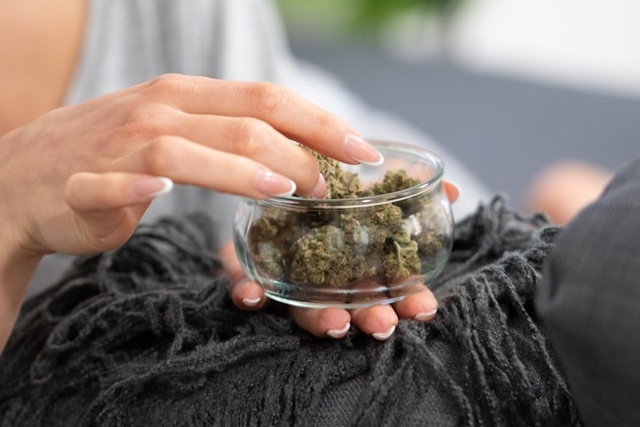
Emerging research explores how cannabinoids may intersect with menstrual pain, perimenopause, and menopause. Here’s what we know, what we don’t, and why the conversation matters.
For too long, conditions like painful periods, premenstrual dysphoric disorder (PMDD), and menopause-related sleep disruption have been undertreated, under researched, and frequently dismissed. As cannabis becomes more accessible and culturally normalized, a growing number of women are turning to cannabinoids, including THC and CBD, for relief across every stage of their hormonal lives, including questions about whether cannabis and menopause symptoms, menstrual pain, and perimenopause can be meaningfully addressed through cannabinoid-based approaches.

The evidence is still emerging, often observational, and far from complete. But the research conversation has finally started, and women deserve access to what it’s actually saying.
This article does not offer medical advice, dosing guidance, or product recommendations. It’s meant to support informed conversations between you and a knowledgeable healthcare provider.
The Endocannabinoid System and Estrogen: A Key Connection
To understand why cannabis and women’s hormonal health overlap at all, it helps to understand the endocannabinoid system (ECS). The ECS is a body-wide network of receptors, enzymes, and naturally occurring compounds that helps regulate pain perception, mood, sleep, inflammation, and stress response. Estrogen, one of the primary sex hormones, appears to modulate how the ECS functions.
That interaction has real implications. It may help explain why cannabis responses differ across the menstrual cycle and through major hormonal transitions. A registered clinical trial is currently investigating how menstrual-cycle hormone fluctuations specifically influence both the subjective and physiological responses to cannabis, a question that has been largely ignored until now.
Cannabis for Menstrual Pain, PMS, and PMDD: What Early CBD Research Shows
Dysmenorrhea, the medical term for painful cramps, affects up to 90% of people who menstruate, and conventional options like NSAIDs and hormonal contraceptives don’t work for everyone. Cannabis researchers are beginning to explore whether cannabinoids, especially CBD, might offer relief for menstrual-related symptoms.
The evidence, while early, is encouraging:
- A randomized, open-label trial evaluating oral CBD isolate found preliminary clinical evidence that CBD may reduce menstrual symptom clusters, including pain and mood-related disturbances.
- A survey-based, quasi-experimental study found that high-CBD vaginal suppositories were associated with reduced menstrual symptom frequency, severity, and daily-life impact compared with treatment-as-usual over two months.
- A peer-reviewed narrative review summarized existing evidence for cannabis and cannabinoids in dysmenorrhea and related gynecologic pain, noting that mechanisms are biologically plausible, but larger controlled trials remain essential.
- A registered clinical trial testing 160 mg versus 320 mg CBD for menstrual symptom relief illustrates how this field is maturing toward more structured, dose-specific research, which is the kind of evidence that could eventually inform real treatment guidance.
Dysmenorrhea has been called one of the most neglected pain conditions in medicine. The fact that researchers are now investigating cannabinoids as a potential avenue is itself a form of progress.
CBD and Perimenopause: Hormonal Fluctuations and Self-Directed Cannabis Use
Perimenopause, the years-long hormonal transition preceding menopause, brings anxiety, sleep disruption, hot flashes, and mood instability for many women. Conventional medicine offers limited options, and a significant number of women report feeling dismissed when they seek help.
It’s no surprise, then, that self-directed cannabis use has increased significantly among midlife women. A survey of perimenopausal and menopausal women found substantial use of medical cannabis for sleep disruption, mood, and anxiety, reflecting real-world patterns of unmet need. Hot flashes were among the menopause symptoms women most frequently cited as a motivation for trying cannabis. A North American Menopause Society press release acknowledged the trend explicitly, calling for more rigorous research to support or qualify these patterns.
A clinician-oriented synthesis on cannabis and perimenopause found that surveyed women frequently name sleep and mood as their primary targets, and many describe cannabis as a last resort after other approaches fell short. That framing, of women advocating for themselves in a system that hasn’t served them well, is an important part of the story.
Cannabis for Menopause Symptoms: Sleep, Mood, and the Limits of What We Know
After menopause, some women continue using cannabis for chronic pain, persistent sleep disruption, and low mood. A cross-sectional study of midlife women found self-reported helpfulness for several menopause symptoms, particularly sleep and anxiety. But it also highlighted a consistent research limitation: most samples are small, self-selecting, and lack demographic diversity across race, region, and socioeconomic status. What works in one population may not generalize broadly.
Stronger Evidence
Randomized and controlled CBD trials for menstrual pain (small, early-stage)
Emerging Evidence
Survey and observational data on cannabis for perimenopause and menopause symptoms
Consistent Finding
Women report perceived helpfulness for sleep and anxiety across life stages
Important Caveat
Most samples are non-diverse and limited in generalizability
Mental Health: Relief, Risk, and Nuance
Many women report using cannabis specifically for anxiety, mood, and stress during hormonal transitions. Some surveys support this, finding subjective relief for mood-related symptoms. But the full picture is more complicated.
A community-based study found that frequent cannabis use was associated with elevated anxiety and depressive symptoms in some populations. That doesn’t mean cannabis causes anxiety, but it does suggest that the relationship between cannabis use and mental health is bidirectional and context-dependent. People experiencing high anxiety may be more likely to use cannabis, and frequent use may, in some cases, amplify those symptoms over time.
This is precisely the kind of nuance that gets lost when cannabis is framed as either a cure-all or a danger. The honest answer, for most people and most conditions, is: it depends.
Why This Research Gap Exists and Why It Matters
The underrepresentation of women’s hormonal experiences in cannabis research isn’t an accident. It reflects broader patterns: gender bias in clinical research, criminalization’s chilling effect on cannabis studies, and a medical system that has historically minimized conditions like dysmenorrhea and perimenopause as natural rather than treatable.
Women filling that gap through self-directed care aren’t acting irrationally. They’re responding to a genuine absence of options. The goal of expanding this research isn’t to validate or invalidate those choices; it’s to give women and their providers the information they need to make them well.
If you’re considering cannabis for menstrual pain, perimenopausal symptoms, or postmenopausal wellbeing, the most useful step is a conversation with a clinician who’s knowledgeable about both cannabinoid science and your specific health history. The research is moving in the right direction, and so is the conversation around it.
What This Means If You’re Considering Cannabis
The research signals that cannabinoids, particularly CBD, may offer meaningful relief for some menstrual and menopause symptoms. But the evidence is still early, often survey-based, and not yet strong enough to support specific product or regimen recommendations. What it does support is a more informed conversation with your healthcare provider, one where cannabis is neither dismissed out of hand nor treated as a guaranteed solution.
Body literacy and self-advocacy are powerful tools. Understanding what the research actually says, and where its limits are, puts you in a stronger position to make choices that reflect your own health history, values, and goals.


Sign up for bi-weekly updates, packed full of cannabis education, recipes, and tips. Your inbox will love it.