

 Merch
Merch Medical card
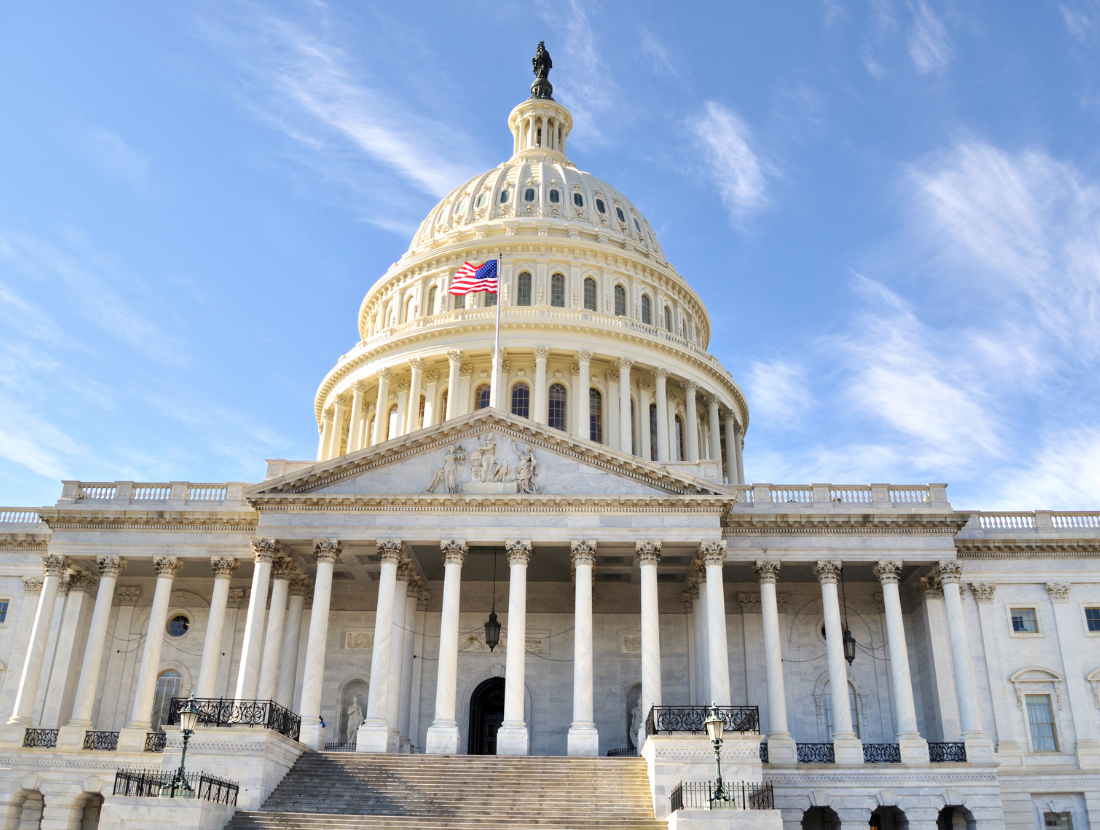
On April 18, 2026, Rick Perry, Marcus Luttrell, and Joe Rogan stood in the Oval Office as President Trump signed an executive order directing the FDA to fast-track psychedelic drug review. The compound at the center was ibogaine, a plant-derived psychedelic from West Africa that has remained Schedule I since 1970. Ibogaine treatment for opioid use disorder and PTSD had moved from underground clinics in Mexico to Republican statehouses in three years, driven by a coalition that reframed psychedelic policy as a veterans’ crisis rather than a counterculture issue.
Ibogaine for PTSD and OUD: What the Evidence Shows

Ibogaine has produced compelling early results for veteran PTSD and opioid use disorder, but the evidence base remains observational. No randomized controlled trial has been completed, and the compound carries a documented cardiac risk that supervised protocols manage but cannot eliminate at scale.
How Veterans Pioneered Ibogaine Treatment Before Any Law Existed
Before any state legislation existed, special operations veterans were traveling to supervised clinics in Mexico, where ibogaine treatment is legal. Most arrived with treatment-resistant PTSD, opioid use disorder (OUD), or traumatic brain injury (TBI) from deployment. The informal network grew as results circulated through veteran communities: a single supervised session was producing outcomes that years of VA care had not.
Marcus Luttrell, the Navy SEAL who became the public face of veteran ibogaine advocacy, testified at the Texas Capitol alongside former Governor Perry and Army veteran Bryan Hubbard. Perry, who co-founded Americans for Ibogaine, described the work as the most important of his career. His appearance on The Joe Rogan Experience brought ibogaine to a mass audience outside traditional policy circles. At the Oval Office signing, Rogan recalled texting Trump information about ibogaine and receiving: “Sounds great. Do you want FDA approval? Let’s do it.”
What the Stanford Study Shows About Ibogaine for PTSD — And What It Doesn’t
In 2024, Stanford researchers published the first prospective observational study of ibogaine in this population. The MISTIC trial enrolled 30 male special operations veterans with blast-exposure TBI histories. Each received oral ibogaine combined with magnesium at a supervised clinic in Mexico. At one month post-treatment, participants reported average reductions of 88% in PTSD symptoms, 87% in depression, and 81% in anxiety, with cognitive improvements across concentration, memory, and processing speed.
A 2025 neuroimaging follow-up on the same cohort linked those improvements to measurable changes in brain activity: increased theta rhythms in veterans who gained executive function, and decreased cortical complexity in those whose PTSD symptoms fell. Researchers connected these findings to neuroplasticity and reduced stress-response activity.
The limits of this research matter as much as the results. Both studies are observational, not randomized controlled trials. There was no placebo group. All 30 participants were male special operations veterans, a narrow population. The authors themselves called for controlled trials before clinical recommendations could be made. A 2026 scoping review confirmed a reproducible signal for ibogaine’s withdrawal-modulating effects across multiple observational designs, while emphasizing “substantial uncertainty surrounding durability, generalizability, and comparative benefit relative to established treatments.”
How Texas Built the Legislative Case for Ibogaine Treatment Research
Texas Senate Bill 2308 passed 26-5 in the Senate and 134-4 in the House, authorizing state-funded clinical trials and reserving commercial IP rights for the state, with 25% of future revenues directed to veterans programs. The bill’s architect, Bryan Hubbard, modeled it on a Kentucky plan that collapsed in late 2023 when a new attorney general replaced Hubbard as commission chair with a former DEA official.
A significant wrinkle emerged by early 2026: no drug company submitted a suitable proposal. In March, Lt. Gov. Dan Patrick and House Speaker Dustin Burrows announced Texas would proceed with $50 million through a university-led consortium. Katharine Neill Harris of Rice University’s Baker Institute described the state’s original requirements as “a demanding set of conditions in a research area that carries substantial risk.”
The Reason Foundation developed a model joiner bill, the Veterans Mental Health Innovation Act, which ALEC adopted in December 2025. Mississippi signed its version into law in March 2026 with a 110-1 House vote. West Virginia’s governor vetoed the state’s version shortly after passage. Bills are pending or advancing in Oklahoma, Tennessee, Missouri, Kentucky, Louisiana, New Hampshire, and New York, a geographic spread that complicates any simple “Southern conservative” framing of the coalition.
The political logic is specific to ibogaine’s profile. The entry point is veterans, a population conservatives treat as a near-sacred obligation. The fiscal case is direct: ibogaine treatment in Mexico costs roughly $17,000 per patient, compared to an estimated $119,600 to $131,040 per patient for Medicaid opioid recovery programs. Ibogaine is also non-patentable for OUD, meaning pharmaceutical companies have limited commercial incentive to develop it, a fact that positions it as a populist alternative to pharmaceutical gatekeeping for advocates skeptical of Big Pharma.
The Cardiac Risk That Ibogaine Treatment Still Has to Solve
Ibogaine prolongs the cardiac QTc interval, raising the risk of torsades des pointes, a potentially fatal arrhythmia. In one peer-reviewed study of 14 OUD patients, virtually all subjects developed some degree of QTc prolongation, with half exceeding 500 milliseconds. At least 33 ibogaine-related deaths have been documented in medical literature, most in unregulated settings without cardiac monitoring, typically involving drug interactions, supra-therapeutic doses, or pre-existing cardiovascular conditions.


The MISTIC protocol addressed this with magnesium co-administration, pre-treatment cardiac screening, and continuous EKG monitoring. Zero cardiac events occurred among 30 treated veterans. Scaling that level of infrastructure is the central clinical challenge that political momentum alone cannot solve.
Researchers have since introduced synthetic analogs called oxa-iboga compounds that appear to retain ibogaine’s anti-addiction mechanism in animal models while eliminating the proarrhythmic cardiac effects. This preclinical research represents a potential next-generation path, though it is far from clinical application.
What Trump’s Ibogaine Executive Order Actually Does — and Doesn’t — Change
The April 18 executive order directs the FDA and DEA to establish a Right to Try pathway for investigational psychedelic drugs including ibogaine, allocates at least $50 million through ARPA-H to match state-level research investments, and triggers a rescheduling review for any Schedule I psychedelic completing Phase 3 trials.
Legal scholars at Harvard Law’s Petrie-Flom Center identified a complication: Right to Try eligibility requires completion of Phase 1 trials, and ibogaine may not meet that threshold. Most ibogaine research has been conducted abroad. The FDA has historically resisted ibogaine research in part because of cardiac risk concerns, and the executive order does not resolve those concerns or accelerate the RCT work that would address them.
Addiction and psychiatric professionals have raised a broader concern. Clinical experts argue that psychedelic-assisted therapy requires preparation, therapeutic support, and integration to produce durable outcomes. An executive order and state funding can accelerate research timelines. They cannot substitute for the controlled trials, cardiac safety infrastructure, or clinical integration frameworks that treatment at scale would require, and critics note that the conservative framing risks reducing ibogaine to a pharmacological event rather than a therapeutic one.
The political momentum is real, and so is the distance between that momentum and a validated treatment. Ibogaine’s observational data is striking by any measure. The evidence tier remains preliminary. Those two facts will need to coexist for however long it takes the clinical science to catch up with the statehouses.
Frequently Asked Questions
Is ibogaine legal in the United States?
Ibogaine remains a Schedule I controlled substance under federal law. Several states have passed or are considering legislation to fund clinical trials, and President Trump’s April 2026 executive order directs the FDA to create an expedited review pathway, but ibogaine has not been approved for clinical use in the U.S.
What does the research show about ibogaine for PTSD and opioid use disorder?
A 2024 Stanford observational study of 30 male special operations veterans reported average reductions of 88% in PTSD symptoms, 87% in depression, and 81% in anxiety one month after supervised ibogaine treatment. The study was not a randomized controlled trial and included no placebo group, so these results, while striking, require validation through controlled clinical research.
What are the cardiac risks of ibogaine?
Ibogaine can prolong the cardiac QTc interval, increasing the risk of a potentially fatal arrhythmia called torsades des pointes. At least 33 ibogaine-related deaths have been documented in medical literature, most in unsupervised settings. Supervised protocols using magnesium co-administration, cardiac screening, and continuous EKG monitoring have produced safer outcomes in clinical settings, but scaling that infrastructure remains a central challenge for broader clinical use.
Why are conservative states leading ibogaine research?
Several factors converge: high rates of veteran PTSD and opioid use disorder in Southern and rural states, advocacy from veterans including Marcus Luttrell and Rick Perry, and a cost argument that ibogaine treatment at roughly $17,000 per patient is far less than long-term Medicaid opioid recovery programs averaging over $119,000 per patient. The ALEC model legislation framework has also accelerated adoption across Republican-controlled statehouses.
What are oxa-iboga compounds?
Oxa-iboga compounds are synthetic ibogaine analogs that appear to retain ibogaine’s anti-addiction effects in animal models while eliminating the proarrhythmic cardiac risks that complicate clinical development of natural ibogaine. This research is at an early, preclinical stage but represents a potential path toward ibogaine-class treatments with a safer cardiac profile.


Sign up for bi-weekly updates, packed full of cannabis education, recipes, and tips. Your inbox will love it.