

 Merch
Merch Medical card
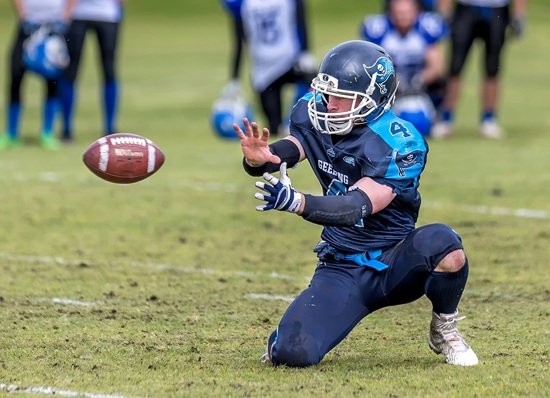
As cannabis policies evolve in professional football, researchers are investigating whether cannabinoids might offer neuroprotection against repetitive head trauma—but the science is still early.
Super Bowl week celebrates football’s spectacle, but it also brings renewed attention to the sport’s most sobering concern: what repetitive head impacts do to players’ brains over time. As the NFL has dramatically loosened its cannabis policies and players increasingly turn to cannabinoids for symptom relief, a bigger question has emerged—could cannabis actually protect against the brain damage that leads to chronic traumatic encephalopathy (CTE)?

Here’s what the science shows, where the gaps remain, and why this question matters for athletes at every level.
Understanding CTE in Context
CTE is a degenerative brain disease that can only be definitively diagnosed after death through brain examination. Boston University’s CTE Center maintains the world’s largest brain bank dedicated to this research, and their findings have reshaped how we think about football and brain health.
The numbers look alarming at first: BU researchers found CTE in nearly 92% of 376 former NFL players whose brains were donated for study. But here’s something important—there’s significant selection bias in these findings. Families tend to donate brains when they suspect something was wrong, so this doesn’t mean 92% of all NFL players will develop CTE.
What makes CTE particularly insidious is that it’s not just about major concussions. BU’s research shows that cumulative exposure to subconcussive impacts—the routine hits that happen on nearly every play—may contribute significantly to long-term neurological problems. This finding has profound implications for youth and college football, where repetitive head impacts begin affecting brain structure years before players reach the pros.
Cannabis for Symptoms vs. Cannabis for Protection
Many former NFL players have publicly shared their experiences using cannabis to manage chronic pain, sleep problems, and mood issues after their playing careers. These testimonies are meaningful and reflect real experiences, but it’s crucial to separate symptom management from potential neuroprotective effects.
Cannabis use among current and former players for pain relief appears widespread, based on comprehensive information gathered by the Concussion Alliance. Players report that cannabis helps them reduce reliance on opioids and manage the physical toll of a football career. That’s valuable—but it doesn’t tell us whether cannabis prevents or slows CTE development. That’s a separate scientific question requiring controlled studies we don’t yet have.
The Neuroprotection Hypothesis: Early Science
The possibility that cannabinoids might offer neuroprotective benefits after head impacts is being explored, but the evidence remains preliminary. The endocannabinoid system plays a role in regulating inflammation, oxidative stress, and excitotoxicity—all processes that may contribute to brain damage after repeated trauma.
Research published in Brain Imaging and Behavior found that cannabis use was associated with different patterns of subconcussive neural injury in athletes exposed to repeated heading in soccer. While this study doesn’t prove cannabis is protective, it suggests cannabinoids may modulate brain responses to repetitive impacts.
An analysis in the American Journal of Endocannabinoid Medicine explored theoretical mechanisms by which cannabinoids might support brain health in NFL players, including anti-inflammatory effects and potential reduction of neuronal damage. But these remain hypotheses rather than proven therapeutic benefits.
What We Still Don’t Know
Does cannabis use change long-term CTE risk in football players? If there are protective effects, which cannabinoids, doses, and timing matter most? Could there be downsides for athletic performance or brain development in younger players?
No large-scale clinical trials have demonstrated that cannabis prevents CTE in football players. The current evidence is hypothesis-generating, not conclusive.

Player-Driven Research and Policy Evolution
Former NFL players haven’t just shared their experiences—some have actively partnered with researchers to advance the science. Calvin Johnson, the legendary “Megatron,” partnered with Harvard-affiliated researchers to study marijuana for CTE, bringing high-profile attention and funding to this emerging field.
Meanwhile, NFL cannabis policy has transformed dramatically. The league’s 2020 collective bargaining agreement ended suspensions for positive cannabis tests, and recent changes increased the THC testing threshold from 150 ng/ml to 350 ng/ml while reducing fines. NFL Chief Medical Officer Dr. Allen Sills has acknowledged that the league’s approach has become more research-driven, with joint NFL-NFLPA funding for studies on CBD for pain management and potential neuroprotection.
The College and Youth Question
The conversation around cannabis and brain health in college football is complicated by different policy environments. NCAA rules differ from NFL collectively bargained policies, and state-level cannabis laws add another layer of complexity.
Evidence suggests that repetitive head impacts during high school and college years may contribute to later CTE development, meaning protection during these formative years could be crucial. However, studying cannabis use in younger athletes raises additional ethical and legal questions that researchers must navigate carefully.
Looking Ahead
As Super Bowl week reminds us of football’s incredible spectacle, it also highlights our responsibility to protect the athletes who create it. The conversation about cannabis and CTE is evolving from stigma to science, with researchers, players, and leagues increasingly willing to investigate potential benefits while maintaining appropriate skepticism.
Current evidence doesn’t support claims that cannabis “treats” or “cures” CTE. At best, it suggests cannabinoids may be worth studying as one piece of a larger approach to protecting athlete brain health. In-vivo biomarkers and imaging methods continue to advance, offering hope for earlier CTE detection. Cannabis research is moving forward through player-driven initiatives and league-funded studies.
But we’re still in the early innings of understanding whether cannabinoids can meaningfully protect football players’ brains. For anyone concerned about their own brain health or experiencing symptoms, consulting qualified healthcare providers remains essential. The science will continue to develop, but for now, the relationship between cannabis and CTE protection in football remains an open question—one worth asking, worth studying, and worth getting right.


Sign up for bi-weekly updates, packed full of cannabis education, recipes, and tips. Your inbox will love it.