

 Merch
Merch Medical card
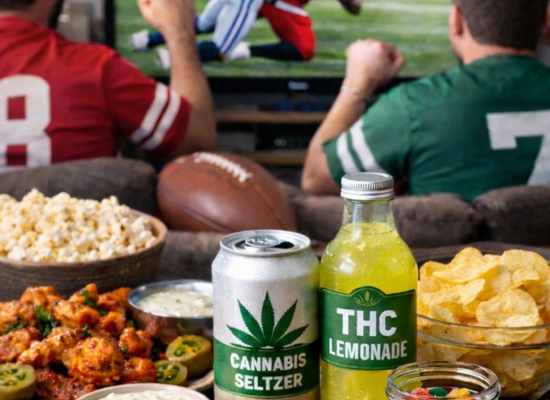
Every February, America performs the same ceremony: it gathers around televisions large enough to qualify as furniture and consumes foods best described as “architecturally ambitious.” The Super Bowl is not merely a sporting event; it is a national eating contest with intermittent football.
This year’s game carries a subplot that would once have caused handwringing in league offices and fainting in congressional hearing rooms: the teams come from Washington State – The Seattle Seahawks and Massachusetts – The New England Patriots both legal cannabis states, and the game is being played in Sanat Clara, California, also legal. Three jurisdictions. One championship. Zero pearl-clutching.

In the 1990s, this alignment might have been treated as a moral emergency. In 2026, it is treated as weather.
Professional sports once regarded cannabis with the same suspicion they reserved for performance-enhancing drugs and disco music. Players were tested. Suspensions were handed out. Speeches were made.
Then the evidence accumulated.
Roughly 50% of retired NFL players report chronic pain, according to Harvard Medical School–affiliated research. Opioid use among former players has been well documented. Cannabis, meanwhile, showed promise for pain, inflammation, and sleep without suppressing breathing or ending careers in pharmacy aisles.
So, leagues adapted. The NFL eliminated in-season testing for THC in 2020 and raised the threshold for positive tests. The NBA removed marijuana from its list of drugs of abuse. Major League Baseball did the same in 2019. The sky did not fall. The players did not forget how to tackle. Television ratings did not turn into ambient noise.
What changed was the framing: cannabis stopped being treated as rebellion and started being treated as recovery.
This is not ideology. It is occupational health.
Ricky Williams, Accidental Prophet
Few people embody this shift more clearly than Ricky Williams. Once suspended and portrayed as a cautionary tale, he is now a cannabis entrepreneur and wellness advocate who looks less like a problem case and more like a pilot study.
Williams speaks openly about cannabis helping him manage anxiety and physical pain. He has been joined, if more discreetly, by dozens of other current and former players. The message is no longer “I broke the rules.” It is “I extended my career.”
In an industry that measures success in games played and ligaments preserved, that argument travels well.
The Party Already Knows
The cultural transition is most visible not in locker rooms but in living rooms.

Super Bowl parties have always been logistical marvels: foods that melt, spill, and require engineering degrees to transport from kitchen to couch. Cannabis has slipped into this ecosystem without much fuss.
In legal states, infused seltzers now sit beside beer. Gummies share space with chips. Hosts issue dosage warnings with the same tone they use for extremely spicy wings. The ritual is no longer subversive. It is courteous.
The numbers suggest this is not anecdotal. U.S. cannabis sales reached roughly $33 billion in 2024, according to industry estimates. Edibles and beverages are among the fastest-growing categories. Consumers are not abandoning snacks; they are upgrading the occasion.
Food companies have noticed. They understand that cannabis consumers retain their interest in queso. In fact, they may become unusually loyal to it. The relationship between cannabis and party food is not philosophical. It is biochemical.
California as Neutral Ground
That the game is being played in California feels symbolically tidy. The state legalized cannabis in 2016. Cannabis became part of the lifestyle economy sold next to yoga pants and cold brew.
Fans flying in from Washington or Massachusetts will not experience cultural shock. They will experience better packaging.
What once would have been described as a contradiction football and cannabis is now simply a geographic overlap.
Advertising: The Last Holdout
Cannabis will not appear in Super Bowl commercials this year. Federal law still draws a thick line between legal states and national broadcasters. But culturally, the gap is narrowing.
Alcohol companies advertise restraint. Sports betting companies advertise responsibility. Cannabis companies, for now, advertise on podcasts and billboards.
This arrangement will not last forever. When cannabis advertising does arrive on football’s biggest stage, it is unlikely to involve tie-dye fonts or reggae bass lines. Expect lab coats. Expect phrases like “recovery” and “ritual.” Expect something that looks suspiciously like a pharmaceutical commercial but with better lighting.
The first cannabis Super Bowl ad will not feel rebellious. It will feel overdue.
The Quietest Revolution
The story here is not that cannabis has conquered football. It is that football has adapted to a country that has already changed.
About 24 states now allow recreational cannabis. Roughly 74% of Americans live in a state where marijuana is legal in some form. The average NFL roster is a cross-section of that population. Prohibition has become administratively awkward. Cannabis did not make athletes worse. It did not make fans forget the score.
Historically, that is how substances gain acceptance: not by being celebrated, but by being regulated, taxed, and sold in packaging with child-proof lids.
Kickoff, With a Side of Normalcy
The Super Bowl remains a festival of excess. It will involve wings. It will involve commercials people claim were better last year.
But beneath the spectacle, something subtle has occurred.
The teams come from legal states. The stadium sits in one. The league has softened its rules. The players have spoken. The food companies have adapted. The parties have already made room.
Cannabis is no longer waiting outside the stadium gates. It is just another guest at the table quietly, politely, checking the score and passing the guacamole.
Which may be the most American outcome of all.


Sign up for bi-weekly updates, packed full of cannabis education, recipes, and tips. Your inbox will love it.