

 Merch
Merch Medical card
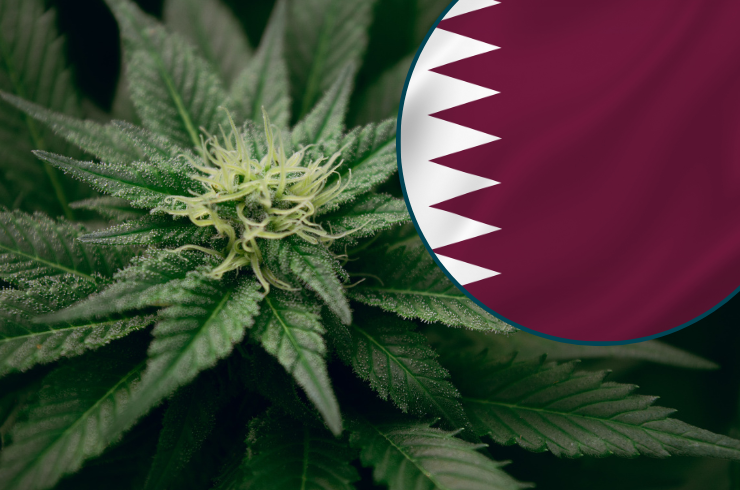
Quick answer: no. Cannabis is illegal in Qatar in every form, recreational and medical, and CBD is caught by the same prohibition. There is no personal-use exemption and no quantity that is treated as too small to charge. Possession for personal consumption carries 2 to 5 years in prison and a fine of QR 50,000 to QR 100,000, and foreign nationals are normally deported once a sentence has been served.
What Qatari law says about cannabis
Cannabis is controlled under Law No. 9 of 1987 on the Control and Regulation of Narcotic Drugs and Dangerous Psychotropic Substances, the statute that governs narcotics offences in Qatar. Herbal cannabis, cannabis resin and cannabis oil all sit on the schedules annexed to that law, so they are handled as narcotics rather than as a lesser category of drug.

That framework has been updated twice in recent years. Law No. 16 of 2023 amended provisions of the 1987 law, and Ministerial Decision No. 8 of 2026 amended Schedule No. 2 annexed to it. Qatari legislation is published through the state’s Al Meezan legal portal, and the Ministry of Public Health administers the controlled substances regime day to day.
Nothing in the current law softens the treatment of cannabis relative to other controlled drugs. What the quantity and the circumstances change is which penalty article the prosecution brings.
Penalties for cannabis possession and personal use in Qatar
Possessing cannabis for personal consumption carries 2 to 5 years in prison and a fine of QR 50,000 to QR 100,000 under Article 37 of Law No. 9 of 1987. The same article covers importing or cultivating cannabis where the intention is personal consumption rather than supply.
Article 37 also gives the court an alternative to prison. Where addiction is established, it may order commitment to a treatment facility for between three months and one year instead of a custodial sentence, with limits on how often that substitution can be repeated. It is a judicial discretion rather than an entitlement, and it is not something a visitor should plan around.
Small residual quantities are still prosecuted. The UK Foreign, Commonwealth and Development Office warns in its travel advice for Qatar that there is zero tolerance for drug offences, and that anyone possessing, using or smuggling illegal drugs, cannabis included, should expect a long prison sentence, deportation and heavy fines even where only residual amounts are found.
Penalties for cannabis trafficking, supply and cultivation
Trafficking carries 10 to 20 years in prison and a fine of QR 100,000 to QR 300,000 under Article 34, which covers importing or exporting cannabis with intent to traffic, producing or manufacturing it for trafficking, and cultivating controlled plants.
Article 35 sits below that and covers the supply tier: possessing cannabis for sale, or delivering, transporting or supplying it for consideration, draws 7 to 15 years and a fine of QR 100,000 to QR 200,000.
Where several of those acts are committed without a commercial purpose, the range falls to 3 to 7 years and QR 50,000 to QR 100,000. Penalties rise where a person under 18 is involved or where the offender is a public official.
When the death penalty applies
Capital punishment is reserved for repeat trafficking. Under Article 34, a person convicted of a further trafficking offence faces the death penalty or life imprisonment, alongside a fine of QR 300,000 to QR 500,000.
Qatar has not applied it to drug cases in recent years. Harm Reduction International’s global overview of the death penalty for drug offences, published in March 2026, places Qatar in the symbolic application category, meaning the penalty exists in law but no drug-related executions or death sentences were recorded there over the preceding five years.
The provision remains live law, and Qatar rejected Universal Periodic Review recommendations to abolish capital punishment.

Penalties at a glance
| Offence | Prison term | Fine | Legal basis |
|---|---|---|---|
| Possession, use, import or cultivation for personal consumption | 2-5 years | QR 50,000-100,000 | Law No. 9 of 1987, Article 37 |
| Possession for sale, or delivery, transport or supply for consideration | 7-15 years | QR 100,000-200,000 | Law No. 9 of 1987, Article 35 |
| Certain supply acts without a commercial purpose | 3-7 years | QR 50,000-100,000 | Law No. 9 of 1987, Article 35 |
| Import, export, manufacture or cultivation for trafficking | 10-20 years | QR 100,000-300,000 | Law No. 9 of 1987, Article 34 |
| Repeat trafficking offence | Death penalty or life imprisonment | QR 300,000-500,000 | Law No. 9 of 1987, Article 34 |
What a cannabis conviction means for foreign nationals
Deportation normally follows a custodial sentence, and it is usually paired with a long-term ban on returning. Most residents of Qatar are foreign nationals, so a large share of drug prosecutions involve expatriates, and a conviction generally ends the residence permit and the job the permit depends on at the same time.
Consular help has limits worth understanding before you need it. An embassy can visit, pass messages to family and supply a list of local lawyers. It cannot get charges dropped, arrange bail or shorten a sentence.
Is CBD legal in Qatar?
No. CBD is treated as a prohibited drug product in Qatar, with no legal retail market and no THC threshold that makes a product acceptable. The US State Department states in its Qatar country information that most drugs which are illegal in the United States are also illegal in Qatar, listing marijuana and THC, CBD products and vape products together.
That sweeps in items travellers rarely think of as drugs: CBD oil, CBD gummies, hemp-derived tinctures, balms and vape cartridges. Customs officers are not assessing these on cannabinoid content, so a CBD product bought lawfully in the UK, the United States or the EU becomes contraband the moment it arrives.
Travelling to Qatar with prescription and controlled medicines
Controlled medicines require a permit, and since 7 August 2026 that permit is applied for online. The Ministry of Public Health launched an electronic system on that date letting travellers apply in advance to carry controlled medicines for personal use and receive the permit electronically.
The ministry published a guidance list of 140 medicines covered by the system, made up of 61 narcotic medicines and 79 psychotropic medicines. Quantity caps apply: up to 10 days of prescribed treatment for narcotic medicines and up to 60 days for psychotropic ones.
An application needs a prescription and a medical report in Arabic or English issued within the previous six months, showing patient name, diagnosis, dosage and prescriber details, plus passport or identity documents and a signed declaration that the medicine is for personal use.
None of this opens a route for cannabis-based medicines. The permit system regulates listed pharmaceutical narcotics and psychotropics, not cannabis products.
Is there medical cannabis in Qatar?
No. Qatar operates no medical cannabis programme, no patient register and no licensed dispensing route. A prescription or authorisation issued elsewhere carries no weight: a US state medical marijuana card, a Canadian authorisation or a UK private prescription creates no defence under Law No. 9 of 1987.
Transiting through Hamad International Airport
Transit passengers are inside Qatari jurisdiction, which catches people out more often than any other scenario. The FCDO advice states that the penalties apply when transiting through the airport, and that airport security uses advanced technology to detect prohibited items in the baggage of all passengers, including those in transit.
The typical case is a layover in Doha on a route between two countries where the product involved is perfectly legal at both ends. Neither the origin nor the destination makes any difference once the bag is screened in Qatar.
Is Qatar’s cannabis law likely to change?
There is no current sign of it. The 2023 amendment to Law No. 9 of 1987 and the 2026 update to Schedule No. 2 both refined the administration of an existing prohibition rather than relaxing it, and no Qatari government body has put forward decriminalisation, a medical cannabis framework or a carve-out for CBD.
Anyone planning travel should treat the position as settled and check the current advice from their own government before flying, since the schedules annexed to the 1987 law can be amended by ministerial decision at any time.
Last reviewed: September 16, 2026.


Sign up for bi-weekly updates, packed full of cannabis education, recipes, and tips. Your inbox will love it.