
 Merch
Merch Medical card

Germany’s legalization data is in, and the results are more complicated than either side predicted. Here’s what 4/20 looks like from Berlin, Amsterdam, Prague, and Zurich in 2026.
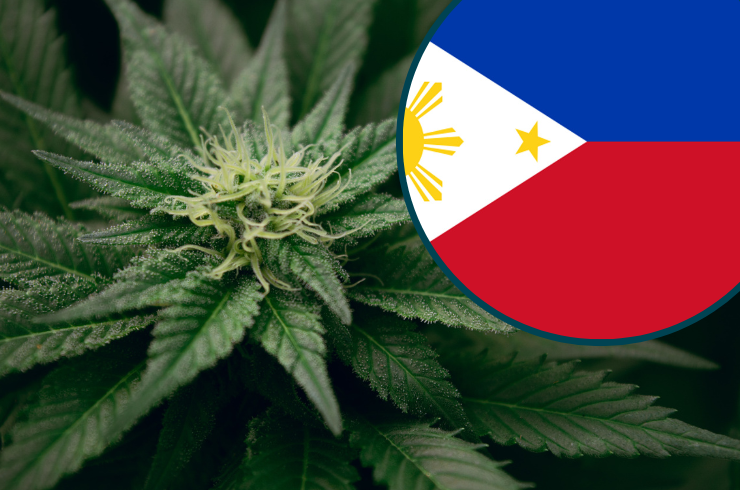
On 4/20 in 2026, cannabis legalization in Europe has moved from theoretical to operational — and the early data is more complicated than either side predicted. In 2026, nearly 50 countries have legalized cannabis to some degree, and regulated adult-use markets serve approximately 230 million people. Europe’s legal cannabis market tripled from €516 million in 2023 to €1.5 billion in 2025, with projections reaching €2.5 billion by 2027. Across the continent, the question on April 20 is less about whether cannabis policy reform is possible and more about whether it’s working.
The date that frames all of this started as a code word. Five high school students in San Rafael, California coined “420” in 1971 as shorthand for meeting after school to look for an abandoned cannabis crop. The code spread through the Grateful Dead touring circuit in the 1980s, then reached a global audience after High Times covered it in 1991, turning April 20 into an international counterculture marker. Those students’ postmarked letters and a “420” flag predate every competing origin myth, including the persistent but fictional claim it derives from a police radio code.

Germany’s Cannabis Legalization: What Two Years of Data Shows
Germany passed the Cannabisgesetz (CanG) in February 2024. Phase 1 took effect April 1, 2024, allowing adults to possess up to 25 grams in public and 50 grams at home, cultivate up to three plants for personal use, and join non-profit cannabis social clubs of up to 500 members. Phase 2, a network of regional commercial sales pilots, has been stalled by political change and may not launch.
The federal government commissioned the EKOCAN research project, run by University Medical Centre Hamburg-Eppendorf, to evaluate outcomes. Its first interim report, released in fall 2025, documented a 60 to 80% drop in cannabis-related police offenses, with at least 100,000 fewer criminal cases in 2024 than the year before. Researchers called it the most significant quantitative decriminalization in the history of the Federal Republic.
A peer-reviewed study published in Lancet Regional Health – Europe in February 2026 covered the first eight months after CanG took effect. Researchers found no significant change in cannabis use rates or drug-impaired driving, and confirmed the 100,000-case reduction. Youth use did not increase. Concerns about a spike in public consumption and additional municipal burdens did not materialize.
Key findings from EKOCAN (2025–2026)
Cannabis offenses fell 60 to 80%. Adult cannabis use held stable. Youth use showed no statistically significant increase. Social clubs covered less than 0.1% of demand in 2024, leaving the illicit market largely intact.
The unresolved problem is market displacement. Social clubs face licensing delays and startup costs ranging from €100,000 to €1 million, which has kept supply far below demand. Legal sales account for roughly 6% of the total German cannabis market. With no commercial retail pathway in sight, most consumers still buy from illicit sources. Germany’s medical cannabis sector has grown to between 700,000 and 1 million patients, largely driven by telemedicine prescribing, but the adult-use supply gap remains the law’s central unresolved tension.
The CDU Review: Measured Caution, Not Rollback
Germany’s new CDU/CSU-SPD coalition, which took office in May 2025, pledged to evaluate CanG in autumn 2025. Bavaria’s CSU pushed for full repeal. It did not prevail. The coalition agreement kept the existing legal framework in place and committed to evidence-based policymaking, with the Federal Drug Commissioner explicitly referencing the EKOCAN evaluation before any further decisions. The second EKOCAN interim report, released April 2026, added: a 300% increase in home cultivation, stable youth use, and a police workforce increasingly freed from cannabis enforcement.
Rollback remains possible. A government that wanted to act on CSU pressure could do so after the evaluation. The more likely scenario, given the data trajectory, is incremental adjustment rather than repeal.
How Europe’s Cannabis Legalization Laws Compare in 2026
Germany’s experience sits within a broader set of European experiments, each with a distinct model.
| Country | Framework | Possession Limit | Retail Sales? |
|---|---|---|---|
| Germany | Personal use + social clubs | 25g public / 50g home | No (Phase 2 stalled) |
| Netherlands | Coffeeshops + regulated supply chain trial | 5g at coffeeshop | Yes (licensed growers, trial cities) |
| Czechia | Personal use + home grow | 25g public / 100g home | No |
| Switzerland | Federal pilot programs | Varies by pilot | Pilot only (pharmacies, clubs, stores) |
Netherlands: One Year Into the Regulated Cannabis Supply Chain
On April 7, 2025, the Netherlands launched the experimental phase of its Controlled Cannabis Supply Chain, requiring coffeeshops in participating municipalities to sell only regulated cannabis from licensed growers. Hash supply created early friction. One year in, the ten licensed growers are delivering consistently and supply has stabilized. RAND Europe has framed the Dutch model as a useful comparative case alongside Vermont, Quebec, and Uruguay, noting that measurable evaluation goals are essential to any meaningful assessment.
Czechia: No Retail, Clear Limits
As of January 1, 2026, adults 21 and over in Czechia may grow up to three plants and possess up to 100 grams at home and 25 grams in public, with no retail sales permitted. The Czech government structured the law to comply with EU treaty obligations, drawing closely from Germany’s social club model while opting against any commercial pathway.
Switzerland: The Cannabis Pilot That May Define Europe’s Next Model
Seven federally sanctioned pilot programs are running across Swiss cities. Züri Can, Zurich’s pilot, has enrolled more than 2,300 participants and recorded around 88,000 legal transactions. Officials estimate approximately CHF 7.5 million withdrawn from the illicit market. Zurich has applied to extend the program through 2028. Switzerland is now tracking toward becoming Europe’s first fully regulated commercial adult-use market, possibly by 2026 or 2027.

What 4/20 Means for Cannabis Legalization in Europe
The European Union Drugs Agency’s 2025 Drug Report estimates Europe’s illicit cannabis market at €12.1 billion annually. Legal access, at current scale, has not displaced it. Germany’s social clubs reach less than 2% of adult consumers. The Netherlands’ pilot covers a fraction of national demand. Switzerland’s programs are deliberately small by design.
The equity dimension compounds this. Thousands of people remain incarcerated in jurisdictions where cannabis is now legal or decriminalized, disproportionately from Black and brown communities. Celebrations on April 20 in 2026 coexist with ongoing enforcement in places where reform has stalled entirely.
On 4/20 this year, Berlin’s cannabis social clubs will host their first formal celebration under legal access. Amsterdam’s licensed coffeeshops will sell regulated product for the first time. Prague residents can legally light up at home. Zurich’s pilot participants can walk into a pharmacy, a social club, or a licensed shop and buy without fear of arrest.
That represents a real shift. The data from Germany, the Netherlands, and Switzerland gives cannabis legalization in Europe its clearest early scorecard yet: legal access reduces criminal exposure without increasing youth use or public disorder. Supply gaps, illicit market persistence, and political vulnerability all remain real. April 20 in 2026 is not a victory lap for legalization advocates. It is a progress report, with more chapters still open.
Frequently Asked Questions
Which European countries have legalized cannabis?
Cannabis legalization in Europe now spans several national frameworks. Malta (2021), Luxembourg (2023), Germany (2024), and Czechia (2026) have all passed laws permitting adult personal possession, home cultivation, or non-profit cannabis social clubs. The Netherlands has operated a regulated coffeeshop model for decades and launched a closed supply chain trial in April 2025. Switzerland is running seven federally sanctioned pilot programs with a commercial adult-use market potentially on the horizon. The European Union Drugs Agency’s 2025 Drug Report documents the full range of current national frameworks.
Is cannabis legal in Germany in 2026?
Adults in Germany may legally possess up to 25 grams in public and 50 grams at home, cultivate up to three plants, and join non-profit cannabis social clubs of up to 500 members. No commercial retail sales are available; Phase 2 of the Cannabisgesetz, which would have created regional sales pilots, has been indefinitely stalled.
Has cannabis legalization in Germany led to more youth use?
No. Federal evaluation data from the EKOCAN research project and a peer-reviewed study in Lancet Regional Health – Europe both found no significant increase in cannabis use among children or adolescents following the April 2024 law. Youth use is one metric researchers and policymakers have watched most closely, and the available data shows it has remained stable.
Is cannabis legal in the Netherlands?
Cannabis has been sold through licensed coffeeshops in the Netherlands for decades. As of April 2025, coffeeshops in participating municipalities must source their supply from regulated, licensed growers as part of the Controlled Cannabis Supply Chain Experiment. Home cultivation and possession outside coffeeshops remain technically illegal under Dutch law, though enforcement has long been deprioritized.
Where is cannabis legal for adults in Europe in 2026?
Malta (2021), Luxembourg (2023), Germany (2024), and Czechia (2026) have all legislated some form of legal home growing, personal possession, or non-profit social clubs for adult use. The Netherlands operates a regulated coffeeshop supply chain trial. Switzerland runs federal pilot programs in multiple cities. No European country has yet opened a full commercial adult-use retail market, though Switzerland is the most advanced in moving toward one.
How did 4/20 become an international cannabis holiday?
The term “420” originated with a group of high school students in San Rafael, California in 1971. They used it as a meeting code. It spread through the Grateful Dead touring community in the 1980s and reached global awareness after High Times magazine published it in 1991. April 20 gradually became a date for public cannabis advocacy events, retail promotions, and cultural celebrations worldwide.


Sign up for bi-weekly updates, packed full of cannabis education, recipes, and tips. Your inbox will love it.