

 Merch
Merch Medical card
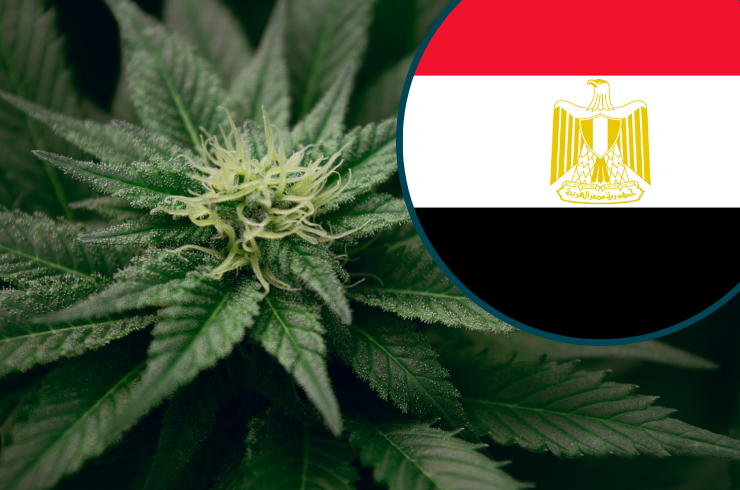
Quick answer: no. Cannabis and hashish are illegal in Egypt, and the penalties are among the harshest in the world. You may see hashish used openly in cafes and hear that “everyone smokes here,” but that is social tolerance, not legal safety. Egyptian drug law is fully available to prosecutors and is applied selectively, often against foreigners.
For a tourist, being caught with even a small amount can mean months in detention and a multi-year prison sentence with hard labour. This guide explains the law, the real risk at airports and resorts, and the prescription-medicine trap that has caught travelers who never touched cannabis at all.

Is marijuana legal in Egypt? The short legal answer
Marijuana is not legal in Egypt in any form. Cannabis and all its derivatives, including hashish, are prohibited narcotics under Decree-Law No. 182 of 1960, as amended by Law No. 122 of 1989.
There is no recreational allowance, no personal-use exemption, and no legal medical cannabis programme. The same statute covers possession, consumption, sale, cultivation and trafficking, with penalties escalating sharply by category.
The UK’s Foreign, Commonwealth & Development Office warns that “possession, use or trafficking of illegal drugs is a serious offence and can, even for small amounts, lead to life imprisonment or the death penalty”.
Penalties at a glance
Penalties for weed in Egypt depend on the alleged offence, and the most serious categories carry capital punishment. The table below summarises how the law is structured.
| Offence category | Penalty | Source |
|---|---|---|
| Trafficking, import/export or cultivation for trade (Article 33) | Mandatory death penalty plus fines of 100,000-500,000 EGP | Decree-Law 182/1960, Art. 33 |
| Possession or sale for trade (Article 34) | Death or life imprisonment with hard labour plus a fine; a court may impose imprisonment instead of death | Decree-Law 182/1960, Art. 34 |
| Possession or consumption for personal use | Multi-year hard-labour imprisonment plus heavy fines. Sources differ on the exact article: personal consumption cited under Article 37 (hard labour + 10,000-50,000 EGP fine), and unauthorised possession under Article 38(1) as “3 to 10 years of imprisonment with hard labour and a fine of 50,000 to 200,000 pounds” | Decree-Law 182/1960, Arts. 37-38 |
Cannabis or hashish trafficking can carry the death penalty in Egypt. That does not mean tourists are routinely executed for personal amounts of hash, but the ceiling of the law is genuine, and it exists. In 2019 Egypt’s cabinet approved expanding capital punishment for trafficking synthetic substances, underscoring how aggressively the state treats drug crime.
Egyptian weed and hash: why local use is not a green light
Widespread hashish use in Egypt is real, but it reflects social tolerance rather than legal protection. Hashish is Egypt’s most-used illicit drug and is deeply culturally embedded.
A peer-reviewed study (PubMed Central, PMC8285707) found that hashish was used by 96.5% of the cannabinoid users studied, that cannabinoids were the most commonly used illicit drug, and that roughly 10.4% of the population was estimated to use drugs.
None of that changes the statute. The harsh law remains fully available to prosecutors and is applied selectively, and foreigners are a favoured target. Seeing locals smoke gives a tourist no defence whatsoever.
Is weed illegal for tourists in Egypt? The real risk
Yes, and tourists face heightened, not reduced, exposure. Foreign nationals are prosecuted under the same law as Egyptians, and consular help is limited.
The US State Department warns that “Egyptian police can stop, question, and detain people without cause,” that “suspects can be held for months without charges,” and that drug offences carry severe penalties including life in prison or the death penalty.
Australia’s Smartraveller is equally blunt: “possessing illegal drugs can lead to the death penalty, long prison sentences or deportation”.

Ignorance of Egyptian law is not a defence. In one documented case the court held that a defendant’s ignorance “did not exempt her from legal liability”. Believing a substance was legal at home carries no weight in an Egyptian court.
Airports and customs are the highest-risk point
The airport is where most tourists get caught, not the resort strip. Customs screening at Cairo, Hurghada and Sharm el-Sheikh is the critical chokepoint, and anything found in your luggage on arrival is discovered before you can even reach your hotel.
Resort areas such as Sharm el-Sheikh, Dahab and Hurghada, along with the wider Sinai, carry added scrutiny. Do not assume tourist zones are lightly policed.
Consular help cannot override an Egyptian court
Your embassy cannot get you out of a drug prosecution. Penalties apply identically to foreigners, and consular intervention cannot override proceedings. Consular officers can monitor welfare and provide lists of lawyers, but they cannot change the outcome of your case.
Is CBD legal in Egypt? Treat it as prohibited
CBD is not a safe alternative in Egypt and should be treated as prohibited and high-risk. There is no reliable legal carve-out and no published THC-threshold framework that makes CBD “legal below X%.”
The US State Department groups CBD with medical marijuana and warns that “U.S. citizens have been arrested and convicted when entering Egypt with medical marijuana and CBD products even with a prescription”.
Do not bring CBD oils, gummies, vapes or hemp products into Egypt. A foreign prescription is not a defence and is itself an arrest risk. There is no medical cannabis exception in Egyptian law.
The prescription-medicine trap: the case tourists should study
Some common Western medicines are controlled substances in Egypt, and this, not recreational cannabis, is how many innocent travelers get into serious legal trouble. The UK FCDO warns that “some prescribed and over-the-counter medicines may be controlled substances in Egypt. You may need permission from Egypt’s Ministry of Health before you arrive… you may be prosecuted”.
The most-cited cautionary example is Laura Plummer, a UK tourist. To be clear, her case was about the prescription painkiller tramadol, not cannabis. She was arrested on 9 October 2017 at Hurghada carrying 290 tramadol tablets and sentenced on 26 December 2017 to three years and a 100,000 EGP fine, convicted under Law 182 of 1960 as amended in 1989; she was later pardoned and released in early 2019.
Her case matters here because the same statute governs cannabis, and the same principle applies: intent and foreign legality are irrelevant. If you take regular medication, carry a doctor’s letter stating your condition, dosage and personal use, and check with the Egyptian embassy or Ministry of Health before you travel.
A brief history of hashish in Egypt
Hashish has deep historical roots in Egypt, but so does its prohibition. Egypt banned the importation and use of cannabis around 1879 and later championed international cannabis control at the League of Nations. The tension between longstanding cultural use and strict legal prohibition is not new, it is more than a century old.
Conclusion: is weed legal in Egypt for travelers?
No. Weed is illegal in Egypt, and the legal risk to tourists is severe. Personal-use possession can bring multi-year hard-labour imprisonment and heavy fines, trafficking can carry the death penalty, and detention without charge for months is documented.
Local hashish use is common, but that is social tolerance, not legal safety, the law can and does fall hardest on foreigners. Do not carry cannabis, hashish or CBD into or within Egypt, and clear any prescription medicines in advance. The safest choice for any traveler is simple: leave it all at home.
Last reviewed: August 14, 2026. Cannabis laws change frequently, always verify current rules with official sources before you travel.


Sign up for bi-weekly updates, packed full of cannabis education, recipes, and tips. Your inbox will love it.