

 Merch
Merch Medical card
A practical guide to what autoflowering cannabis is, how it developed, and how its pros and cons play out on urban balconies, patios, and outdoor gardens.
You’ve got a balcony, a small patio, or a compact backyard. You live somewhere with a short growing season, unpredictable weather, or neighbors who notice everything. You want to grow cannabis outdoors, but you don’t want to spend six months tending a plant that towers over your fence. If that sounds familiar, autoflowering cannabis might be exactly what you’re looking for.

Autoflowers aren’t a new concept, but they’ve changed dramatically over the past decade. Understanding where they come from, and what they can and can’t do, helps you decide whether they’re right for your space and goals.
Where Autoflowering Cannabis Comes From
To understand autoflowers, you need to meet their ancestor: Cannabis ruderalis, a wild-type cannabis form native to Central and Eastern Europe and Russia. Russian botanist D.E. Janischewsky first formally described ruderalis as a distinct cannabis type in 1924, after observing weedy, low-growing plants in the Volga region.
Unlike sativa and indica relatives, ruderalis evolved under harsh conditions: short summers, poor soils, and dramatic temperature swings. Its key adaptation was flowering based on age rather than day length, a survival strategy that let it complete its life cycle before cold weather arrived. That trait is the genetic foundation of every autoflowering cultivar available today.
Breeders recognized ruderalis’s potential early on, crossing it with indica and sativa cultivars to blend age-triggered flowering with better potency and flavor. Modern autoflowering strains typically begin flowering around three to four weeks after germination and finish in roughly eight to ten weeks from seed outdoors.
What “Autoflowering” Actually Means for Outdoor Growers
The practical upside is simple: autoflowers don’t need you to adjust their light cycle. Outdoors, that means you don’t have to worry about the natural photoperiod, light pollution from nearby buildings, or timing your plant to the autumn equinox. The plant flowers when it’s developmentally ready, regardless of what the sky is doing.
That simplicity opens the door to multiple harvests per season. In a temperate climate, many growers run two or even three successive cycles in the time a single photoperiod crop would take from seed to harvest.
A note on potency: Early ruderalis genetics and first-generation autoflowers were known for low THC and unremarkable terpene profiles. That reputation no longer holds. Modern autoflowering cultivars have closed much of the gap with photoperiod strains through selective breeding, with many reaching potency and flavor complexity that would have been unthinkable in the early autos of the 2000s.
Autoflowers vs. Photoperiods: What Changes Outdoors
| Factor | Autoflowers Outdoors | Photoperiods Outdoors |
|---|---|---|
| Flower trigger | Age-based; no light management needed | Day-length based; needs natural short days |
| Time seed to harvest | ~8–10 weeks for most strains | 4–6+ months depending on veg and cultivar |
| Yield per plant | Lower per plant; more seasonal runs possible | Higher per plant with full veg period |
| Height and stealth | Compact, easier to conceal on patios | Can grow tall and visible; wind-sensitive |
| Climate fit | Ideal for short seasons and marginal climates | Best with long, reliable sun and warmth |
| Training flexibility | Low-stress methods only | Tolerates topping and heavier pruning |
| Potency and terpenes | Improved significantly; many match photoperiods | Historically broader top-end selection |
Yield comparisons between autos and photoperiods often come down to this: individual plants produce less, but total seasonal output can be competitive when you factor in multiple harvests per growing window.
Honest Pros and Cons for Urban and Outdoor Growers
Advantages
- Speed: Eight to ten weeks from seed to harvest means faster results and more flexibility.
- Compact size: Plants stay short and manageable on balconies, patios, and small yards.
- No light-cycle management: Autos flower regardless of surrounding light conditions.
- Resilience: Ruderalis genetics can improve tolerance to cold snaps and variable weather.
- Multiple harvests: Two or three cycles per season are realistic in temperate climates.
Limitations
- Lower yield per plant: Shorter veg phases mean smaller individual harvests.
- Limited training: High-stress techniques can stunt autos; gentle low-stress training (LST) is safer and more compatible with their short veg window.
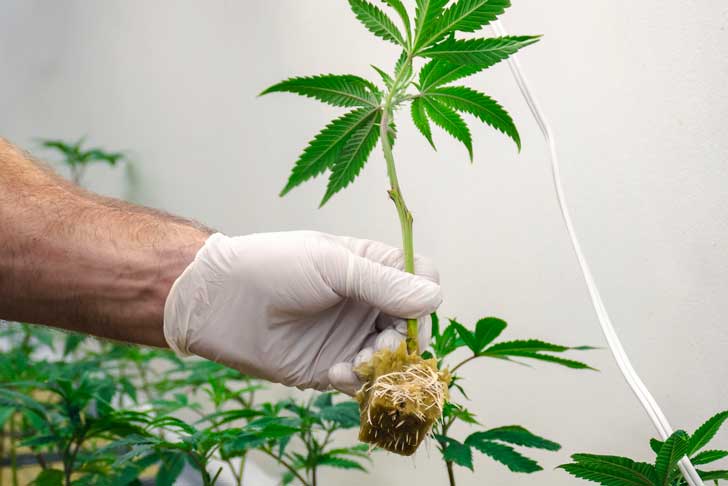
- No cloning: Cuttings inherit the plant’s age and flower almost immediately.
- Less control over size: You can’t extend vegetative growth by managing day length.
The yield and potency trade-off is the most common reason growers with ample space still prefer photoperiods. But for anyone dealing with space constraints, a short season, or a need for discretion, the math shifts decisively toward autos.
How to Grow Autoflowering Cannabis Outdoors
Growing autoflowers on urban balconies and patios
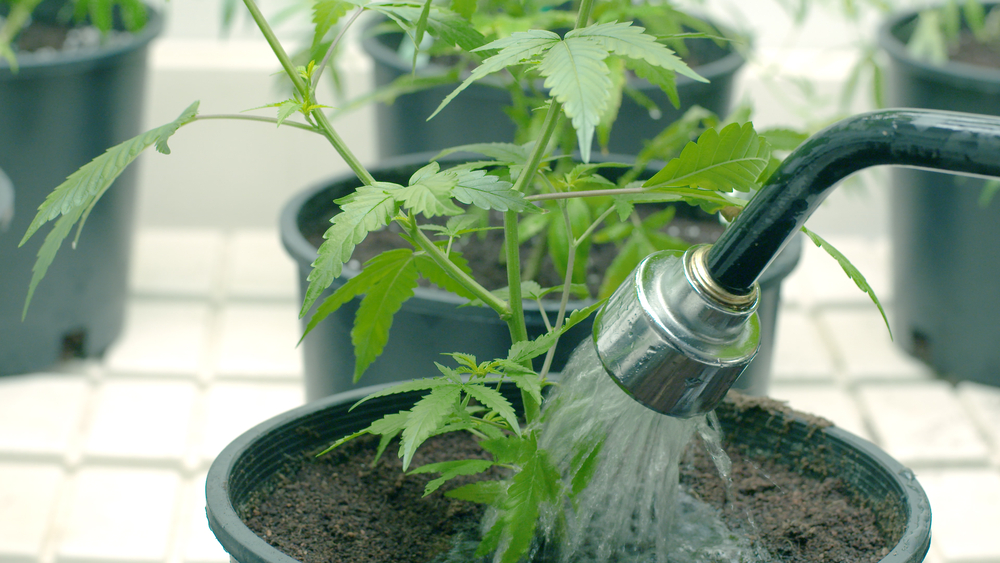
Containers are your most useful tool in an urban grow. Pots let you move plants to follow the sun throughout the day, shelter them from storms, and keep them out of sight when needed. Aim for the sunniest, most south-facing aspect your space offers. Autoflowers still benefit from 12–18 hours of light daily, so sun exposure matters.
Companion planting with herbs or ornamentals can help a rooftop or balcony grow blend into its surroundings without drawing attention.
Outdoor beds and gardens
Outdoor autos thrive in light, well-aerated soil with a slightly acidic to neutral pH around 5.5–7.0. Avoid heavy transplanting during their short vegetative stage: they don’t have much time to recover from root disturbance before flowering begins.
Staggering your grow cycles is one of the most effective strategies for outdoor cultivators. Starting seeds at different intervals through the season gives you a rolling harvest rather than one concentrated flush. In temperate climates, that might look like a spring run, an early summer run, and a late summer run, each finishing cleanly before the other begins.
Should You Grow Autoflowering Cannabis Outdoors?
Autoflowers aren’t the right choice for every grower. If you have abundant space, reliable long-season sun, and want the highest possible yield per plant, a photoperiod cultivar may still serve you better. But if you’re working with limited space, a short or unpredictable season, or just want the fastest path from seed to harvest, autoflowering cannabis offers a practical, increasingly capable option, one rooted in centuries of botanical resilience and refined by decades of dedicated breeding.
Start with a compact, well-reviewed modern cultivar. Give it good soil, consistent moisture, and as much sun as your space allows. Chances are, it’ll take care of the rest on its own.


Sign up for bi-weekly updates, packed full of cannabis education, recipes, and tips. Your inbox will love it.