

 Merch
Merch Medical card
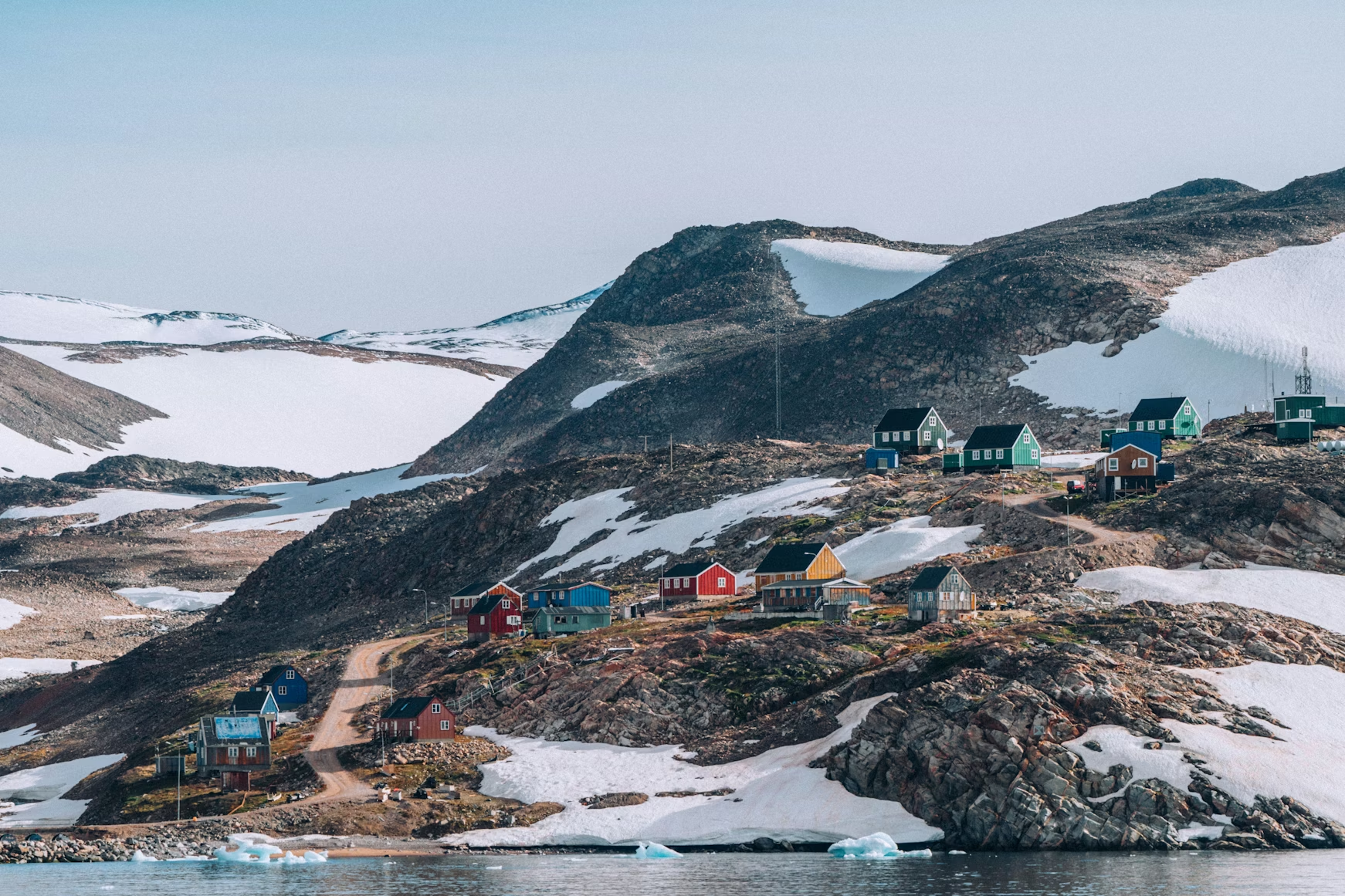
A playful tour of Greenland’s underground cannabis scene, from strict laws and sky-high prices to myths that grow in the polar night.
Imagine living in a place where winter darkness stretches for months, the nearest neighbor might be hours away by boat, and a single gram of cannabis costs roughly $59. Oh, and it’s completely illegal—but more than 40% of teenagers have tried it anyway.

Welcome to Greenland, home to 56,000 people scattered across the world’s largest island, some of the highest rates of cannabis use on the planet, and a completely underground market where everyone in your small town knows exactly what you’re up to. This is cannabis culture at 70 degrees north.
The Legal Reality
Cannabis is illegal in Greenland. As an autonomous territory within the Kingdom of Denmark, Greenland follows Danish drug laws that prohibit both recreational and medical cannabis use. There’s no legal retail market, no medical dispensaries, and no plans for legalization—a sharp contrast to shifting policies elsewhere.
Yet prohibition hasn’t stopped use. It’s created one of the world’s most unusual cannabis markets: expensive, entirely underground, and surprisingly widespread in communities where discretion is nearly impossible.
Getting High Where the Sun Don’t Shine
Here’s a wild stat: research from the early 2000s showed that more than 40% of 15-year-olds in Greenland had tried cannabis, with rates climbing since. For context, about 10% of adults use regularly. That’s higher than most places with actual dispensaries and delivery apps.
The reasons aren’t mysterious. Try being in a town of 300 people where winter darkness lasts months, your entertainment options are “ice fishing” or “different ice fishing,” and the nearest movie theater is a six-hour boat ride away. When you’re living through four months of polar night, the appeal of cannabis becomes pretty understandable.
The Economics: World’s Most Expensive Cannabis
Cannabis in Greenland can cost around $59 per gram—roughly 10 times the price in legal US markets. The extreme cost reflects brutal logistics: everything must be smuggled in via multi-leg journeys to communities accessible only by sea or air. With no local cultivation possible (winter temperatures regularly hit -30°C) and every gram carrying importation risk, cannabis becomes a prohibitively expensive luxury where many struggle financially.
This creates an economic paradox: sky-high prices haven’t suppressed demand, but they’ve likely shaped patterns of use in ways that differ from cheaper, more accessible markets. When a single joint costs what some people make in an hour, you’re probably not hotboxing your cousin’s garage.
Arctic Stoner Myths and Polar Night Legends
In a place where the sun doesn’t rise for months and your only neighbors are seals and the occasional polar bear, cannabis culture takes on its own mythology. There are whispered stories about the joint that supposedly burned through an entire polar night (that’s four months, for those keeping track). Tales of stash spots hidden in ice caves. The legendary “Northern Lights strain” that may or may not actually exist but makes for great conversation on a -30°C evening.
Unlike classic stoner comedy set in sunny California basements, Greenlandic cannabis lore involves scenarios like: “Dude, the hash is frozen solid” or “Can’t smoke outside, the wind chill is -50.” It’s a whole different vibe when your main concern isn’t “Do I have munchies?” but “Will my lighter even work in this weather?”
No Anonymity in Small Towns
In towns of a few hundred or thousand people, there are no secret smoke sessions. Everyone knows everyone—your cousin works at the store, your aunt teaches at school, your neighbor is on the town council. Word travels fast through actual social networks where people have known each other’s families for generations.
This creates social regulation completely different from urban anonymity, but also pressure. Unlike the stoner culture celebrated in warmer climates, cannabis use in Greenland happens without glossy branding, legal shops, or cultural celebration. It’s more discreet, more fraught with social consequences, and deeply tied to other community challenges.
What This Tells Us
Greenland’s cannabis situation demonstrates that high prices don’t prevent use—they just change who can afford it. Illegality doesn’t stop widespread adoption when other social factors are in play. Geographic isolation doesn’t equal isolation from global drug markets.
Perhaps most importantly, behind every statistic about youth cannabis use are real communities grappling with complex challenges that require thoughtful, culturally appropriate responses—not just law enforcement or simple prohibition.
The Bottom Line
Greenland’s relationship with cannabis is shaped by extreme isolation, Indigenous cultural contexts, astronomical prices, and the unique pressures of Arctic living. For anyone interested in global cannabis policy, Greenland offers a case study in how legal status, economic factors, and community context interact in unexpected ways. Sometimes the most interesting cannabis stories come from the least expected places—even the edge of the Arctic Circle.


Sign up for bi-weekly updates, packed full of cannabis education, recipes, and tips. Your inbox will love it.