
 Merch
Merch Medical card
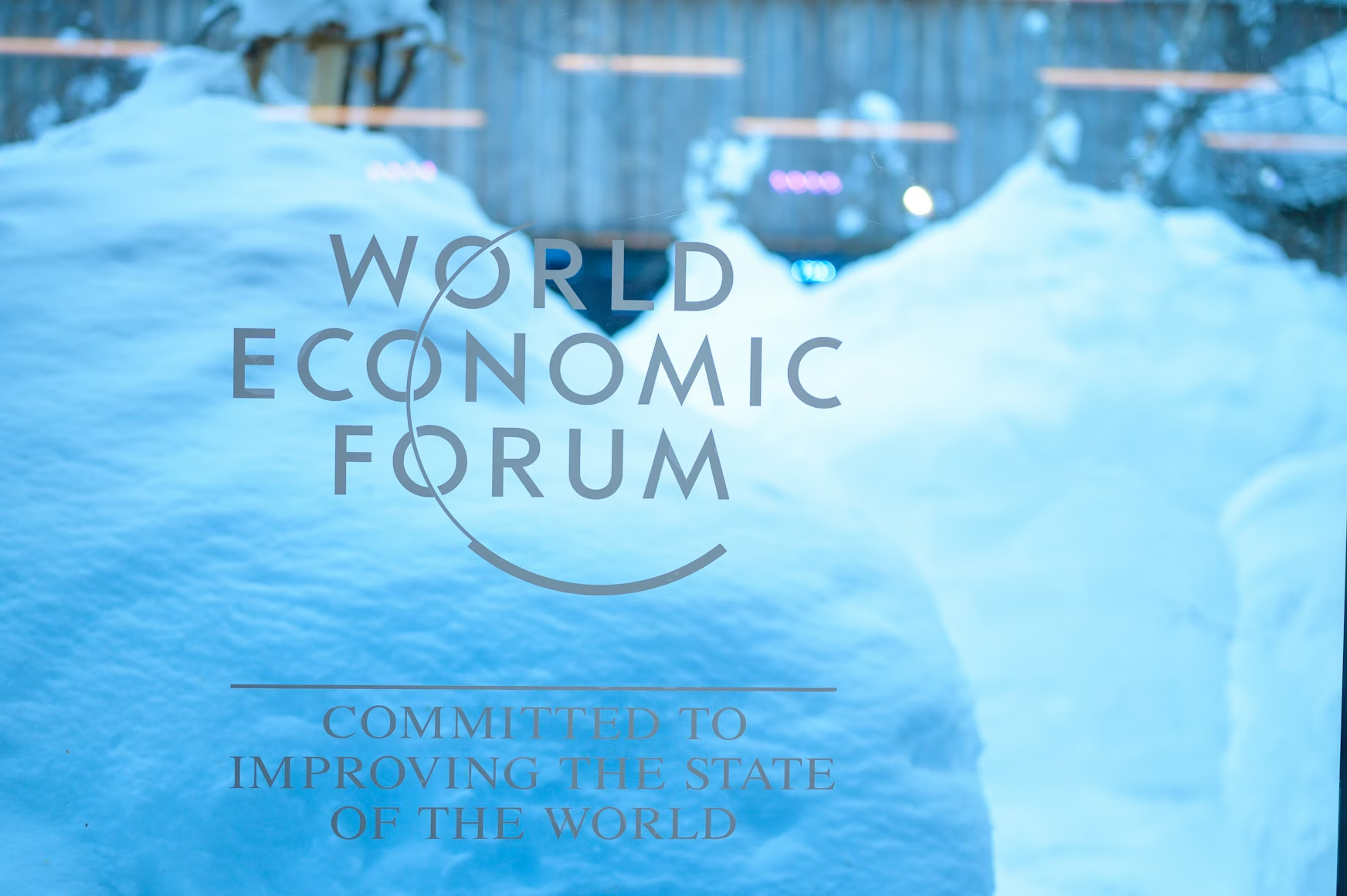
The World Economic Forum’s Annual Meeting in Davos has many rituals. There is the first snowflake selfie. The first panel declaring that “the world is at an inflection point.” The first CEO who insists they have come to “listen”.
This year the conference will be held January 19–23 2026, in Davos, Switzerland under the theme “A Spirit of Dialogue” that will need plenty of cannabis with the current world status.

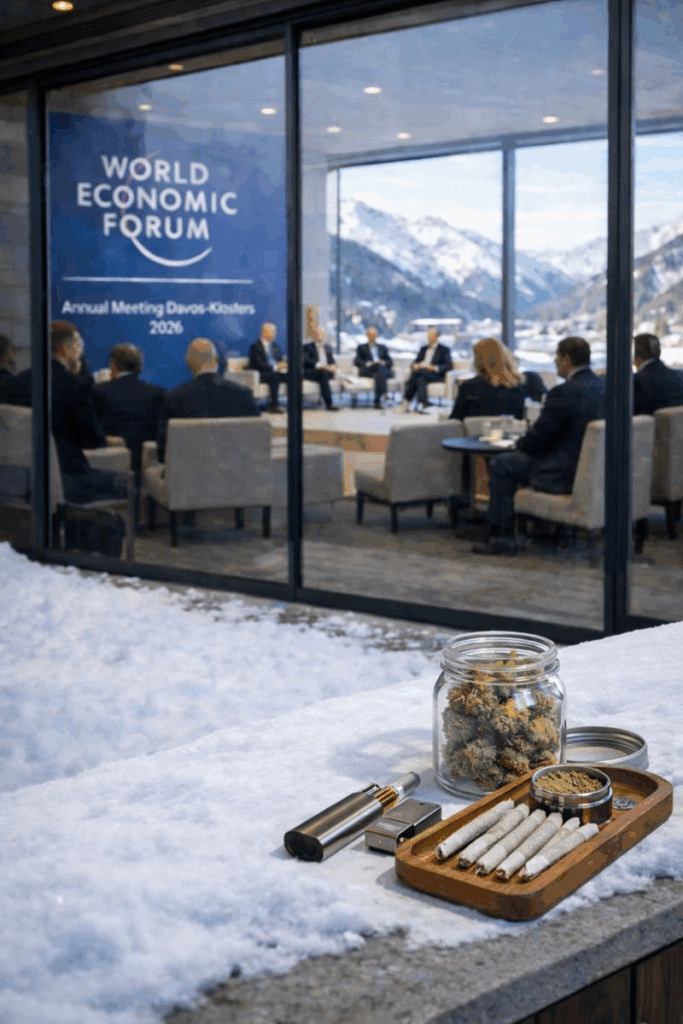
Not because the Forum has added a “Cannabis Track” (it hasn’t). Not because the Swiss have replaced fondue with gummies (they haven’t). But because Davos 2026 arrives amid an unusually bracing mix of geopolitics, trade friction, and technology anxiety conditions that reliably increase the global demand for two things: thinking and chilling out, 2 things cannabis helps with really well.
A record turnout expected:
WEF expects around 3,000 participants from 130+ countries, including roughly 60–64 heads of state and government and about 850 CEOs. The cast is familiar: presidents and prime ministers, central bankers, tech bosses, philanthropists, activists, journalists. Reuters notes the geopolitical temperature is higher than the Alpine altitude, with U.S. policy dominating corridor conversations. Davos is situated at an elevation of 1,560 meters (5,118 feet) above sea level. It is widely known as the highest town in the Alps and in Europe.
In previous years, delegates coped with war, inflation and climate dread by commissioning private meetings. In 2026, the addition of tariff threats, territorial brinkmanship, and the ever-present question of whether artificial intelligence will save productivity or replace it, has created a kind of collective tension.
In other words: ideal conditions for cannabis consumption at least among those who can do so legally, discreetly, and without becoming the subject of a media hit piece.
Who attends Davos, and why that matters for cannabis.
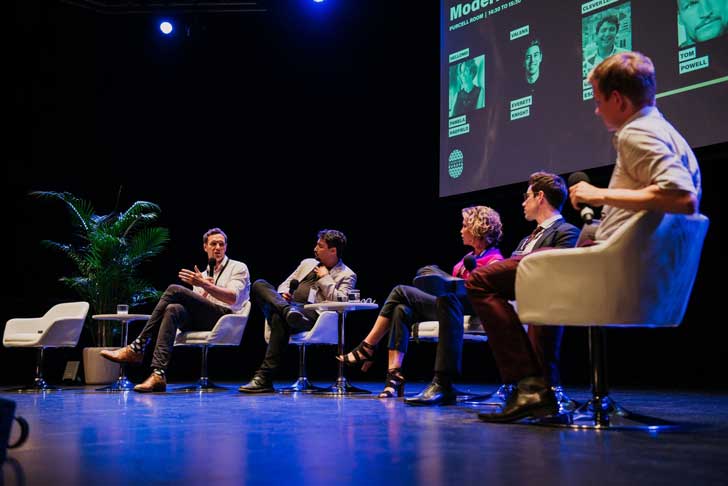
The Forum is often described as “the world’s most exclusive networking event,” which is a polite way of saying it is a temporary city-state of influence, powered by badges, black cars and the conviction that a fireside chat is a form of public service.
Attendees span:
- Political leaders (including dozens of heads of state and senior ministers)
- Business leaders (hundreds of CEOs, chairs and major investors)
- International organisations, civil society and academia
- Media (to explain, hourly, that Davos is out of touch, while attending Davos)
This mix matters because cannabis like everything else at Davos travels through networks. Not the sort that appears on an official agenda, but the kind that operates via whispers, introductions, and the miraculous global interoperability of the phrase “Do you know a guy?”
Davos is also where leaders speak endlessly about “resilience” while their schedules demonstrate remarkable resistance to sleep. Cannabis, for some, becomes a form of executive wellness: a way to turn the nervous system from “emergency summit” to “productive roundtable.”
Why 2026 will see “more cannabis consumption than any other year”
Davos demand is driven by three forces: stress, discretion, and supply. In 2026, all three point in the same direction.
- Stress is up.
The world has arrived in Davos with a sense that “polycrisis” is no longer a concept but a scheduling system. Trade disputes, security concerns, and the shifting geometry of alliances are now part of the baseline agenda. When uncertainty rises, so does the appeal of anything that makes one’s brain less interested in headlines. - Discretion is institutionalised.
Davos has perfected the art of discussing sensitive matters in ways that cannot be quoted, attributed, or even fully remembered. The same cultural technology applies to cannabis: nobody “consumes”
“It helps me sleep at altitude.”
“I use a very low-dose medical formulation.”
“It’s part of my recovery protocol.”
“It’s legal where I’m from.”
“I don’t drink during Davos.”
“It sharpens my listening.
- Supply is more global (and more normalised).
With medical frameworks in roughly 50 countries by at least one commonly used accounting, cannabis has become if not mainstream then at least bureaucratised. Bureaucracy is the first step to Davos acceptance. Once something has compliance paperwork, it is only a short ski ride from becoming a “stakeholder solution.”
If Davos is where the world’s leaders come to soberly confront global risk, then cannabis quietly, discreetly, and off-agenda may be the most widely shared coping mechanism at the conference.


The Davos cannabis index (a totally unserious metric)
To estimate consumption, one might construct a “Davos cannabis index” based on:
- 3,000 attendees
- Multiplied by the share from jurisdictions with medical legality (call it “large enough to matter”)
- Multiplied by the probability of stress-induced self-medication during a week of panels titled “The Future of Everything”
- Divided by Swiss indoor-smoking etiquette.
The resulting figure is, naturally, confidential but we conservatively estimate 25% or almost 800 people.
A closing thought, in the spirit of Davos
The Forum’s promise is that if you gather enough powerful people in one snowy place, they will coordinate to improve the world. Critics note that if you gather enough powerful people in one snowy place, they will mostly coordinate dinner reservations.
Cannabis will not resolve geopolitical tension, reform trade policy, or prevent AI from generating yet another “open letter” about AI. But it may help a few delegates discover the radical idea that listening, real listening, requires silence, patience, and perhaps some modest cannabis consumption.
In that sense, Davos’s unofficial commodity – cannabis -may be the only commodity that reliably delivers on the conference theme – A Spirit of Dialogue.


Sign up for bi-weekly updates, packed full of cannabis education, recipes, and tips. Your inbox will love it.