

 Merch
Merch Medical card

From regenerative Emerald Triangle farm tours to solar-powered grows, equity-built city trails, and a wave of eco-conscious 420-friendly hospitality, sustainability is becoming the defining edge of the fast-growing cannabis tourism economy.
Walter Wood walks visitors through the living-soil beds at Sol Spirit Farm in Trinity County, where cover crops cycle nutrients into the same ground that grows the cannabis served at the farm’s on-site dinners. Twenty miles down the road, another small grower hosts overnight stays under the redwoods. Five hours south, a self-guided trail through Oakland routes visitors past equity-owned dispensaries that exist because the city directed its first licenses to people from neighborhoods harmed by prohibition. These are the ingredients of sustainable cannabis tourism, a fast-growing segment of the visitor economy that has started to define itself by environmental and social responsibility.
Cannabis tourism is one of the fastest-growing segments of the U.S. visitor economy. Proprietary market research from Grand View Research estimates the global market at roughly $10.2 billion in 2023 and on track for $23.7 billion by 2030, a 12.4% compound annual growth rate, with the United States driving more than half of the activity.1 The demographic powering that growth, mostly travelers between 25 and 44, overlaps with the cannabis wellness travel and experiential audiences that already book trips around eco-conscious operators. Sustainable cannabis tourism has become the lane that destination marketers and operators are leaning into.

The Sustainability Stack
Regenerative organic cultivation, sun-grown supply chains, recyclable and compostable packaging, LED and solar-powered grow operations, equity-licensed dispensaries, and walkable consumption-lounge infrastructure are the building blocks operators are using to compete for the eco-conscious cannabis traveler.
Regenerative cannabis farming: the supply chain behind sustainable tourism
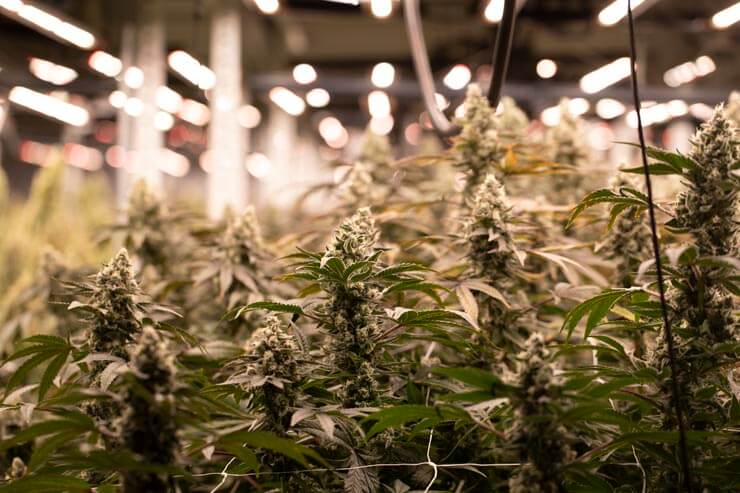
The biggest sustainability story upstream of cannabis tourism is the rise of regenerative organic cultivation. Sun+Earth Certified, the nonprofit third-party standard launched in 2019 with backing from Dr. Bronner’s, has certified more than 60 farms across California’s Emerald Triangle, Oregon, Washington, Michigan, and Vermont, where Rebel Grown became the East Coast’s first certified operation in 2024.2 The standard goes beyond USDA organic by requiring three pillars: regenerative earth care with living soil and no synthetic inputs, fair labor for farm workers, and active community engagement. Peer-reviewed life-cycle analysis published in Cell Reports Sustainability in 2025 found that shifting more cannabis production outdoors could reduce industry-wide emissions by as much as 76%.
Cannabis farm tours, retreats, and eco-conscious hospitality
Cannabis tourism operators have built experiences around those farms. Humboldt Cannabis Tours pairs licensed Emerald Triangle outdoor farm visits with redwoods hikes; Emerald Farm Tours runs multi-day overnight routes through Mendocino, Humboldt, and Trinity counties; Sol Spirit Farm & Retreats offers off-grid glamping with farm-to-table meals from on-site produce, eggs, and meat. The Cannabis Travel Association International’s consumer survey found that more than 70% of polled cannabis travelers want to tour a cultivation site, attend an infused dinner, or book an infused massage. Eco-conscious hospitality has followed: Mine + Farm in Guerneville runs as a solar-powered Kind Travel partner inn sourcing food from its own garden, and Cape Town’s Hemp Hotel is built from hempcrete blocks made with industrial hemp.
Sustainable cannabis packaging and dispensary recycling programs
Sustainable packaging is the most visible touchpoint for cannabis tourists. A wave of operators now produces hemp-plastic and ocean-reclaimed plastic containers, biodegradable pre-roll tubes, and recyclable glass drams designed without adhesives. Dispensary-level recycling programs have followed. Trulieve’s TruRecycle has collected and processed more than 3,500 pounds of cannabis packaging across Florida, shipped carbon-neutral through UPS. Maryland’s High 5 Initiative connects roughly 40 dispensaries to a coordinated take-back program. Vermont and New York have moved at the policy level, banning single-use plastic and requiring post-consumer recycled content respectively.
How cannabis grows are going green: LEDs, solar, and federal energy programs
Indoor and mixed-light grow operations are decarbonizing faster than the headlines suggest. Solar Cannabis Company, a Massachusetts operator running entirely on rooftop solar, has reported flower-weight gains alongside the state’s tight electricity caps after converting from HPS to LED lighting. Trade reporting puts LED-versus-HPS efficiency gains in the 20 to 30% range in kilowatt-hours, with cascading HVAC savings. The USDA’s Rural Energy for America Program, boosted by Inflation Reduction Act funding, now offers grants up to $500,000 for energy efficiency upgrades and $1 million for on-site renewable energy systems. Rural cannabis cultivators have begun routing solar-plus-battery buildouts through those grants.
Destination stewardship and the Oakland model
Visit Oakland’s Cannabis Trail and its “This 420 Choose Equity” campaign have set the benchmark for socially sustainable cannabis tourism. The self-guided trail routes visitors past Blunts + Moore (the country’s first equity-licensed dispensary), Eco Cannabis, The Peakz Co., Root’d in the 510, and Padre Mu, and earned a top-three US Travel ESTO recognition, a CLIO Award, and a Condé Nast Traveler 2024 Bright Ideas in Travel listing. Destinations International, the global trade body for tourism bureaus, has formally positioned cannabis tourism within its destination-stewardship and sustainability framework, treating economic equity, community wellbeing, and environmental responsibility as inseparable. Peer-reviewed tourism research has begun applying shared-value theory to the model, arguing that cannabis tourism can deliver economic returns alongside social and environmental ones.
Cannabis consumption lounges, walkable cities, and the conscious traveler’s toolkit
Consumption lounges are making cannabis tourism look more like wine or coffee tourism. California’s AB 1775 took effect in January 2025, enabling cannabis cafés that serve non-infused food alongside live entertainment. Nevada, New Jersey, Massachusetts, New York, Michigan, and Illinois have moved in similar directions. The cumulative effect is a shift toward walkable, transit-accessible cannabis itineraries instead of the dispensary-to-rental-car model of the early legal years.
What conscious travelers can look for
- Sun+Earth Certified or Certified Kind labels on dispensary flower for regenerative or organic cultivation.
- FSC certification on packaging paper, and ASTM D6400 or EN 13432 for genuinely compostable materials.
- Equity Trade Network membership for BIPOC, LGBTQ, and veteran-led brands.
- Sun-grown or mixed-light flower over fully indoor product where labeling allows the comparison.
- Equity-licensed dispensaries and lounges in destinations like Oakland that have built equity into their tourism programs.
The certifications, the supply chain, the destination programs, and the lounge infrastructure are all maturing in the same direction. Sustainable cannabis tourism is no longer a marketing layer painted onto conventional travel. It has become an industry the cannabis-curious traveler can plan a trip around.
Frequently Asked Questions
What makes cannabis tourism sustainable?
Sustainable cannabis tourism is travel that prioritizes environmental responsibility, social equity, and regenerative practices across the cannabis supply chain. It connects travelers to sun-grown cultivation, eco-conscious hospitality, recyclable or compostable packaging, and equity-licensed dispensaries and lounges. The most measurable signals come from third-party certifications like Sun+Earth Certified, Certified Kind, FSC for packaging, and the Equity Trade Network.

What does Sun+Earth Certified mean?
Sun+Earth Certified is a nonprofit third-party regenerative organic cannabis standard launched in 2019 with backing from Dr. Bronner’s. It certifies farms against three pillars: regenerative earth care with living soil and no synthetic inputs, fair labor for farm workers, and active community engagement. More than 60 farms are now certified across California’s Emerald Triangle, Oregon, Washington, Michigan, and Vermont.
Where can travelers book a regenerative cannabis farm tour?
California’s Emerald Triangle is the densest hub. Humboldt Cannabis Tours, Emerald Farm Tours, and Sol Spirit Farm & Retreats run licensed visits to regenerative outdoor farms in Humboldt, Mendocino, and Trinity counties, often paired with redwoods hikes, on-site organic meals, or glamping stays.
What is Visit Oakland’s Cannabis Trail?
Visit Oakland’s Cannabis Trail and its “This 420 Choose Equity” campaign route visitors through equity-licensed dispensaries, lounges, and cultural sites, channeling visitor spending toward businesses owned by people from communities harmed by cannabis prohibition. The program has earned a top-three US Travel ESTO recognition, a CLIO Award, and a Condé Nast Traveler 2024 Bright Ideas in Travel listing.
How can travelers identify genuinely sustainable cannabis brands?
Look for third-party certifications rather than marketing language alone. Sun+Earth Certified flags regenerative organic cultivation. Certified Kind covers organic standards. FSC certification verifies sustainable packaging paper. ASTM D6400 and EN 13432 distinguish genuinely compostable materials from look-alikes. The Equity Trade Network certifies BIPOC, LGBTQ, and veteran-led cannabis brands.


Sign up for bi-weekly updates, packed full of cannabis education, recipes, and tips. Your inbox will love it.