

 Merch
Merch Medical card
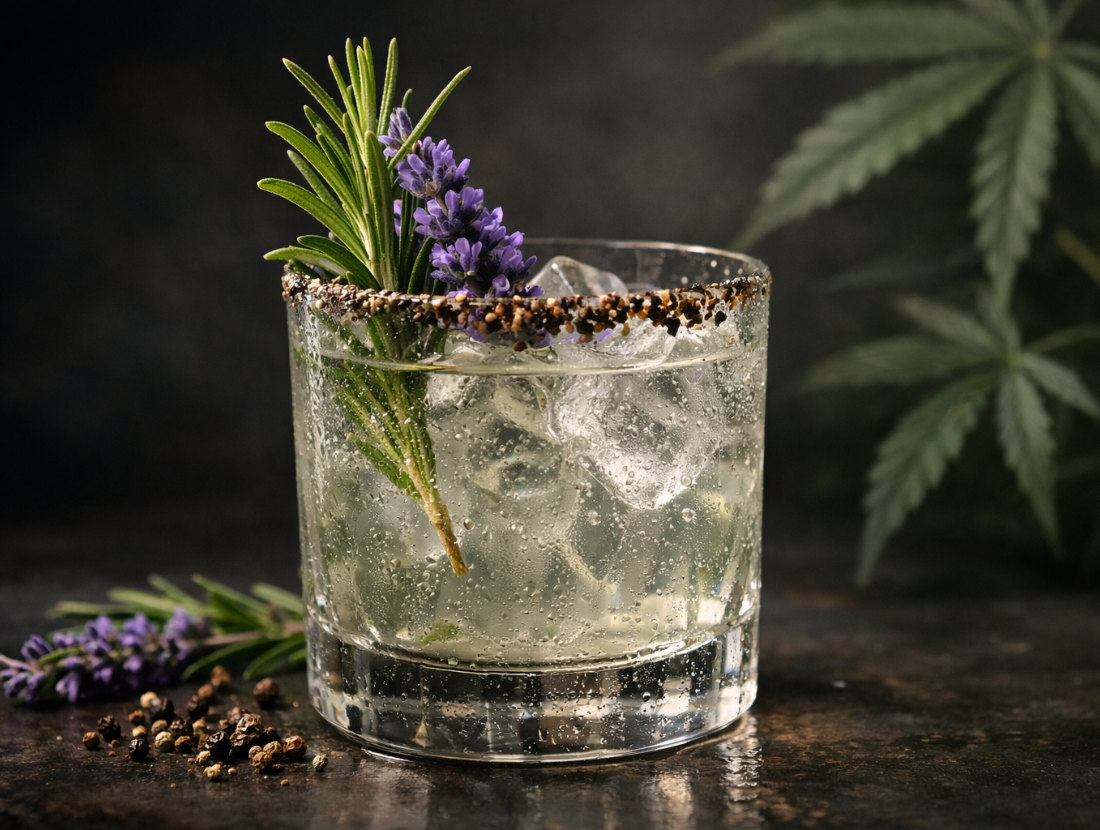
An evidence-based exploration of how culinary botanicals synergize with cannabinoids to create pharmacologically active, alcohol-free beverages for mindful consumption.
If you’re tackling Dry January with a cannabis mocktail in hand, you might be onto something more sophisticated than a simple vice swap. That rosemary sprig floating in your glass, the black pepper rimming the edge, the lavender you’ve stirred in—they’re not just garnishes. They’re pharmacologically active botanicals that may enhance how cannabinoids work in your body.

This is botanical synergy: whole-plant additions that contribute their own bioactive compounds and interact with cannabinoid receptors through overlapping pathways. When you combine cannabis with specific culinary herbs and spices, you’re creating something potentially greater than the sum of its parts.
The Science of Botanical-Cannabinoid Synergy
The foundation of botanical synergy lies in shared receptor targets. Many culinary herbs contain compounds that independently activate the same systems cannabinoids use—the endocannabinoid system and GABA pathways that regulate relaxation and anxiety.
Take black pepper and rosemary. Both contain beta-caryophyllene, a terpene that selectively activates CB2 receptors—the same cannabinoid receptors found throughout your immune system and peripheral tissues. This makes beta-caryophyllene a “dietary cannabinoid” that complements THC and CBD’s effects. When you add a rosemary sprig to your cannabis beverage, you’re introducing a botanical that may support memory and reduce anxiety through its own activity.
Lavender works through a different pathway. Its primary compound, linalool, produces calming effects via GABA-A receptors—the same system CBD modulates for its relaxing properties. Hops, cannabis’s botanical cousin, contains compounds that contribute to sedative effects and have been used traditionally to support sleep.
Here’s the key: this isn’t about isolated terpene additions. When you work with whole botanicals—fresh rosemary, dried lavender, hop-infused bitters—you’re getting the full complement of bioactive compounds that create true synergistic effects.
Why This Matters for Dry January
Cannabis is increasingly recognized as a tool for reducing alcohol consumption. Recent research from Brown University found that cannabis use is associated with significant reductions in alcohol intake, with some participants reporting complete substitution. Studies on CBD specifically show it may reduce ethanol consumption, motivation to drink, and relapse risk, while newer research demonstrates that CBD administration can reduce alcohol craving in the hours after dosing.
But Dry January isn’t just about removing alcohol—it’s about replacing the ritual. The slow sip, the complex flavors, the social ease. Botanical-enriched cannabis mocktails address all three:
- Ritual replacement: Complex herbal flavors satisfy your palate’s need for sophisticated, slow sipping without the burn of alcohol.
- Chemical synergy: Botanicals provide relaxation cues through their own receptor activity, enhancing the calming effects of low-dose cannabinoids.
- Intentional consumption: Crafting a botanical mocktail creates mindfulness around what you’re consuming and why.
Interestingly, beta-caryophyllene may offer additional support for those cutting back on alcohol. Research suggests it provides protective effects against alcohol-induced liver damage—a compelling reason to rim your glass with fresh-cracked black pepper.
Practical Considerations
One of the most interesting aspects of botanical synergy is its potential to allow lower cannabinoid doses. When you’re working with herbs that independently activate overlapping pathways, you may find that smaller amounts of THC or CBD produce your desired effects. This makes botanical mocktails particularly appealing if you’re new to cannabis or prefer subtle, functional doses.
That said, individual responses vary considerably. Your baseline anxiety levels, cannabis tolerance, and even your history with these specific botanicals all influence the experience. Start with modest cannabinoid doses and familiar herbs, then adjust based on how your body responds.
Try this:
For relaxation: Pair lavender and hops with CBD. The overlapping GABA activity may enhance calming effects.
For socializing: Combine rosemary and black pepper with a balanced THC:CBD ratio. This leverages CB2 activation while supporting mental clarity.
Work with whole botanicals rather than isolated compounds—hop-infused bitters, fresh herb infusions, or dried flower preparations. The full spectrum of plant compounds creates more nuanced interactions than single-molecule additions.
The Bottom Line
Cannabis-infused botanical mocktails represent something beyond a Dry January trend. They’re an intersection of culinary tradition and contemporary pharmacology—a way to craft beverages that are both pleasurable to drink and functionally designed for relaxation. The herbs in your kitchen aren’t just flavor additions. They’re active partners that may enhance and modulate how cannabinoids work in your body.
This isn’t about cure-all claims or miracle drinks. It’s about understanding that plants contain bioactive compounds, and when you combine them thoughtfully, you create beverages with more intentional effects. For those seeking alcohol alternatives this January—or any month—that’s a compelling reason to think beyond the garnish.
References
- Gertsch J, Leonti M, Raduner S, et al. Beta-caryophyllene is a dietary cannabinoid. Proceedings of the National Academy of Sciences. 2008;105(26):9099-9104.
- Harada H, Kashiwadani H, Kanmura Y, Kuwaki T. Linalool odor-induced anxiolytic effects in mice. Frontiers in Behavioral Neuroscience. 2018.
- Cho IH, Hong J, Suh EC, et al. Beta-caryophyllene protects against alcoholic steatohepatitis by attenuating hepatic inflammation. Free Radical Biology and Medicine. 2017;103:155-166.
- Viudez-Martínez A, García-Gutiérrez MS, Navarrón CM, et al. Cannabidiol reduces ethanol consumption, motivation and relapse in mice. Addiction Biology. 2018;23(1):154-164.
- García-Gutiérrez MS, Navarrete F, Gasparyan A, et al. Exploring the sedative properties of natural molecules from hops. Frontiers in Chemistry. 2024.
- Nematolahi P, Mehrabani M, Karami-Mohajeri S, Dabaghzadeh F. Effects of Rosmarinus officinalis L. on memory performance, anxiety, depression, and sleep quality. Journal of Herbal Medicine. 2018;11:47-54.
- Gunn RL, Aston ER, Metrik J. Cannabis use substitution for alcohol. Brown University News. 2025.
- McAllister S. Synergy: Cannabis & other herbs—thinking beyond plant constituents. Society of Cannabis Clinicians. 2021.
- Hops (Humulus lupulus) Monograph. Restorative Medicine.
- Morgan CJA, Schafer G, Freeman TP, Curran HV. Acute cannabidiol administration reduces alcohol craving and cue-reactivity. Molecular Psychiatry. 2024.


Sign up for bi-weekly updates, packed full of cannabis education, recipes, and tips. Your inbox will love it.