


 Merch
Merch Medical card
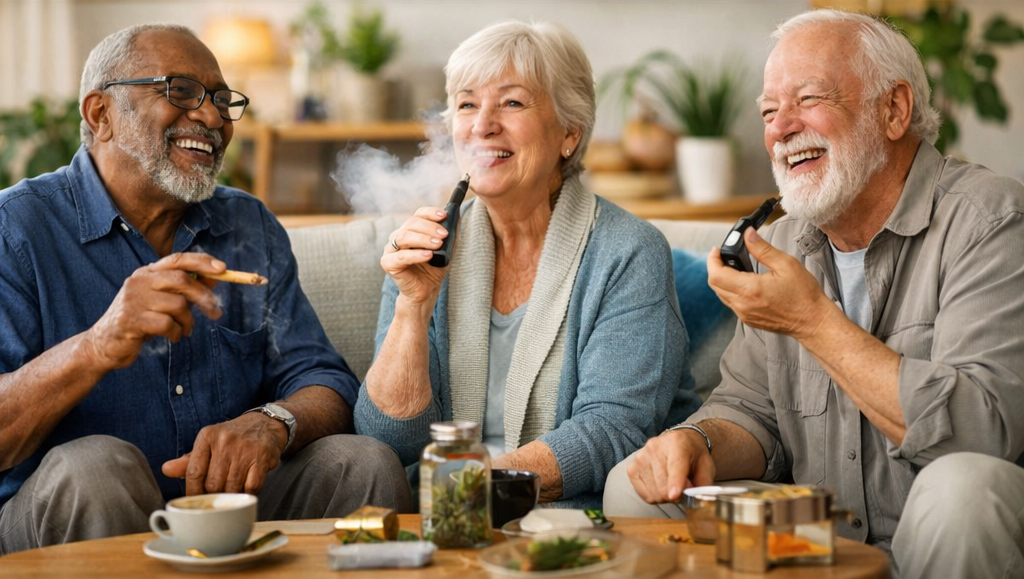
Across the United States, one age group is embracing cannabis more rapidly than any other — seniors. Once seen as an unlikely demographic for cannabis consumption, older Americans are now among the most active new users, driven by shifting laws, changing perceptions, and a growing appetite for alternative wellness solutions.
In 2007, just 0.3% (1 in 300) Americans aged 65+ reported using cannabis in the prior year. Today, that figure is just over 10%, a more than 30-fold increase, according to the National Survey on Drug Use and Health (NSDUH). Roughly 1 in 15 seniors now consumes cannabis monthly, making older adults the fastest-growing consumer segment in legal markets.


Why Seniors Are Turning to Cannabis
Unlike younger groups discovering cannabis for the first time, many seniors aren’t new to the plant — they’re returning to it. Today’s retirees are yesterday’s counterculture generation, and more than half of senior consumers report first trying cannabis 15+ years ago.
Three major forces are accelerating the trend:
1. Legal Access
- 40 states now allow medical cannabis
- 24 states + Washington, D.C. allow recreational use.
- Over 50% of Americans live where adult-use cannabis is legal.
- More than 75% of Americans live near a dispensary.
2. Product Innovation
Today’s retail shelves offer more age-friendly formats than ever:
- Low-dose edibles
- Tinctures and oils
- Topicals and lotions for arthritis or localized pain
- Vaporizers that avoid smoke irritation
3. Stigma Is Disappearing
A decade ago, many seniors avoided cannabis due to cultural stigma or fear of legal consequences. Today, physicians, caregivers, and even retirement communities are beginning to acknowledge the plant’s therapeutic potential when used responsibly.
What Seniors Are Using Cannabis For
While everyone’s experience varies, surveys of older cannabis users highlight consistent motivators:
| Reason for Use | % of Senior Consumers |
|---|---|
| Pain management | High |
| Sleep & insomnia | High |
| Anxiety or mental health | Medium-High |
| Appetite, inflammation & arthritis | Medium |
| Recreation & social enjoyment | Growing |
Note: Cannabis affects individuals differently. Seniors should consult a clinician trained in cannabinoid medicine to avoid medication interactions.
Important Risks to Consider
Cannabis isn’t risk-free, and seniors may face increased sensitivity or medication conflicts.
Key considerations include:
- Possible interactions with prescription medications
- Increased dizziness or confusion at high doses
- Elevated fall risk with overconsumption or poor product selection
- Smoking inhalation concerns for those with lung or heart conditions
Start low, go slow remains the clinical standard.
Could Cannabis Actually Save Lives?
Emerging research suggests the answer might be yes.
A working paper led by Sara Markowitz (Emory University) analyzed CDC and RAND data, finding that the opening of a recreational dispensary is associated with:
- 4% reduction in suicides among adults 45+
- 6% reduction among low-educated white adults aged 45-54, one of the groups at highest statistical risk
While more peer-reviewed research is needed, this early evidence challenges the long-held myth of cannabis as a “gateway drug” — and instead suggests it may reduce harm for vulnerable populations.

The Bottom Line
Seniors are not just experimenting with cannabis — they are redefining who the modern cannabis consumer is. For many, cannabis isn’t a symbol of rebellion, but a tool for autonomy, comfort, and quality of life. As laws evolve and research deepens, America’s fastest-growing consumer group may also be its most overlooked.
And if early evidence is any indication, cannabis may not just be improving the lives of older adults — it may be saving them.
Sources
- National Survey on Drug Use and Health (NSDUH)
- CDC National Vital Statistics System
- RAND Corporation Policy Data
- “The Effect of Legal Marijuana Markets on Suicide and Mental Health” – Markowitz et al., Emory University (Working Paper)


Sign up for bi-weekly updates, packed full of cannabis education, recipes, and tips. Your inbox will love it.