

 Merch
Merch Medical card
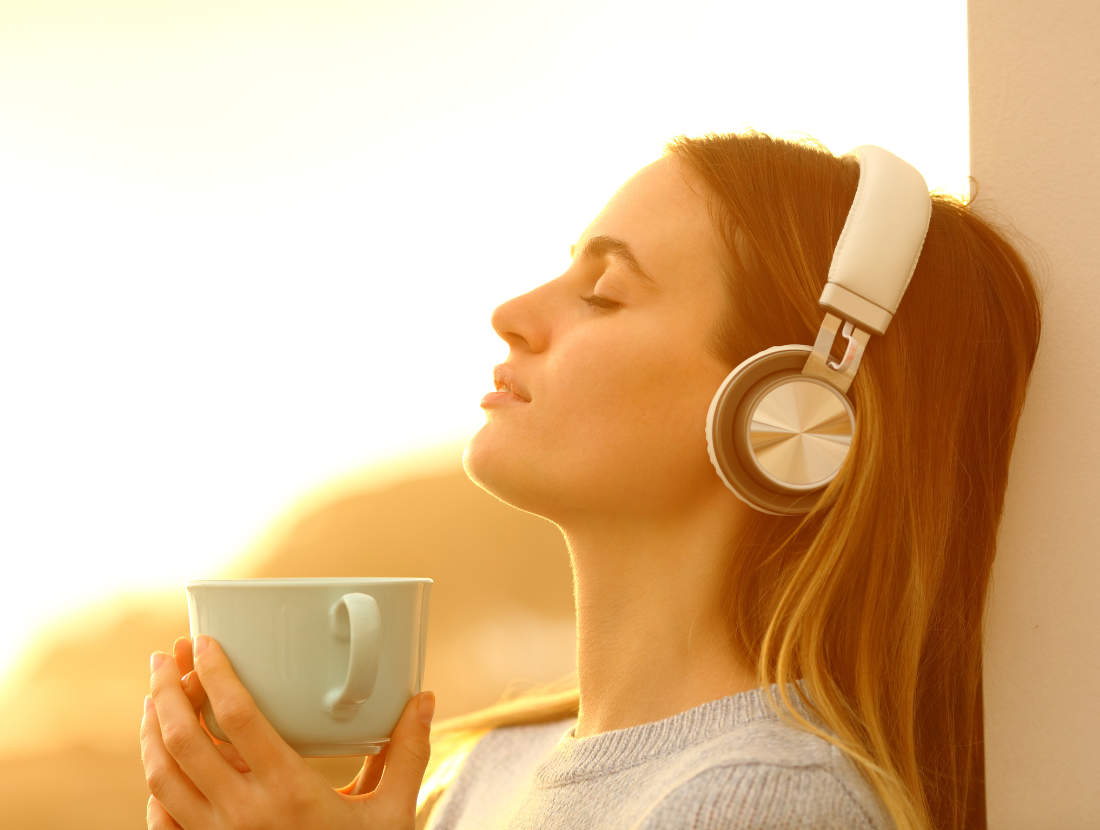
What controlled fMRI studies, EEG research, and self-report data reveal about how THC reshapes the way you hear, feel, and absorb sound — and why the brain’s response contradicts the experience.
Cannabis and music have traveled together for a long time, from the jazz clubs of 1920s New Orleans to the recording studios that shaped reggae and psychedelic rock. That pairing isn’t incidental. A growing body of cannabis and music neuroscience research suggests THC may alter auditory perception in measurable, if complicated, ways. The most controlled fMRI cannabis study on this question found something that most popular coverage gets backward.

A Paradox at the Core of Cannabis and Music Perception
The most controlled neuroimaging study on this question produced a counterintuitive finding. A 2018 fMRI crossover trial by Freeman et al., published in the International Journal of Neuropsychopharmacology, gave 16 cannabis users either THC alone, THC with CBD, or placebo before a music-listening session. Cannabis without CBD reduced neural responses in the bilateral auditory cortex, right hippocampus, right amygdala, and right ventral striatum, the exact regions implicated in music-evoked reward and emotion. At the same time, participants in the THC condition reported significantly greater desire to listen to music and significantly greater enhanced sound perception.
In other words, brain activity in reward-relevant regions went down while the felt experience of sonic enhancement went up. That gap between subjective report and measurable neural response sits at the center of this field and should shape how you read any confident claim about cannabis “improving” music perception.
The Freeman et al. fMRI study had 16 participants. It is the best-controlled neuroimaging evidence currently available on this question, but its sample size means its findings are directional, not definitive.
How the Endocannabinoid System Shapes Auditory Perception
Cannabis doesn’t arrive at the auditory system by accident. CB1 receptors are present throughout the auditory pathway: in the spiral ganglion, the dorsal and ventral cochlear nucleus, the inferior colliculus, and the auditory cortex. A 2021 review by Mlonzi et al. in Frontiers in Molecular Neuroscience mapped this receptor distribution and concluded that the endocannabinoid system plays a modulatory role across the entire auditory pathway, from cochlear hair cells through vestibulocochlear nerve projections into the brain. The preponderance of this evidence comes from animal models, but it establishes a receptor-level biological basis for cannabis’s effects on sound processing.
A 2017 rat study in Scientific Reports added a specific mechanistic detail: CB1 receptor activation in the inferior colliculus decreased neuronal adaptation to repeated stimuli, increasing responses to standard (repeated) sounds relative to deviant (novel) ones. For music listeners, this may translate into heightened attention to familiar phrases and passages that typically fade into the background.
Cannabis, Time Perception, and the Space Between Notes
Music researcher Jörg Fachner has proposed that cannabis’s most relevant effect on music listening runs through time perception rather than sensory amplification. His 2006 EEG study found that THC produced increasing alpha-signal strength in the parietal cortex and theta-band changes in temporal and occipital areas, a pattern he interpreted as intensified auditory attention and altered music perception via what he called hyperfocusing on acoustic space. The study had four participants and no control group; its framework is provocative but not definitively established. A careful reading of Fachner’s work positions it as a productive hypothesis rather than settled finding.
The time perception component has stronger empirical support. A controlled study by D’Souza et al. found that THC consistently caused time overestimation and temporal underproduction, meaning participants perceived intervals as longer than they were and produced shorter intervals than instructed. A critical review found that 70% of time estimation studies report cannabis-induced overestimation, though effects on time production remain less consistent. Frequent users showed tolerance to this distortion. The implication for music is that subjective time may expand under THC, giving listeners more perceptual room within each phrase.
Cannabis, Dopamine, and the Music Reward Circuit
Both cannabis and music activate the mesolimbic dopamine system, which has led to a popular “double dopamine” framing. The reality is more restrained. A landmark 2011 PET study by Salimpoor et al. in Nature Neuroscience demonstrated that music alone triggers endogenous dopamine release in the striatum, with a functional split: the caudate activates during anticipation of an emotional musical peak, and the nucleus accumbens during the peak itself. A subsequent review by Salimpoor and Zatorre detailed how auditory cortex-striatum interactions and expectancy mechanisms underlie music’s reward properties.
THC does increase mesolimbic dopamine transmission, but a 2023 systematic review found the increase amounts to approximately 3.65% within the limbic striatum, a figure below the 5% test-retest variability threshold for the measurement method. The dopamine overlap between cannabis and music is real, but modest, and the interaction between them remains poorly characterized.
Does Cannabis Make Musicians More Creative?
Cannabis’s reputation as a creativity enhancer in music deserves careful scrutiny. A randomized double-blind study by Kowal et al. found that high-dose THC (22 mg) impaired divergent thinking in regular users compared to placebo, while low-dose cannabis (5.5 mg) had no measurable effect on creative performance. A separate study found that cannabis did not improve cognitive performance but did produce more favorable self-ratings of creativity, an effect researchers attributed to cannabis-induced positive mood rather than genuine creative enhancement.
Dose, frequency of use, and the specific cognitive task all shape outcomes. A casual user’s first session and a daily user’s studio session are neurologically distinct situations, and flattening them into one claim about cannabis and creativity misrepresents both.

How CBD Changes the Cannabis Music Experience
The Freeman et al. fMRI study included a cannabis-with-CBD condition, and its results offer a relevant finding for contemporary consumers. Enhanced sound perception was greater for cannabis containing CBD than for THC alone. Cannabis with CBD also increased functional connectivity between the ventral striatum and the auditory cortex, while THC alone reduced it. On all brain imaging measures, the cannabis-with-CBD condition did not differ from placebo. As commercial cannabis has shifted toward higher-THC, lower-CBD formulations over the past decade, this finding raises a question about whether the product landscape has changed the experience.
Cannabis and Auditory Risk: What Heavy Use May Do Over Time
Acute perceptual effects and long-term auditory health are separate questions. A cross-sectional NHANES analysis by Qian and Alyono found that high-volume cannabis use (three or more joints or pipes per day) was independently associated with bothersome tinnitus after adjusting for demographics, noise exposure, hearing loss, and cardiovascular factors. A 2022 narrative review of cannabinoids and audiovestibular function found that animal models suggest cannabinoids may not reduce tinnitus and could potentially worsen it.
Cross-sectional data cannot establish causation. Tinnitus sufferers may self-medicate with cannabis at higher rates, which would inflate the association. The finding merits attention for heavy users but should not be generalized to moderate use without stronger evidence.
A 2025 mixed-methods study by Darakjian et al. in the Annals of the New York Academy of Sciences surveyed 104 adults and found that listening to music was the most commonly reported activity while high (45% of participants), with significant self-reported increases in both hearing sensitivity and absorption in music. Thematic analysis identified four patterns: altered cognitive reinterpretation of sound; perceptual effects ranging from new sensations to sensory overload; emotional openness; and embodiment or immersion. Self-report data reflects perceived experience, not objective auditory performance, but it maps well onto the neural and pharmacological mechanisms proposed in controlled studies.
The science is still thin. No large-scale pre-registered trial with objective auditory performance metrics and dose-controlled cannabis administration exists. The primary neuroimaging study had 16 participants. Cannabis and music research remains a field worth watching, not a field with settled answers. For now, the evidence supports the view that cannabis reshapes auditory attention and time perception in ways that may intensify how music feels, even as the brain’s reward circuitry responds to it less, not more.
A few patterns hold across the studies reviewed here: time distortion and attentional hyperfocus are the most consistently documented mechanisms; CBD appears to offset some of THC’s dampening effects on the music reward circuit; and the felt experience of sonic enhancement is real to users even when neural measures point in the opposite direction. Those gaps between perception and measurement are the most interesting thing about cannabis and music perception, and the most honest framing researchers can currently offer.
Frequently Asked Questions
Why Does Music Sound Better When You’re High?
Users consistently report greater hearing sensitivity and deeper absorption in music while high. A 2025 study found these reports were statistically significant. However, a controlled fMRI study found that cannabis simultaneously reduced neural activity in the brain regions responsible for music-evoked reward, so the felt enhancement doesn’t map neatly onto measurable brain activity.
How does THC affect time perception and music listening?
THC consistently causes time overestimation, meaning subjective time passes more slowly than clock time. Researchers suggest this gives listeners more perceptual space within each note and phrase. Frequent users develop tolerance to this effect, which may explain why casual and daily users describe cannabis and music so differently.
Can cannabis damage your hearing?
A large NHANES cross-sectional study found significantly higher tinnitus rates among high-volume cannabis users (3 or more joints or pipes per day) compared to non-users, after adjusting for noise exposure, hearing loss, and other factors. The data is observational and cannot confirm causation, but the association warrants attention for heavy users.
Does CBD affect music perception differently than THC alone?
In the Freeman et al. fMRI study, cannabis containing CBD produced greater enhanced sound perception than THC alone, and it did not differ from placebo on any brain imaging measures. CBD also increased functional connectivity between the ventral striatum and auditory cortex, the opposite of what THC alone produced.
Does cannabis make musicians more creative?
Controlled studies find a dose-dependent relationship. High-dose THC (22 mg) impaired divergent thinking compared to placebo in regular users. Low-dose cannabis had no measurable effect on creative performance, though participants in cannabis conditions rated their own and others’ creativity more favorably, an effect researchers attributed to cannabis-induced positive mood rather than genuine creative enhancement.


Sign up for bi-weekly updates, packed full of cannabis education, recipes, and tips. Your inbox will love it.