

 Merch
Merch Medical card
A practical guide to choosing companion plants that support beneficial insects, reduce pest pressure, and complement your cannabis garden ecology.
A cannabis garden is an ecosystem. The plants you grow alongside cannabis shape which insects visit, which pests persist, and what volatile compounds move through the air. Companion planting for cannabis draws on that ecology to give you four practical tools: pollinator support, pest deterrence, soil health, and aromatic chemistry. Each category has its own evidence base, and the science behind some claims is stronger than others. This guide covers all four honestly.

Companion Plants That Attract Pollinators to Your Cannabis Garden
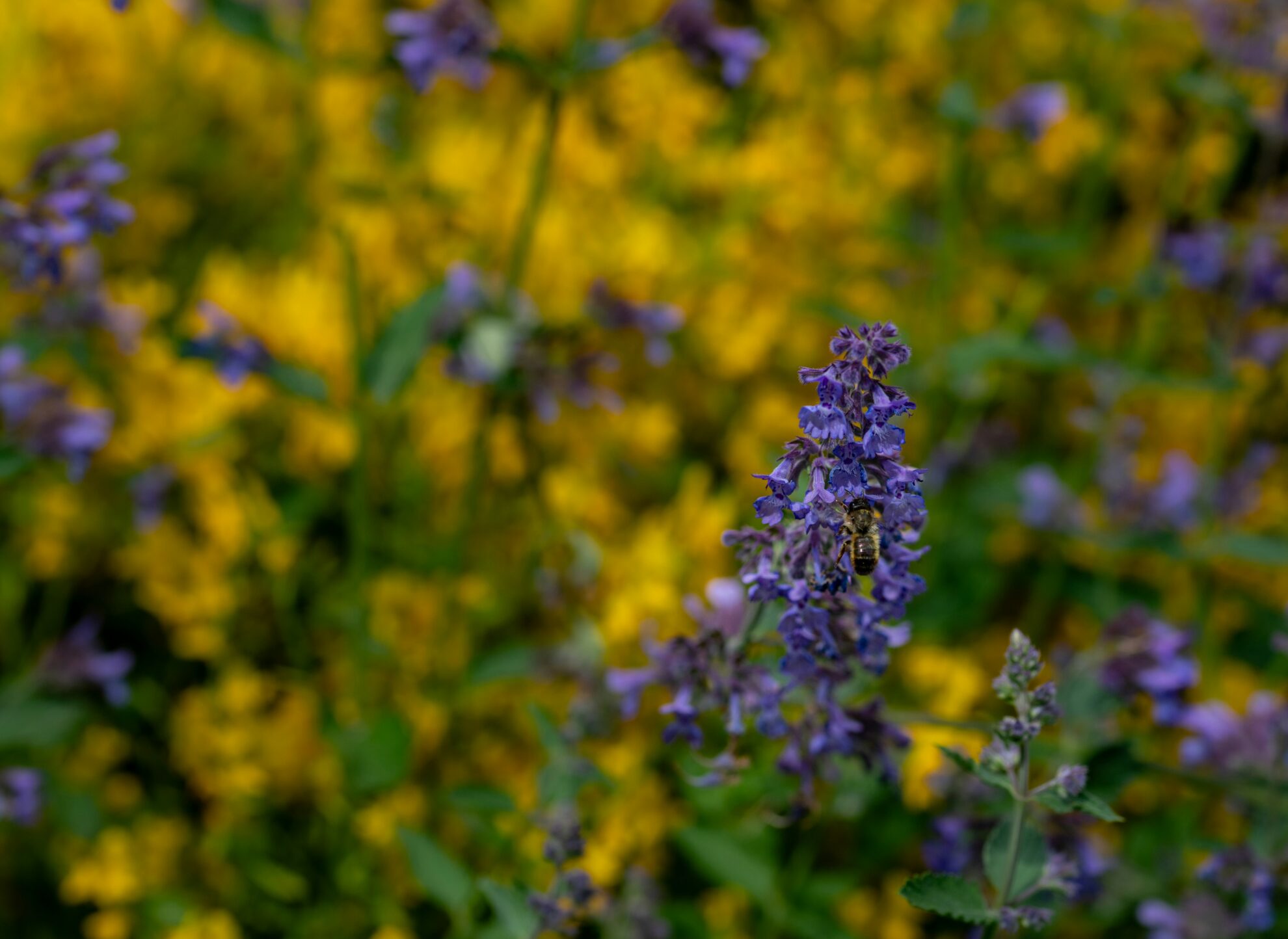
Cannabis is wind-pollinated, so bees and other pollinators don’t visit its flowers for nectar. They visit the companion plants nearby, and that’s the point. Research on pollinator-supportive garden design confirms that diverse plantings at garden borders increase both pollinator abundance and species variety. More pollinators in the garden also means more predatory insects, which prey on aphids, thrips, and other cannabis pests. Studies in managed agricultural systems show that pollination support and biological pest control can act together rather than independently.
Sweet Alyssum
Low-growing and long-blooming. Draws hoverflies and parasitic wasps that prey on soft-bodied pests.
Phacelia
A fast-germinating annual with high nectar value for bumblebees and solitary bees.
Lavender
Attracts bees across a long season. Produces linalool, a terpene shared by several cannabis cultivars.
Yarrow
Flat flower heads support lacewings and hoverflies. Dried flowers also make a mild herbal tea.
Aromatic Companion Plants for Cannabis Pest Control
Several aromatic herbs release volatile compounds that deter aphids and other soft-bodied pests. The research on this is more targeted than broad, with the strongest evidence coming from laboratory and controlled field studies rather than cannabis gardens specifically. Still, the findings are worth applying.
Sage (Salvia officinalis and related species) shows deterrent and repellent activity against aphids in controlled studies, with the added advantage that its volatile compounds appear less toxic to ladybirds and other beneficial insects than to pest species. Plant sage at the outer edges of beds. The leaves dry well and make a warming, slightly earthy tea long used in European herbal traditions.
Rosemary (Salvia rosmarinus) contains camphor and 1,8-cineole, both of which show aphicidal activity in essential oil studies. In garden conditions, the volatile release is lower than in laboratory extracts, but rosemary planted on sunny borders still contributes deterrent chemistry to the surrounding air. It’s a perennial in most climates and infuses well into cooking oils. Steep the needles for a resinous, pine-forward tea.
Basil (Ocimum basilicum) emits linalool and methyl chavicol, both documented as insect deterrents. It thrives in the same warm, well-drained conditions cannabis prefers, making it a convenient row companion. Harvest regularly to keep plants productive.
Mint (Mentha spp.) releases a volatile profile that deters several pest species. Plant it in containers to stop it from spreading through beds. A handful of fresh leaves makes a simple, versatile tea.
Lower plant stress means better pest resistance. Companions that improve soil biology and structure give cannabis better conditions to grow in, which forms the foundation of integrated pest management (IPM) in organic cannabis gardens.

- White or crimson clover: Fixes atmospheric nitrogen and feeds pollinators simultaneously. Use it as a living ground cover between plants, where it suppresses weeds and supports soil microbiology.
- Buckwheat: Germinates fast, feeds beneficial insects through its flowers, and adds organic matter and phosphorus availability when turned into the soil as a green manure.
- Dill (Anethum graveolens): The flat flower heads of dill support parasitic wasps and hoverflies. Let some plants flower fully rather than harvesting the whole crop for culinary use.
Do Companion Plants Affect Cannabis Terpenes?
Some growers plant aromatic herbs hoping the companion plants’ terpenes will lift the terpene content of nearby cannabis. The evidence for that claim is thin. Cannabis terpene synthesis responds to genetics, light intensity, temperature, and cultivation management far more than to neighboring plant chemistry.
The stronger claim is about garden ecology: aromatic companions release volatile compounds that may influence which insects and microorganisms establish in the space, shaping the garden environment rather than the cannabis plant’s internal chemistry. Sage, rosemary, basil, lavender, and thyme all contain terpene profiles that overlap with compounds found in cannabis, including linalool, myrcene, and pinene. That overlap makes them worthwhile garden companions, but growers should treat any “terpene enhancement” framing with skepticism until controlled cannabis-specific studies provide clearer evidence.
Terpene-cannabinoid interactions within cannabis itself, often called the entourage effect, follow the same principle. Both recent clinical reviews and pharmacological analyses treat this as a promising but still-developing area of science rather than a settled cultivation outcome. The honest takeaway: grow aromatic companions for their documented benefits to insects and soil, and enjoy any terpene overlap as a bonus.
The science of companion planting for cannabis as biological pest control is the most developed thread here. Choosing plants that bring predatory insects into the garden, support pollinators at the border, and add volatile deterrents at the edges gives you a layered approach grounded in evidence. Start with one category, watch what changes over a season, and expand from there.
Frequently Asked Questions
Which companion plants attract beneficial insects to a cannabis garden?
Sweet alyssum, dill, and phacelia are the strongest choices for drawing beneficial insects for cannabis cultivation. Their flowers feed hoverflies, parasitic wasps, and lacewings, all of which prey on aphids and thrips. Yarrow works well too, particularly for lacewings. Plant them at borders and let some go to full flower rather than harvesting them all for culinary use.
What are the best companion plants for a cannabis garden?
The strongest candidates span several roles: sweet alyssum and phacelia attract beneficial insects at garden borders; sage, rosemary, and basil release volatile deterrents against aphids; and clover and buckwheat improve soil nitrogen and structure. Using plants across all three categories gives you layered support rather than relying on a single species.
Does companion planting reduce pest pressure organically?
It can, within limits. Aromatic herbs like sage and rosemary show aphid-deterrent activity in controlled studies. Pollinator-support plants bring hoverflies and parasitic wasps into the garden, which prey on aphids and thrips. Neither approach replaces attentive cultivation, but together they reduce reliance on topical treatments.
Can companion plants increase cannabis terpenes?
The current evidence doesn’t support that claim. Cannabis terpene profiles respond most to genetics, light, and temperature. Aromatic companions contribute terpene-rich volatile chemistry to the garden environment, but a direct transfer to the cannabis plant’s resin profile has not been established in controlled studies. Grow aromatic herbs for their pest-deterrent and ecological benefits.
Which companion plants work best for pollinator support?
Sweet alyssum, phacelia, lavender, and yarrow are well-documented for pollinator attraction. Plant them at the borders and edges of cannabis beds rather than between plants, so pollinators and predatory insects can establish a presence in the space without competing for canopy light.
Are aromatic companion plants useful beyond the garden?
Yes. Several of the best pest-deterrent companions also have strong culinary and wellness uses:
- Sage: herbal tea, cooking, aromatherapy
- Rosemary: infused oils, savory cooking, tea
- Mint: fresh tea, culinary use, essential oil
- Lavender: dried flower sachets, teas, aromatherapy
- Yarrow: dried flower tea, traditional herbal medicine
For a step-by-step approach to setting up a productive cannabis grow from the ground up, the Cannigma Cultivation Guide covers soil, environment, and plant health in detail.


Sign up for bi-weekly updates, packed full of cannabis education, recipes, and tips. Your inbox will love it.