

 Merch
Merch Medical card

Every gummy, every CBD tincture, every vape pen, every cannabis recommendation is political and will be until cannabis and all its cannabinoids are federally legal. Cannabis is not safe from shifting political winds and regulatory clawbacks. In fact, a well-funded and coordinated effort is underway to not only take those products away from you but also to dismantle the rights we’ve fought hard to secure under state laws and limited federal protections. These forces now hold real power on Capitol Hill and are exploiting the regulatory divide between hemp and cannabis to fracture our once-unified movement. If you don’t recognize your cannabis use or your role in this space as inherently political, you’re giving ground to those who are determined to take our progress away.
Headlines about cannabis and hemp have normalized fractured regulations. The successes of cannabis businesses are now a part of the mainstream conversation and considered big business, while the rights and protections for medical cannabis patients have been sidelined. There are still medical cannabis patients going to jail and losing their homes, custody of their children, and their jobs, regardless of the market from which they purchased their medicine. So while a cannabis business can join their local chamber of commerce, a patient in hospice can be denied access to medical cannabis. Make it make sense.


Many Americans think legalization is a “done deal” and has essentially already happened, but this is a dangerous mentality. There is a shift happening in this country, away from liberal policies, including drug policy reforms. Most people don’t realize that there are no federal protections for adult-use cannabis consumers, and these businesses continue to operate without federal interference strictly at the whim of the Executive Branch. The unstable legality of federal protections for medical cannabis, which solely come from an amendment to the DOJ and DEA’s budget that has to pass every year, threatens our progress. Those who access cannabis through the hemp market or own businesses in hemp are not protected either, as loose definitions of “hemp” that can be altered in the next Farm Bill reauthorization.
It is easy to get comfortable in our own cannabis and hemp bubbles. But make no mistake, there is a battle that is still being fought in Washington, DC, and your use of cannabis places you on the battlefield. Turning a blind eye to this fact puts our progress at risk. Things feel stable, but all could unravel with a single strikethrough during a government budgetary process or a targeted amendment during the Farm Bill reauthorization. Until we pass comprehensive reforms, all cannabis use will remain political.
Divide & Conquer Tactics Can Work; Don’t Fall For Them
Hemp vs. Cannabis, Medical Cannabis vs. Adult Use, Schedule III vs. Deschedule: These are not debates happening in Washington, DC. These conversations are playing out in marketplaces, among advocates and cannabis business owners, but not in Washington. The real debates happening in Washington D.C. are about FDA-approved drugs vs Herbal Medicine, THC vs. no-THC, Harm Reduction vs. Prison. Restricted access and fear-mongering is the vibe, not freeing the plant and healing people.
In case you missed it, “War on Drugs” rhetoric is back. This language is being re-ushered in by the new Administration and supported by the anti-cannabis members of Congress who are now chairing every committee in the House and Senate essential to advancing cannabis policy. Cannabis has real enemies; ones with motives opposed to allowing cannabis-based medicine to thrive. It is time to focus and look at the long game. How do we move federal policies forward?
Political Success Requires Strategic Moves
The passage of the Controlled Substances Act (CSA) in 1970 classified cannabis as a Schedule I substance, finding it had “no currently accepted medical use.” The CSA ignited the War on Drugs and sparked the medical cannabis movement. Efforts to facilitate access to cannabis for medicinal use began immediately, achieving varied degrees of success. Rescheduling petitions stalled, patient Bob Randall fought a cannabis charge based on “medical necessity,” resulting in the creation of the Compassionate Investigational New Drug (IND) program, the federal government growing and providing cannabis for a small number of patients. That’s right – there was a federal medical cannabis program way back in 1978.
In 1992, however, President Bush Sr. shut down the program and patient advocates were forced to turn to the states for protection from arrest. Their efforts resulted in legal protections for patients and providers at the state level, but spurred federal attacks that continued for 28 years until the passage of the Rohrabacher-Farr Amendment in 2014. This amendment to the Commerce, Justice, Science, and other Related Agencies Budget (now commonly referred to as the CJS amendment) has effectively prevented the DOJ from interfering with state medical programs for the past ten years. However, existing adult-use markets have no such legal shield, and amendments being proposed to the Farm Bill would leave stakeholders in the “hemp” market in the same boat.
Over the last 23 years, Americans for Safe Access (ASA) has been implementing a strategic plan that would allow medical cannabis to become a frontline treatment option for patients that is covered by insurance and readily available nationwide. While addressing the immediate needs of patients through state access programs, ASA has also been driving campaigns to remove barriers preventing a federal access program.
ASA campaigns removed barriers for U.S. research on the benefits of medical cannabis, disproved the “gateway” theory, created product safety protocols for cannabis for human consumption, established requirements for product testing capabilities beyond a few cannabinoids, worked with the World Health Organization to recognize the therapeutic uses of cannabis, rescheduled cannabis in United Nations drug treaties, provided the FDA with the rationale and data needed to find that “cannabis has accepted medical use in treatment in the United States,” and created legal access for medical cannabis to over 6 million Americans.
The result of these efforts is a more favorable landscape for tackling federal medical cannabis policy. As of today there is: limited opposition to medical cannabis in general, overwhelming public support, federal health agencies agreeing that cannabis has accepted medical value, healthcare stakeholders publicly expressing interest to include medical cannabis in their sectors (Mayo Clinic, American Nurses Association, the American Pharmacist Association, etc.), and years of data proving the positive impacts that medical cannabis has on healthcare systems. Collectively, they paint a picture of a nation ready to adopt the federal changes needed for medical cannabis to reach its potential.
Not only have we shifted public support for what is possible, Congress and the Administration are grappling with numerous cannabis-related issues. Federal policymakers are searching for direction as they are forced to address concerns from hemp regulations up for reauthorization in the Farm Bill, weigh the impact of the pending rescheduling petition, respond to the FDA’s call for a new pathway to regulate cannabinoids, and implement the requirements placed on NIH and HHS by the Medical Marijuana and Cannabidiol Research Act of 2022. This is the ideal environment to propose a comprehensive approach to medical cannabis policy.
A national medical cannabis program would fill this void, ensuring uniform regulations, restoring patients’ rights, creating nationwide access for therapeutic use and research, and forging a new pathway for cannabis therapeutics to gain recognition as a medicine.
Where Do We Go from Here?
While the road leading to today was paved with forethought and intention, these opportunities could quickly evaporate. The potential rescheduling of cannabis reinvigorated “drug war” champions, putting medical cannabis policy in the crosshairs of the legalization debate and putting our progress at risk.
How do we respond? We unite behind a path forward grounded in political realities and a vision for a better tomorrow.
Top health agencies acknowledging that cannabis has a “currently accepted medical use” (CAMU) set the stage for ASA’s legislative proposal for a national medical cannabis program. Developed in collaboration with healthcare stakeholders, cannabis experts, patient advocacy organizations, and other policy advisors, the Medical Cannabis and Cannabinoid Act (MCCA) introduces a new scheduling category for cannabis and cannabinoids, Schedule VI, and establishes the Office of Medical Cannabis and Cannabinoid Control (OMC) within HHS.
No Time to Lose
As it stands, the state-by-state compassionate use model ignores the needs of patients in states reluctant to pass medical cannabis laws, federal employees, contractors, and veterans utilizing VA medical services. Time has shown that these programs often do not address patients’ medical, financial, and logistical needs, serving only a privileged class of Americans. This will persist as long as medical cannabis access happens independently of broader healthcare systems and will not be corrected by rescheduling alone.
Looking back, every step medical cannabis has taken forward has broken down barriers for all cannabis consumers. Advancing federal medical cannabis policy isn’t about Medical Cannabis vs Adult-use, it is about untangling this plant from federal prohibition to serve patients, while normalizing federal regulations.
Doing Nothing is Not an Option
The Washington, DC, battle is in full effect; whether you are actively engaging or not, you are on the battlefield. Cannabis isn’t just about personal choice. It’s about policy. And policy, in a democracy, only changes when people demand it. Our community – comprised of patients, providers, researchers, and advocates – has been advancing this cause for decades. It’s time to light up the next phase of cannabis reform. Let’s make sure our voices are heard.
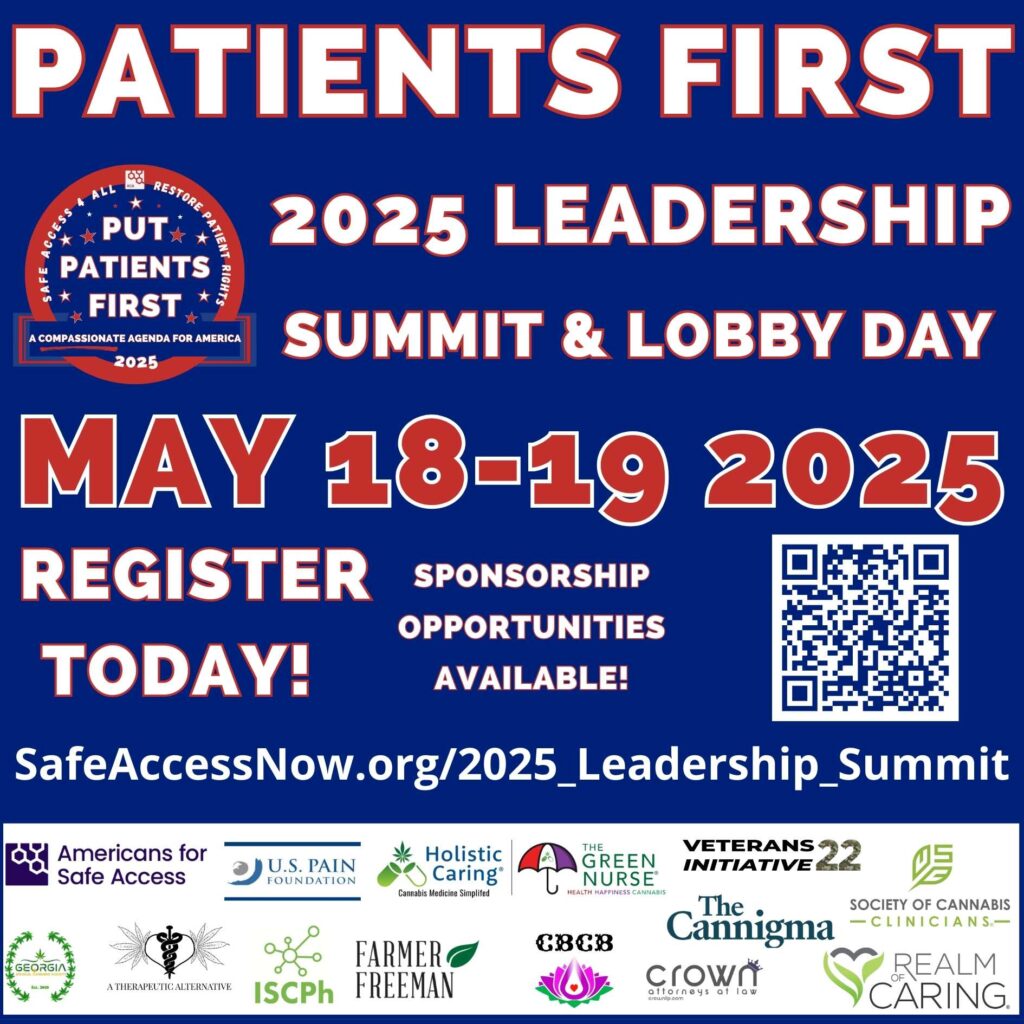
Don’t wait; take action! Use this link to tell your member of Congress that you want to see medical cannabis policy move forward and join us in Washington D.C. on May 18 & 19 for ASA Leadership Summit & Lobby Day.
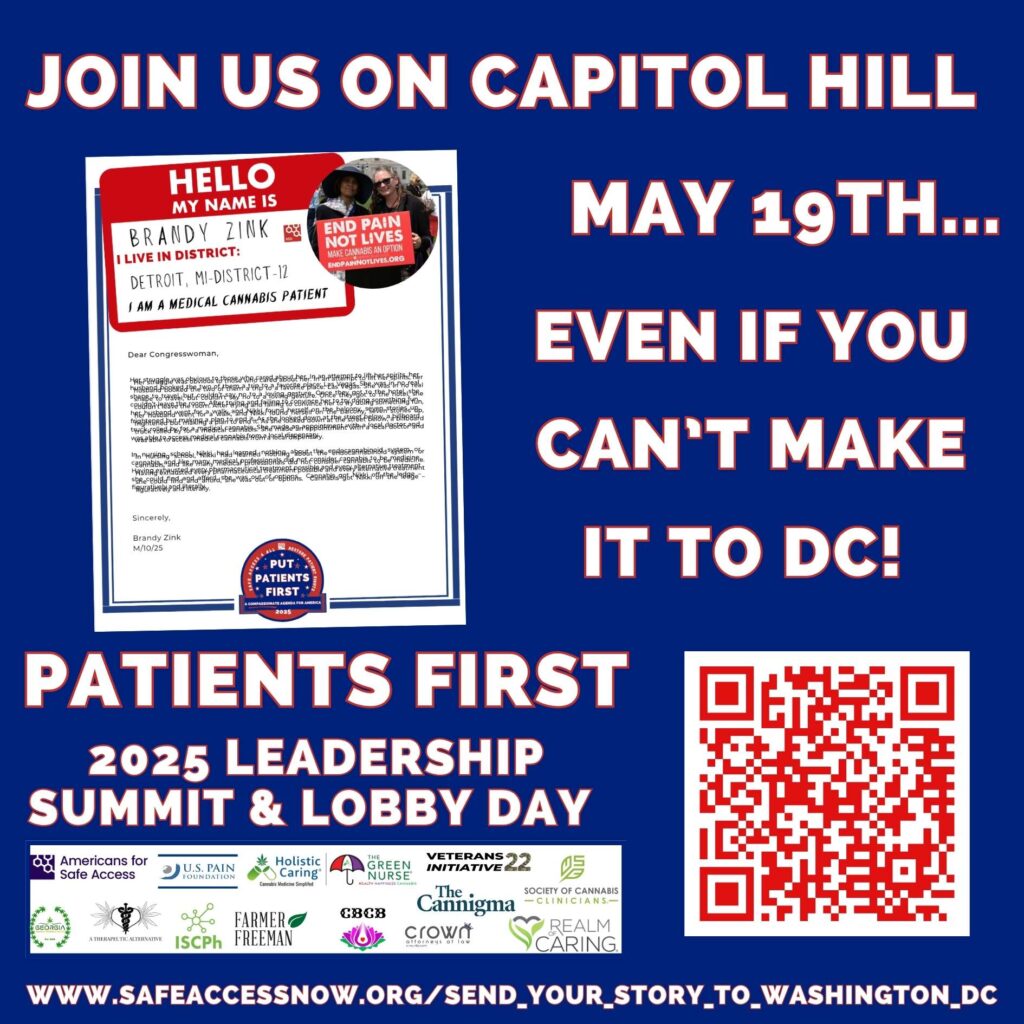
Can’t make it to the capitol? No problem. You can still share your story in the form of a letter, and we made it extra easy for you! Simply fill out your name, photo and write a short blurb about why cannabis reform is important to you — and voila, you’ve participated in advocacy and lobbying to protect patients and legitimize cannabis medicine.
About The Authors
Steph Sherer is the Board President, Executive Director of Americans for Safe Access and a pioneering international leader in medical cannabis advocacy. Her personal experience with the therapeutic benefits of cannabis, combined with her background in political organizing, led her to establish ASA in 2002. Under her guidance, ASA has grown into the nation’s largest patient-centered organization dedicated to ensuring access to medical cannabis, bridging gaps in knowledge, policy, and regulation, and promoting its recognition as a legitimate medical therapy.
Codi Peterson is The Cannigma’s Chief Science Officer. He also serves on the Board of Directors of Americans for Safe Access. He is a practicing pharmacist with a passion for cannabis-based medicine. Given his diverse pediatric pharmacy experience and knack for educating, he tries to share his knowledge whenever possible. Building on his experience teaching healthcare professionals about pharmacology and pharmacotherapy, he aims to educate as many people as possible about the medicinal potential of cannabis.


Sign up for bi-weekly updates, packed full of cannabis education, recipes, and tips. Your inbox will love it.