
 Merch
Merch Medical card
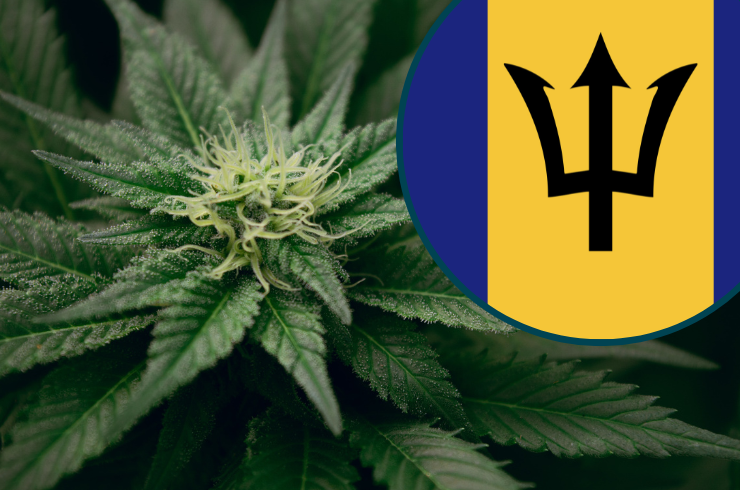
Quick answer: no, recreational cannabis is still illegal in Barbados, but the picture is more nuanced than in most of the Caribbean. Possession of up to 14 grams now attracts a 200 dollar fixed-penalty ticket instead of an automatic arrest.
Medical cannabis is fully legal and licensed dispensaries have been trading since 2025. Rastafarian sacramental use has its own statute. None of that makes recreational possession lawful.

Barbados has not decriminalised cannabis
Headlines have said otherwise, and the government has been explicit that they are wrong.
The change came through the Drug Abuse (Prevention and Control) (Amendment) Bill, introduced on 1 December 2020, passed by the House of Assembly on 5 March 2021 and by the Senate on 26 March 2021. It inserted a new section 6A into the Drug Abuse (Prevention and Control) Act, Cap. 131, creating a fixed-penalty notice for possession of no more than 14 grams of cannabis.
Attorney General Dale Marshall put the position plainly during the second reading: the government was not decriminalising the possession of any cannabis. The offence remains an offence. What changed is how the police can dispose of it.
Superintendent Anthony Warner of the Royal Barbados Police Force described the practical effect in June 2024: before the amendment, officers could arrest for the smallest amount, a stem, a seed or a stalk, and the law now tells them to take a different approach to that type of offence.
How the 14 gramme ticket works
The fixed penalty is 200 dollars, set out in the Third Schedule. A person served with a notice has 30 days to pay, and payment discharges liability. Non-payment exposes them to ordinary prosecution, which matters more for a visitor than a resident, since an unpaid ticket does not disappear when the flight home does.
Minors are handled differently. Section 6A(2) requires a person under 18 served with a notice to attend the National Council on Substance Abuse for an assessment and counselling within 14 days.
Section 6B added expungement. A person convicted of possessing not more than 14 grams who has served their sentence, custodial or non-custodial, is deemed rehabilitated and the conviction is deemed expunged. That is a meaningful retrospective element, and it is the part of the reform most often left out of coverage.
The one gramme that changes everything
There is a quirk in the architecture worth knowing, because it sits in a place no summary mentions.
The ticketing ceiling is 14 grams. The trafficable quantity for cannabis under the Second Schedule of Cap. 131 is 15 grammes, and section 6(4) turns possession of that amount into a presumption of intent to supply. So the gap between a 200 dollar ticket and a presumption that you are a dealer is a single gramme.
Between 14 and 15 grams you are outside the fixed-penalty regime but below the trafficking presumption, which means an ordinary possession charge under section 6(2). At 15 grams the presumption bites and the burden shifts to you.
Penalties at a glance
| Situation | What happens | Legal basis |
|---|---|---|
| Possession of 14 g or less | Fixed penalty notice, 200 dollars, payable within 30 days | Cap. 131, s.6A and Third Schedule |
| Same, person under 18 | Notice plus assessment and counselling at the National Council on Substance Abuse within 14 days | Cap. 131, s.6A(2) |
| Fixed penalty unpaid after 30 days | Liability to ordinary prosecution for possession | Cap. 131, s.6A(4)(c) |
| Possession above 14 g, below 15 g | Ordinary possession charge | Cap. 131, s.6(2) |
| Possession of 15 g or more | Presumption of intent to supply | Cap. 131, s.6(4) and Second Schedule |
| Cultivation | Offence in its own right | Cap. 131, s.11(2) |
| Trafficking | Offence in its own right | Cap. 131, s.18(2) |
| Past conviction for 14 g or less, sentence served | Deemed rehabilitated, conviction deemed expunged | Cap. 131, s.6B |
Cannabis and cannabis resin are listed in Part I of the First Schedule to Cap. 131. Maximum sentences for the section 6(2), 11(2) and 18(2) offences are set by the Fourth Schedule, which is not reproduced in the copies of the Act published on Barbadian government sites, so exact maximum fines and prison terms are not stated here.

Medical cannabis is real, legal and operating
This is where Barbados genuinely differs from most of the region, and where the answer to “is weed legal in Barbados” stops being a flat no.
The Medicinal Cannabis Industry Act, 2019-44, created the Barbados Medicinal Cannabis Licensing Authority, a Licensing Board and an Appeals Tribunal. Section 31(1) sets out the licence classes: Cultivator Licences in four tiers, Research and Development, Laboratory, Processor Licences in three tiers, Retail Distributor, Import, Export and Transport.
Access runs through a prescription from a medical practitioner, with dispensing by a pharmacist. Minors require parental or guardian consent plus written certification.
The industry is real but small. The application portal opened on 18 January 2021 and the first nine licences went to two Barbadian-owned operators, Best Buds and Cleland Organics Inc.
The first licensed dispensary, Island Therapeutics in Worthing, Christ Church, opened on 13 June 2025, operating on a seed-to-shelf basis for medicinal use only. A second centre, Island Naturals Medical Centre at Sheraton Mall, followed in the same year.
As of February 2026 the Authority’s acting chief executive, Shanika Roberts-Odle, put the total at approximately 12 licences across cultivation, manufacturing, retail, transport, security and research, with at least two more operators intending to open during 2026 and others still working through financing and logistics.
For a visitor the practical position is unchanged, though. Two outlets on the island, a prescription requirement and pharmacist dispensing mean there is no realistic route for a tourist to obtain product legally.
Sacramental cannabis and the Rastafarian framework
Barbados passed a second statute at the same time as the medicinal one. The Sacramental Cannabis Act, 2019-45, permits an adherent of the Rastafarian religion to use cannabis as a sacrament, under section 3.
It works through registration rather than individual permits. A religious body applies to the Minister responsible for Legal Affairs, naming five principal officers with identification and contact details, and receives a permit tied to a registered place of worship, valid for as long as that place continues to be used by the body. Use is permitted at registered places of worship, and at public places under an exempt event permit.
The Act sets no cultivation cap for a registered place of worship. The one express numerical limit is in section 6(4)(b), which allows no more than 14 grammes of cannabis to be transported to a public place being used for an exempt event. Section 5(2) prohibits cultivation within 600 metres of a school. Offences under sections 8 and 9 carry a summary fine of 10,000 dollars or two years’ imprisonment, or both.
The framework is operative but contested. The Afrikan Heritage Foundation publicly criticised the rules in April 2024, and a Rastafarian elder criticised the first medicinal dispensary in July 2025, so this is not a settled consensus on the island.
Is CBD legal in Barbados?
This is the honest gap in the article, and it is better to say so than to guess.
No Barbadian government source that could be located addresses CBD or industrial hemp specifically. The Medicinal Cannabis Industry Act creates no hemp or CBD licence class, the Licensing Authority publishes no CBD guidance, and there is no separate hemp statute.
What the law does say is that Cap. 131 controls cannabis and cannabis resin with no THC-threshold carve-out in the text. On that basis a CBD product is not obviously distinguished from cannabis, and a traveller should not assume it is treated differently. Anyone needing a definitive answer should ask the Licensing Authority or the Customs Department directly rather than relying on a retailer.
What visitors should expect
The UK Foreign, Commonwealth and Development Office keeps it short in its Barbados travel advice, updated in January 2026: it is illegal to possess drugs, and there are severe penalties for all drug offences. It also advises travellers to pack their own luggage and not to carry anything through customs for anyone else.
The US State Department, in guidance dated July 2026, says drug use including marijuana is illegal, that penalties for possession, use or trafficking are severe, that convicted offenders can expect long jail sentences and heavy fines, and that a visitor who breaks local laws even by mistake could be deported, arrested or imprisoned.
Two practical points for a tourist. The 14 gramme ticket is drafted around the quantity rather than the person, so it is available to a visitor as much as a resident. But a ticket that goes unpaid for 30 days converts back into a prosecution, and that is a genuine trap for someone who flies home and forgets about it.
There is also a separate issue worth checking before you travel, which drives its own search traffic: Barbados restricts certain prescription medicines, and the list is not intuitive. Confirm your own medication with the authorities rather than assuming.
Is recreational cannabis coming?
A referendum on recreational use has been a standing government promise since the 2021 Throne Speech, and the Prime Minister has repeated the commitment. As of September 2026 no date has been set, no bill has been tabled and no referendum has been held.
The primary documents are worth reading directly. Parliament publishes the amendment bill that created the 14 gramme fixed penalty and the expungement provision, and the Attorney General’s Office publishes the official text of the Medicinal Cannabis Industry Act, 2019-44.
Last reviewed: September 17, 2026.


Sign up for bi-weekly updates, packed full of cannabis education, recipes, and tips. Your inbox will love it.