

 Merch
Merch Medical card
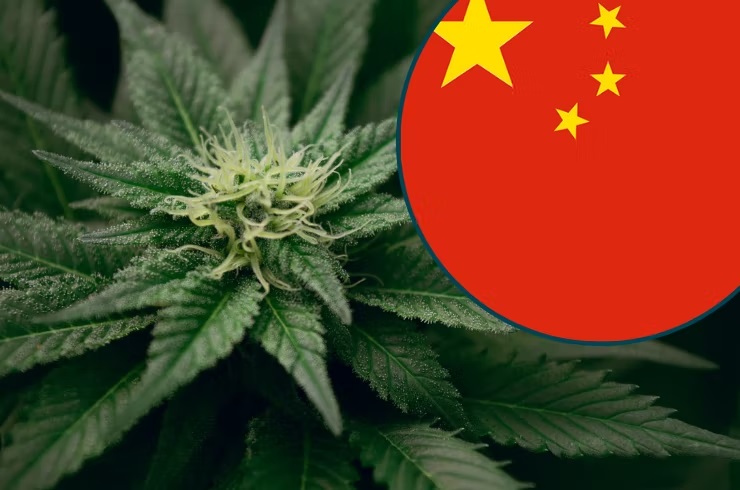
Quick answer: No, weed is not legal in China. Cannabis is a strictly prohibited controlled drug, with no legal recreational or general medical use. Personal possession is handled administratively, while trafficking is a serious crime that can carry life imprisonment or the death penalty. China can even prosecute travelers for cannabis they used legally in another country before arriving.
If you are asking whether marijuana is legal in China, the short version is that the country runs one of the world’s strictest drug-control regimes. Below is a plain-English breakdown of what is banned, the penalties involved, and the specific risks for visitors.


Is marijuana legal in China for recreational use?
Recreational marijuana is completely illegal in China. Cannabis is treated as a controlled narcotic, and there is no legal recreational market of any kind. Under the PRC Criminal Law and the Drug Prohibition Law, smuggling, trafficking, transporting, manufacturing, and illegally possessing drugs are all forbidden.
So no, you cannot smoke weed in China, and there is no gray area for casual use. The prohibition applies to residents and foreign visitors alike.
What happens with personal possession?
Personal use and possession of small amounts are generally handled administratively rather than as a criminal trafficking charge. Under the Public Security Administration Punishments Law, penalties reportedly include detention of up to 15 days plus fines, and users can reportedly be placed in compulsory drug rehabilitation for up to two years.
These figures come from secondary legal explainers, so treat them as an indication of how the system works rather than a precise guarantee of any individual outcome.
How serious are trafficking penalties?
Trafficking cannabis in China is a genuine capital offense. Serious drug trafficking can be punished by “fifteen years’ imprisonment, life imprisonment, or even the death penalty and confiscation of property.” The UK’s Foreign, Commonwealth & Development Office echoes this, warning that possession, trafficking, and manufacture of cannabis are serious offences carrying penalties up to heavy fines, lengthy prison sentences, or the death penalty.
China is one of a small number of countries where cannabis can still lead to execution. Human-rights monitors believe China executes hundreds of drug offenders each year, but exact numbers are estimates only, since the government treats execution figures as a state secret. The country has also sentenced foreign nationals to death for drug trafficking.
Trafficking thresholds
Sentencing tiers are tied to quantity. The 2016 Supreme People’s Court interpretation defines the weight bands that separate offenses, though thresholds and their application should be verified against the current text. According to that 2016 interpretation, the highest tier, the one linked to 15 years, life, or death, begins at large quantities, while a lower “relatively large” band carries heavy but lesser penalties.
Penalties at a glance
| Offense | Reported penalty | Source |
|---|---|---|
| Personal use / small-amount possession (administrative) | Detention up to 15 days + fines; compulsory rehab up to 2 years (reportedly) | Public Security Administration Punishments Law |
| Serious trafficking / manufacturing | 15 years, life imprisonment, or death + confiscation of property | PRC Criminal Law |
| “Large quantities” death-penalty tier | Threshold: 5kg+ hemp oil, 10kg+ cannabis resin, 150kg+ marijuana leaves/cigarettes (verify) | 2016 SPC interpretation |
| “Relatively large” tier | Threshold: 1-5kg hemp oil, 2-10kg resin, 30-150kg leaves/cigarettes (verify) | 2016 SPC interpretation |
| Positive drug test on entry / in raids | Heavy fines, detention, and deportation | UK FCDO travel advice |
Can you smoke weed in China as a tourist?
No, and the risk extends beyond anything you do inside the country. Chinese authorities can prosecute you for drug use “regardless of where or when you took drugs.” That means a positive test on arrival can create legal trouble even if the cannabis was consumed legally somewhere else.
Enforcement is active. The UK FCDO reports random hair and urine testing at points of entry and during bar raids, with a positive result leading to heavy fines, detention, and deportation. Reporting by the South China Morning Post notes that testing tends to focus on flights from places where drugs are decriminalized, and that students and foreigners appear more likely to be targeted.
One documented case: a Volkswagen executive was detained for about 10 days and expelled in October 2024 after returning from Thailand and testing positive for cannabis (then legal in Thailand) and cocaine. Airports also scan baggage, including that of transiting passengers, for cannabis. The US State Department maintains an elevated travel advisory for China.
Is medical cannabis or CBD available?
There is no medical cannabis program for patients in China. High-THC cannabis is prohibited, and only narrow, state-controlled cannabis-derived substances are permitted for medical or research use. Cannabis seeds (huomaren) do appear in the Chinese Pharmacopoeia for traditional medicine, but that is not a route to consumer cannabis products.
The consumer CBD market is effectively closed. China’s regulator, the NMPA, banned four cannabis-derived cosmetic ingredients, including CBD, effective 28 May 2021, and as of 25 August 2024 it classified CBD under precursor-chemical controls. Travelers should not bring CBD products into the country.
What about industrial hemp?
Industrial hemp is the one narrow exception, and it is not for consumers. Cultivation of low-THC hemp (below 0.3% THC) is licensed only in two provinces, Yunnan, which set up the first framework in 2010, and Heilongjiang in 2017, strictly for industrial and export use. Separately, China banned synthetic cannabinoids as an entire class effective 1 July 2021, a distinct measure that does not change the status of natural cannabis.
Two things people confuse with Chinese weed law
First, US enforcement headlines about “Chinese grows” are not Chinese law. The DEA has begun tracking such operations in its US marijuana-enforcement data, and in July 2025 seven Chinese nationals were indicted in Maine over illegal grows and human trafficking, an organized-crime matter operating inside the United States, not Chinese state policy.
Second, drug use in China is comparatively low by official measures. National figures for 2024, released around June 2025, showed registered drug users fell 16.7% year on year to about 0.054% of the population.
A long history, a strict present
Cannabis is far from new to China, hemp has roughly a 6,000-year history there. Emperor Shen Nung (~2700 BC) is linked to early medicinal use, the ~2,700-year-old Yanghai Tombs hold some of the oldest evidence of psychoactive cannabis, and the physician Hua T’o (~190 AD) reportedly used a hemp-and-wine anesthetic. That heritage stands in sharp contrast to today’s zero-tolerance stance.
Conclusion
Is weed legal in China? No, cannabis is banned across the board, with no recreational market, no patient medical program, and effectively no legal consumer CBD. Personal possession draws administrative detention and possible compulsory rehab, while trafficking can end in life imprisonment or execution. For travelers, the sharpest risk is testing: China can act on drug use that happened legally abroad. The safest approach is simple, do not carry, use, or arrive with any cannabis product.
Last reviewed: August 14, 2026. Cannabis laws change frequently, always verify current rules with official sources before you travel.


Sign up for bi-weekly updates, packed full of cannabis education, recipes, and tips. Your inbox will love it.