

 Merch
Merch Medical card
A practical 2026 guide to building biologically active, compost-rich living soil and using companion plants to support healthy, pest-resistant cannabis.
If you’re preparing beds or containers for organic living soil cannabis cultivation this season, the most important work happens before you plant a single seed. Soil that’s biologically active and rich in compost can support stronger roots, richer terpene profiles, and plants that are naturally more resistant to pests. Here’s how to build and maintain one, with companion plants that do real work in the garden.
What Is Organic Living Soil for Cannabis (and Why Does It Matter in 2026)?
Organic living soil for cannabis is biologically active growing medium rich in organic matter and populated by bacteria, fungi, protozoa, and other organisms that cycle nutrients and protect plant roots. Unlike bagged potting mixes or salt-based systems, organic living soil is managed as a living ecosystem, one that improves with each season rather than depleting.

For cannabis growers, it represents a meaningful shift away from synthetic fertilizers toward a system where the soil itself does most of the work. A well-built organic living soil reduces the need for bottled feeds, supports more complex terpene expression, and can be refreshed and reused season after season. Many growers report that the difference shows up most clearly in the final product’s flavor and aroma. The foundation of this approach is healthy soil biology, not a bag of fertilizer.
Start With Compost: The Backbone of Your Organic Cannabis Soil Mix
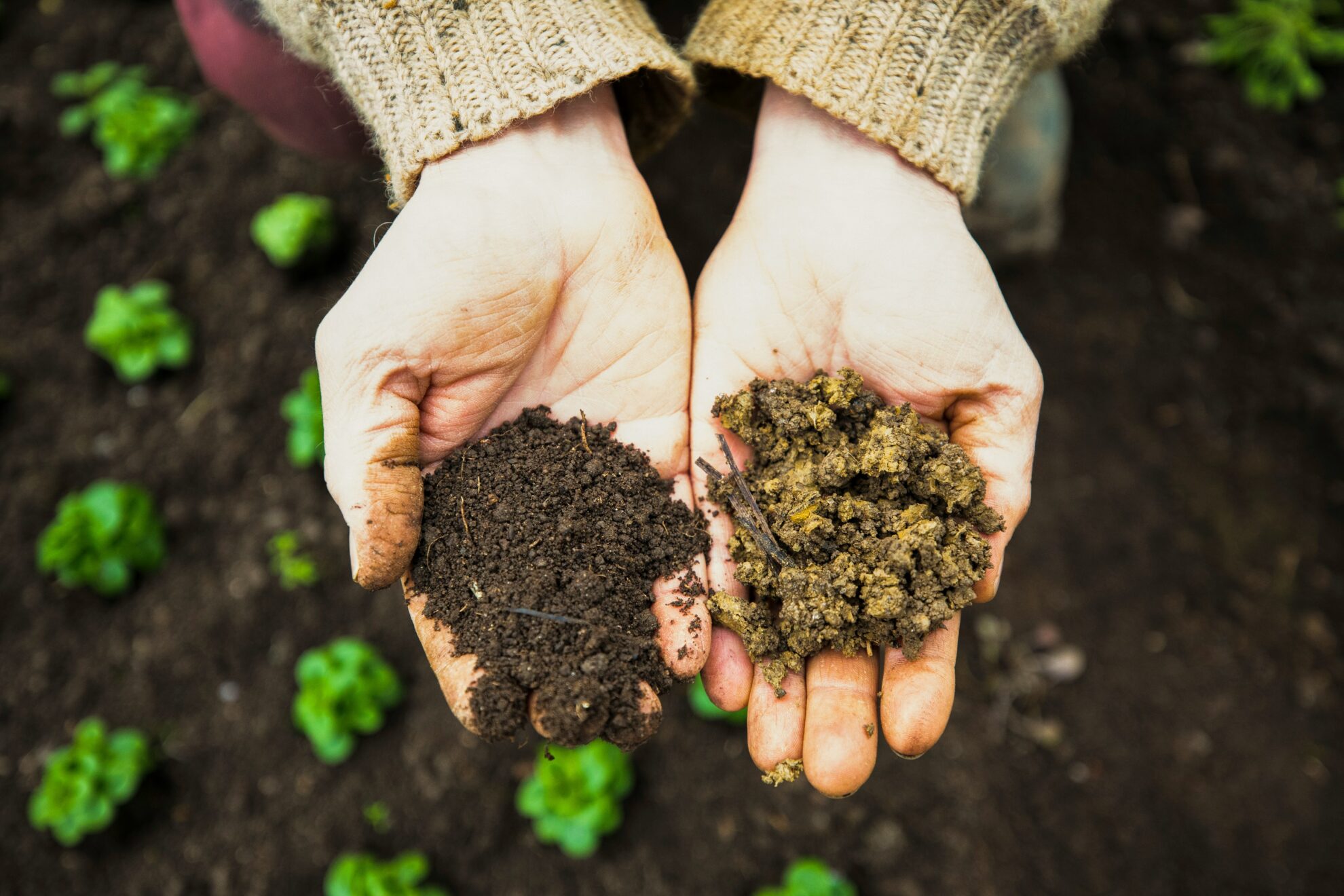
Compost is the foundation of any organic living soil for cannabis. Good finished compost is dark, crumbly, and earthy-smelling, with no sour or ammonia odor. It delivers organic matter, beneficial microbes, and slow-release nutrients all at once, and it improves soil structure and water retention at the same time.
For cannabis beds, stick to plant-based feedstocks: vegetable scraps, fallen leaves, straw, and plant residues. Avoid high-salt inputs, meat or dairy products, and grass clippings treated with synthetic herbicides. Outdoor piles can take several months to a year to fully mature, so planning ahead matters. If you’re targeting a spring 2026 grow, starting or expanding your compost pile now is the right call.
Base Organic Soil Mix for Cannabis (per 10 gallons)
- 4 gallons fully finished compost
- 3 gallons coco coir
- 2 gallons perlite
- 1 gallon vermiculite
- Small additions of kelp meal, alfalfa meal, rock dust, and agricultural lime as appropriate
Adapted from cannabis-specific organic soil recipes. Allow the mix to rest two to four weeks before transplanting.
This kind of compost-rich soil recipe gives cannabis roots a loose, well-drained environment while maintaining enough moisture retention to support consistent growth through warm weather.
Understanding the Soil Food Web for Cannabis
The soil food web is the network of living organisms, bacteria, fungi, protozoa, nematodes, arthropods, and earthworms, that break down organic matter and make nutrients available to plant roots. It’s what separates living soil from a medium that simply holds plants upright.
For cannabis, a diverse and biologically active soil community means more efficient nutrient cycling and better natural resistance to pathogens. Mycorrhizal fungi are a particularly valuable part of this system: they form symbiotic relationships with roots, extending their reach and improving phosphorus and water uptake in organically managed soils.
Practices that support a healthy soil food web include:
- Feeding the soil steady organic matter rather than high-dose soluble fertilizers
- Applying mulch (straw, leaf mold, compost) to protect surface biology and moderate soil temperature
- Minimizing tillage, following no-till and regenerative principles that preserve fungal networks and micro-arthropods
- Avoiding synthetic pesticides and fungicides in or near the root zone
Cannabis-Specific Soil Prep Steps for 2026
Cannabis roots perform best in loose, well-drained soil that still retains adequate moisture, with a pH of 6.0 to 7.0. Outside this range, nutrient lockout becomes a real problem, so testing and adjusting your soil before planting is worth the extra step.
If you’re building an amended living soil mix from scratch, let it “cook” for two to four weeks before transplanting. This gives beneficial microbes time to break down any hot organic amendments and stabilize the mix. Organic amendments like kelp, alfalfa, and rock dusts support nutrient cycling and soil structure rather than delivering a sudden nutrient spike.
For outdoor beds, the news gets better over time. Soil biology accumulates year over year in permanent beds. Refreshing annually with a topdress of finished compost and a winter cover crop of white clover, which fixes atmospheric nitrogen and protects surface biology, keeps the system building rather than depleting. If you’re newer to growing and want a comprehensive walkthrough from seed to harvest alongside your soil work, The Cannigma’s cultivation guide covers the full growing process in one place.


Cannabis Companion Planting: Pest Control and Soil Benefits in One Step
Companion planting is one of the most underused tools in the organic cannabis garden. The right plants nearby can repel pests, attract beneficial insects, and improve soil structure without any spraying. Cannabis companion planting works through a combination of aromatic deterrence, habitat creation for predatory insects, and in some cases, direct soil improvement.
| Companion Plant | Main Role | Placement Tip |
|---|---|---|
| Marigold (Tagetes) | Repels aphids, whiteflies, root nematodes; attracts beneficials | Ring around beds or interplant between rows |
| Basil | Aromatic deterrent for flies and some aphid species | Close to cannabis plants; works well in containers |
| White clover | Fixes nitrogen, living mulch, keeps surface biology active | Low-growing ground cover between plants |
| Dill, yarrow, buckwheat | Habitat for lacewings, parasitic wasps, and pollinators | Bed borders; avoid shading the cannabis canopy |
| Lemon balm, sage | Aromatic deterrents; attract beneficial insects | Keep trimmed so lemon balm doesn’t spread aggressively |
According to current companion planting guidance for cannabis, a few practical rules make all the difference: establish companions before peak pest season arrives, place aromatic herbs close to cannabis plants where deterrent oils are most effective, and avoid tall companions that shade the canopy significantly.
Building organic living soil for cannabis takes more planning than filling containers with bagged mix, but the payoff compounds across seasons. Start your compost early, source quality organic amendments, and let biology do the heavy lifting. A soil food web that’s diverse and well-fed will cycle nutrients on its own, reduce your dependence on bottled inputs, and support plants that are healthier from root to flower. Add a few well-chosen companion plants to your organic cannabis soil mix, and you’ve created a garden system that becomes more resilient every year.
Frequently Asked Questions
What’s the difference between organic living soil and regular potting mix for cannabis?
- Regular potting mixes are largely inert and rely on added fertilizers to feed plants. Organic living soil is biologically active, with microbes, fungi, and other organisms that break down organic matter and make nutrients available on their own.
- Living soil builds in quality over time and can be refreshed and reused across seasons, while most bagged mixes are single-use.
What pH should organic living soil be for cannabis?
- A pH of 6.0 to 7.0 is the target range for cannabis grown in soil. Outside this window, nutrient availability drops and plants can show deficiency symptoms even in nutrient-rich soil.
- Test your mix before planting and adjust with agricultural lime (to raise pH) or sulfur (to lower it) as needed.
How long should I let amended living soil sit before planting cannabis?
- Most growers allow two to four weeks for a freshly amended mix to “cook.” This gives beneficial microbes time to break down hot organic amendments like alfalfa meal or guano before roots are introduced.
- A mix that smells earthy and pleasant is ready. A sharp ammonia odor means it needs more time.
Which companion plants work best near cannabis for pest control?
- Marigolds (Tagetes) are one of the most effective options, repelling aphids, whiteflies, and root nematodes while attracting beneficial insects. Basil and lemon balm offer aromatic deterrence against flies and some aphid species.
- For beneficial insect habitat, dill, yarrow, and buckwheat attract lacewings and parasitic wasps. White clover doubles as a ground cover that fixes nitrogen and supports soil biology between plants.


Sign up for bi-weekly updates, packed full of cannabis education, recipes, and tips. Your inbox will love it.