

 Merch
Merch Medical card
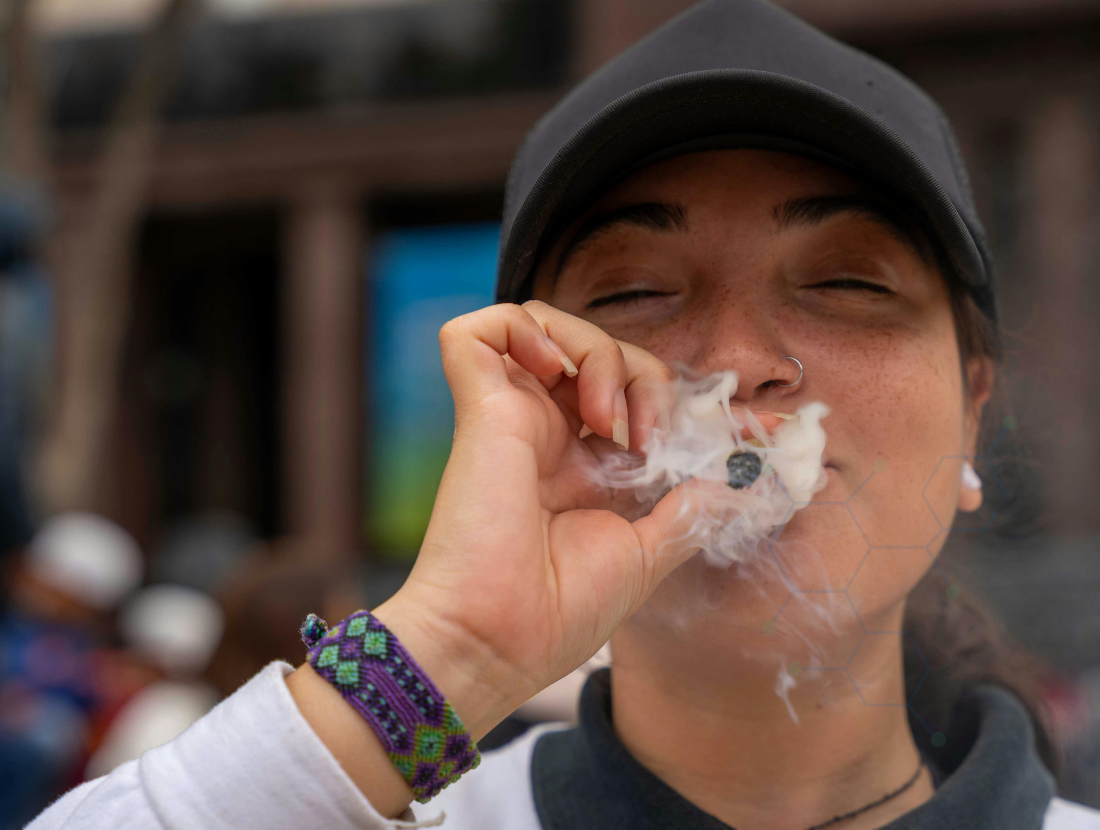
Albert Hofmann’s 1943 bicycle ride and the worldwide cannabis holiday share a week, a courtroom history, and a molecular connection in the brain. Each informs how we understand the other.
Key Takeaways
- Bicycle Day (April 19) marks Albert Hofmann’s first intentional LSD experience in 1943. It falls the day before the worldwide cannabis holiday, 4/20.
- Congress placed LSD and cannabis in Schedule I together in 1970, ending decades of active clinical research on both.
- The cannabinoid CB1 receptor and the serotonin 5-HT2A receptor (LSD’s primary target) physically bind together in brain regions linked to memory, according to preclinical studies in rodents.
- Cannabis co-use during psychedelic sessions is common. A 2024 international survey found that 56% of psychedelic users reported co-using at least one other substance, with cannabis topping the list.
- Researchers and policy analysts increasingly draw direct parallels between cannabis legalization and the emerging push to reform psychedelic access.
Bicycle Day and 4/20 fall within 24 hours of each other every April, and the two occasions are closer than the calendar suggests. On April 19, people who follow the history of psychedelic research observe Bicycle Day: the anniversary of the afternoon in 1943 when Swiss chemist Albert Hofmann intentionally dosed himself with the substance he had synthesized five years earlier, then rode his bicycle home through Basel as the world rearranged itself around him. The following day, April 20, cannabis communities worldwide mark 4/20 with a mix of advocacy, celebration, and ritual. The proximity is not a coincidence to explain away. It turns out to be a good starting point for examining how deeply the two substances and their communities are entangled, in pharmacology, in legal history, and in contemporary use.
Albert Hofmann, LSD, and the Research Blackout Cannabis Advocates Recognize
Hofmann was a conservative, meticulous scientist at Sandoz Laboratories who spent much of his later life frustrated that the compound he discovered had been stripped from clinical use. Interviewed shortly before his 100th birthday, he called LSD “medicine for the soul” and described his dismay that a decade of productive psychiatric research, covering more than 1,000 scientific papers, several dozen books, and treatment of over 40,000 patients, had been shut down not by evidence of harm, but by political and cultural backlash. His team also isolated, named, and synthesized psilocybin and psilocin, the active compounds in psychedelic mushrooms.
Cannabis advocates will recognize the arc. A substance with documented therapeutic applications, subject to a research blackout enforced by federal classification rather than scientific consensus. Hofmann’s frustration and the frustration of cannabis researchers who spent decades unable to run controlled trials emerged from the same moment in American legislative history.
How the Controlled Substances Act Linked Cannabis and Psychedelics in 1970
The shared frustration Hofmann expressed about LSD traces back to the same legislative moment that shaped Bicycle Day’s activist undertone. In 1970, Congress passed the Controlled Substances Act and placed LSD, psilocybin, DMT, mescaline, and cannabis together in Schedule I: the most restrictive classification, reserved for substances with no accepted medical use and high potential for abuse. The decision was political. Researchers at the time documented the cost: an entire generation of psychiatric knowledge frozen, clinical programs disbanded, and decades of delay before researchers could return to the questions Hofmann’s generation had been asking. Cannabis researchers can tell a structurally identical story, chapter by chapter.
Research Context
A 2025 peer-reviewed analysis in Addiction identified direct structural parallels in how cannabis and psychedelics each moved through American drug policy, including ballot initiative strategies, corporate investment patterns, and the use of therapeutic claims as a gateway to broader policy change.
The Molecular Overlap Between Cannabis and Psychedelics: CB1 and 5-HT2A
The pharmacological connection between cannabis and psychedelics runs to the receptor level. THC acts primarily at the CB1 cannabinoid receptor. LSD acts primarily at the 5-HT2A serotonin receptor. Researchers at the University of Barcelona demonstrated in 2015 that in specific brain regions involved in memory formation, these two receptors physically bind together, forming protein complexes called heterodimers, and that THC-induced cognitive impairment in rodents depends on this CB1/5-HT2A interaction. Separate preclinical research has since shown that chronic THC exposure sensitizes 5-HT2A receptors to hallucinogenic signaling patterns through the Akt/mTOR pathway, a molecular profile associated with psychedelic-type activity.
CBD sits at the same receptor from the opposite side. CBD acts as a weak antagonist at 5-HT2A; LSD is among the most potent agonists ever identified at that site. The same receptor, three compounds, three distinct experiential outcomes. This is preclinical research conducted in rodent models and cell cultures. No human randomized trial has yet established this heterodimer mechanism as a driver of subjective experience, and the article should be read with that limitation in mind.
Cannabis in the Psychedelic Experience: What the Data Shows
Cannabis is the most common substance people co-use alongside psychedelics. A 2024 analysis of the Global Psychedelic Survey, drawing on 5,370 respondents across dozens of countries, found that 56% reported typically co-using at least one additional substance during psychedelic sessions, with cannabis ranking first. A separate field study conducted at music events in Colorado found that users most often described their reasons for combining the two as “tension reduction and balancing of drug effects,” followed by enhancement of psychological processes.
The most rigorous human observational evidence comes from a 2022 prospective study by researchers at Imperial College London. Among 321 participants, cannabis co-use correlated dose-dependently with higher scores on mystical-type experience, ego dissolution, and visual alterations during psychedelic sessions. Higher cannabis doses also correlated with more challenging experiences, including scores on an “insanity” subscale, in a non-linear pattern: low doses were associated with lower challenge scores, while high doses pushed them up sharply. Cannabis is not a predictable amplifier. The direction and intensity of its effect depend on dose, and the available data is observational and self-reported. Causality cannot be established from these studies.
Meanwhile, both substances are reaching more people. NIDA’s 2024 Monitoring the Future data confirmed that cannabis and hallucinogen use among adults aged 19 to 30 and 35 to 50 held at or near historic highs in 2023, with psychedelic use reaching the highest levels ever recorded in the survey’s history the following year. The population navigating the overlap between these two substances is growing, and the evidence base has not kept pace.
Bicycle Day, 4/20, and the Shared Reform History Behind Both
Bicycle Day was formalized in 1985 by Thomas Roberts, a Northern Illinois University professor who recognized April 19 as worth marking. Its founding impulse was serious: to honor a moment of scientific discovery and to keep alive the argument for supervised, intentional psychedelic use. That seriousness increasingly shares space with the commercial pressure that cannabis advocates know from 4/20. Cannabis writer Madison Margolin, writing for GreenState, observed that psychedelics are now following the path of cannabis “for better and for worse,” a formulation that captures the complexity of what mainstream attention brings.
The “better” includes renewed research legitimacy and real access for people who need it. The “worse” includes the commercialization of a holiday whose original purpose was to argue against suppression. Cannabis advocates who have watched 4/20 transform over the past decade will find that trajectory familiar. Both communities are negotiating the same tension: how to preserve the reform impulse that created the holiday as the corporate infrastructure grows up around it.
Hofmann believed the compounds he synthesized had therapeutic and spiritual value that deserved careful, sober investigation. The science is now confirming connections his chemistry could not have predicted. The calendar, at least, puts both conversations in the same week.
Frequently Asked Questions
Is cannabis considered a psychedelic?
Cannabis is not a classical psychedelic. Classical psychedelics act primarily through the 5-HT2A serotonin receptor; cannabis acts through the CB1 cannabinoid receptor. The two systems interact at a molecular level in preclinical models, and high-dose cannabis can produce psychedelic-adjacent perceptual effects in some users, but the pharmacological mechanisms are distinct.
Is it safe to combine cannabis with psychedelics?
The available evidence is observational and does not support a clear safety recommendation. Research from Imperial College London found that high-dose cannabis co-use increased both the intensity and the challenging aspects of psychedelic experiences, including a non-linear increase in distress scores. Anyone considering co-use should be aware that cannabis can amplify the difficulty of a psychedelic experience, not only its positive dimensions. Set, setting, dose, and individual sensitivity all influence outcomes in ways that no general guideline can account for.
When is Bicycle Day and why does it matter?
Bicycle Day is observed on April 19, the anniversary of Albert Hofmann’s intentional self-experiment with LSD in 1943. It commemorates the first documented psychedelic experience and serves as a touchstone for researchers and advocates working on psychedelic-assisted therapy and related clinical trials. Its proximity to 4/20 (April 20) reflects a genuine historical entanglement: both cannabis and LSD were placed in Schedule I by the Controlled Substances Act in 1970, and advocates in both communities have been working to restore research access and reform drug policy ever since.
Are cannabis and psychedelic policy movements connected?
A 2025 peer-reviewed analysis in Addiction documented direct structural parallels between the cannabis legalization movement and the emerging push to decriminalize or legalize psychedelics, including shared ballot initiative strategies, growing corporate investment, and the use of therapeutic claims to build toward broader recreational access. An analytic model based on cannabis legalization timelines projects that a majority of US states could legalize psychedelics between 2033 and 2037.
Did Albert Hofmann support cannabis?
Hofmann did not specifically advocate for cannabis, but he consistently argued that the criminalization of psychedelics was a political decision unsupported by clinical evidence, a position that maps closely onto arguments cannabis researchers and advocates have made about cannabis scheduling. He was a proponent of supervised, intentional use of psychoactive substances for therapeutic and spiritual purposes, and he criticized blanket prohibition as a barrier to legitimate medicine.


Sign up for bi-weekly updates, packed full of cannabis education, recipes, and tips. Your inbox will love it.