

 Merch
Merch Medical card
Based on peer-reviewed research on cannabis, alcohol use, and substitution patterns
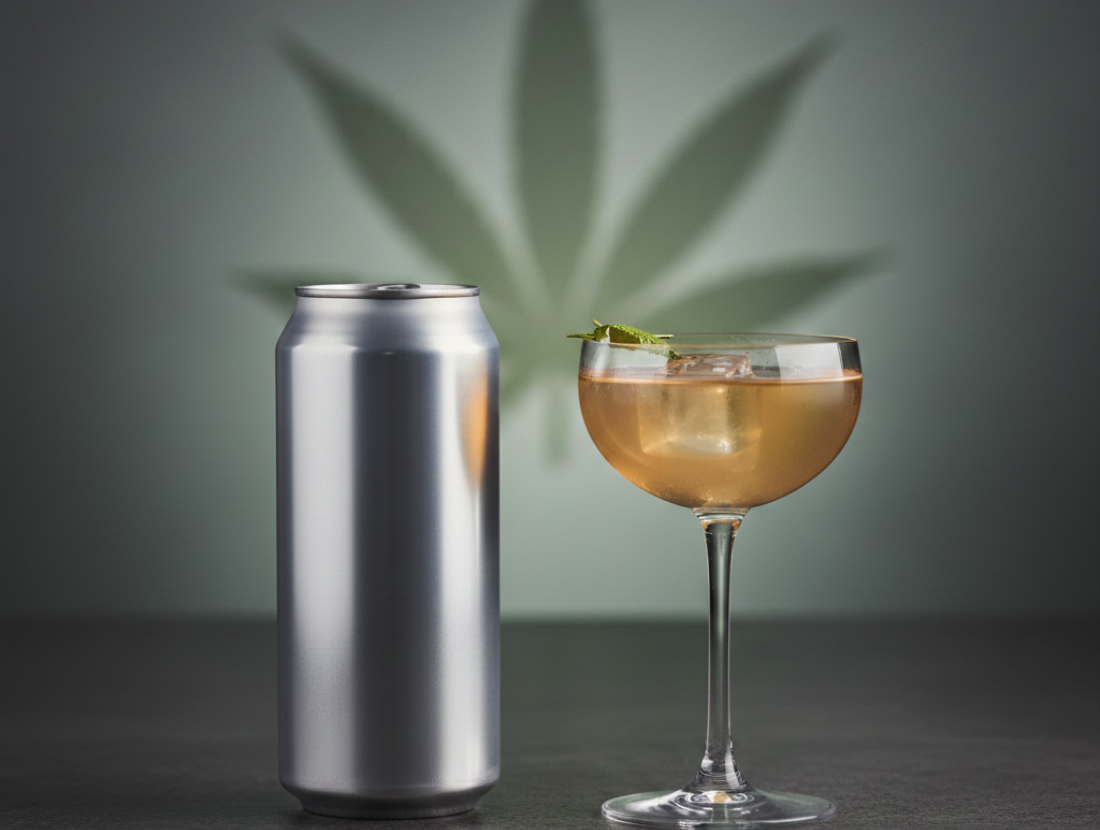
“Cali sober” has become shorthand for a lifestyle choice: ditching or cutting back on alcohol while you’re still using cannabis. It sounds healthier on the surface, and THC-infused seltzers and mocktails have made the swap feel more social. But what does the science actually say about trading drinks for cannabis? And do THC beverages work the same way as smoking or vaping?


Here’s the thing—it’s complicated. While some people do drink less when they use cannabis, the pattern isn’t universal. In fact, people who identify as sober-curious or Cali sober often have higher rates of past-month heavy drinking and cannabis use than their peers. So let’s look at what research actually tells us about THC as an alcohol substitute—and what it doesn’t.
What the Science Shows About Substitution
The most direct evidence comes from a randomized controlled trial at Brown University, where researchers gave participants cannabis with varying THC levels (3.1% to 7.2%) or a placebo, then observed their drinking behavior in a lab setting. The results? People who used cannabis drank 19–27% less alcohol and delayed their first drink compared to the placebo group.
That’s consistent with what we’re seeing in real-world patterns. In studies tracking heavy drinkers over time, days when people used cannabis were linked to fewer alcoholic drinks and lower odds of binge drinking. The substitution effect seems to work best for people who already drink heavily or who’re intentionally using cannabis as an alcohol alternative.
But here’s the catch: substitution isn’t the whole story. A systematic review of cannabis and alcohol co-use found both substitution and complementarity—meaning some people use cannabis instead of alcohol, while others use both together, which can amplify intoxication and risk.
Why THC Drinks Aren’t Like Smoking Cannabis
Here’s where things get interesting: most of the research showing reduced alcohol intake used smoked cannabis, not edibles or beverages. That distinction matters because of how your body processes oral THC.
When you ingest THC, only about 4–12% makes it into your bloodstream due to liver metabolism. But during that process, THC converts into 11-OH-THC, a metabolite that’s more potent and longer-lasting than THC itself. This is why oral cannabis products have a delayed onset—sometimes 30 to 90 minutes—and can catch people off guard with intensity that builds over hours.
Key difference: Smoked cannabis peaks within minutes and gives you control over how much you’re using. THC drinks take longer to kick in, making it easier to overshoot your target and harder to adjust on the fly.
The Dose Matters—A Lot
Low doses of oral THC can feel really different from higher ones. In controlled studies, around 7.5 mg of oral THC reduced subjective stress during stressful tasks without causing significant anxiety. But slightly higher doses—particularly in people who don’t use cannabis regularly—can actually increase feelings of unease.
Most THC beverages on the market contain 2–10 mg per serving, putting them in that lower range. That’s generally enough to feel relaxed without strong intoxication, but individual responses vary widely based on tolerance, body weight, metabolism, and whether you’ve eaten recently.
Real-World Considerations
If you’re using THC drinks as an alcohol substitute, here are a few practical points that really matter:
- Don’t drive. Even at low doses, cannabis impairs reaction time and divided attention, especially in the first few hours. The “I feel fine” test doesn’t work.
- Start low if you’re new. Wait at least 90 minutes before deciding whether to have more. It’s really easy to underestimate oral THC.
- Watch for next-day effects. Some people report grogginess or brain fog the morning after, particularly with higher doses or late-night use.
- Know your goals. If you’re trying to reduce alcohol harm, substitution with low-dose THC may help. But if you’re prone to heavy use of either substance, cannabis and alcohol co-use can increase risks rather than reduce them.
The Bottom Line
Cali sober isn’t a one-size-fits-all health intervention. For some people, using cannabis instead of alcohol genuinely reduces drinking and the harms that come with it. For others, it becomes another form of regular intoxication—or it adds to their alcohol use rather than replacing it.
The science does support the idea that cannabis can substitute for alcohol in certain contexts, especially among heavier drinkers and when it’s used intentionally. But THC beverages introduce different pharmacokinetics and risks compared to smoked cannabis, and most research hasn’t tested them specifically.
If you’re exploring THC drinks as an alcohol alternative, go slow, pay attention to how you feel, and be honest with yourself about whether the swap is actually serving the goal you have in mind. Science can tell us what’s possible—but only you can decide what works for your life.
References
- Brown University. (2024). Cannabis reduces alcohol consumption in a randomized controlled trial. Brown University News.
- Metrik, J., et al. (2024). Acute effects of cannabis on alcohol craving, choice, and consumption in the human laboratory. American Journal of Psychiatry.
- Karoly, H.C., et al. (2021). Effects of cannabis use on alcohol consumption in a sample of treatment-engaged heavy drinkers in Colorado. Addiction.
- Subbaraman, M.S. (2022). Patterns of cannabis and alcohol co-use: Substitution versus complementary effects. Addictive Behaviors.
- Cannabis Evidence. (2022). Cannabis and alcohol use. STEM Health Brief.
- Pearson, M.R., et al. (2024). Sober curiosity, temporary abstinence, and reduced drinking among U.S. emerging adults. Addictive Behaviors.
- Huestis, M.A. (2018). Human cannabinoid pharmacokinetics. Chemistry & Biodiversity.
- Freeman, T.P., & Lorenzetti, V. (2020). Clinical evaluation of the cannabis-using patient: A moving target. The Permanente Journal.
- Spindle, T.R., et al. (2021). Pharmacodynamic effects of vaporized and oral cannabidiol and vaporized CBD-dominant cannabis in infrequent cannabis users. Drug and Alcohol Dependence.
- McCartney, D., et al. (2021). Cannabis effects on driving performance: Clinical considerations. Clinical Pharmacology & Therapeutics.


Sign up for bi-weekly updates, packed full of cannabis education, recipes, and tips. Your inbox will love it.