


 Merch
Merch Medical card

For a long time now, the conversation around medical cannabis has revolved around two familiar names: THC and CBD. These two compounds opened the door for millions of people to understand that cannabis could be medicine, not just a recreational substance. They helped legitimize an entire field that had lived in the shadows for decades.
But something important has quietly shifted in the background of scientific research.
And most people don’t even know about it yet.

What many don’t realize is that long before cannabis ever entered human culture, the body already carried a communication system designed to work with cannabinoid-like signals. This system—the endocannabinoid system, or ECS—is part of our shared, ancient human biology, reaching back hundreds of millions of years through evolutionary time. It helps regulate mood, pain, immunity, stress, appetite, sleep, and repair. Cannabis is, in evolutionary terms, a relative newcomer. And yet, it speaks the language of this system with an almost uncanny accuracy.
For a while, it seemed like that was the whole story: cannabis, receptors, and the molecules that connect them.
But it turns out the story is much bigger.
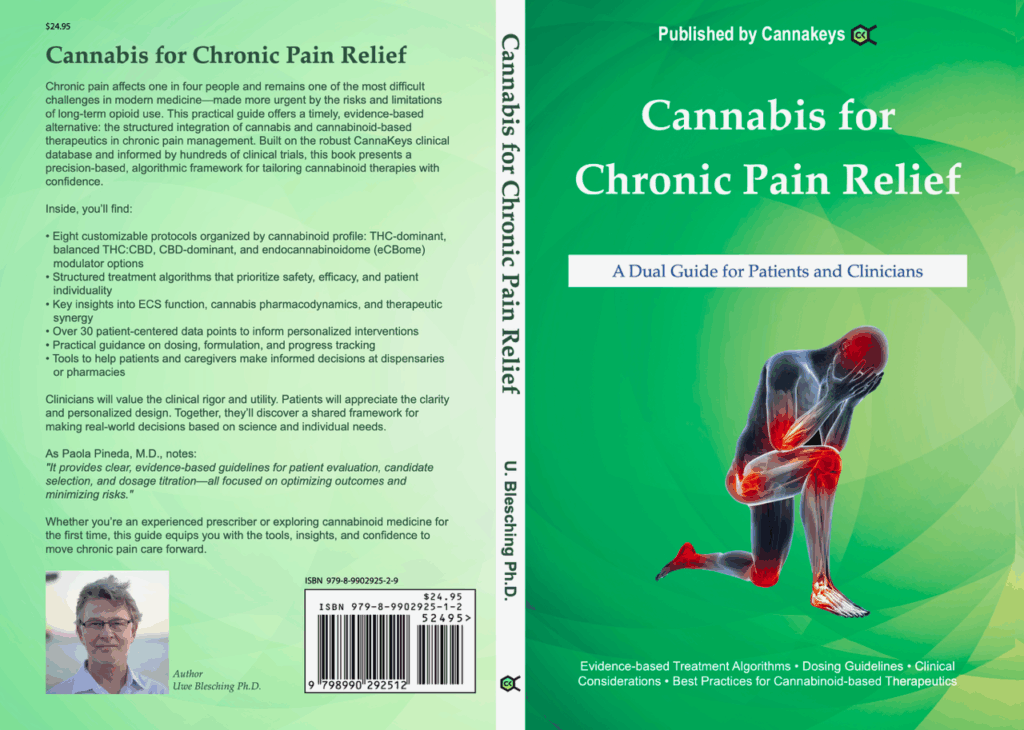
Cannabis is not the system. It is only one voice among many in a much larger biological conversation taking place inside your body. Scientists now call this expanded network the endocannabinoidome, or eCBome for short. It includes not only your cannabinoid receptors and the endocannabinoids you make yourself, but also your gut microbiome, your dietary fats, your inflammatory signaling molecules, and a wide family of cannabinoid-like compounds that don’t come from cannabis at all.
These other modulators speak the language of the ECS less directly than THC or CBD—but often in ways that are just as impactful. And it is this larger network, the eCBome, that is now reshaping how we understand pain, mood, immunity, metabolism, and why cannabis can work beautifully for some people—and unpredictably for others.
In simple terms, the eCBome is the full internal conversation that helps keep your endocannabinoid, nervous, immune, and metabolic systems in balance. Cannabis can influence that conversation significantly.
But it does not run it alone.
And that distinction matters more than most people realize.
Many people notice that their relationship with cannabis changes over time. CBD that once felt clearly supportive may seem quieter. THC that once brought ease may feel different in certain moments. Chronic pain that once responded easily can become more layered. In those moments, it’s natural to first wonder whether the product, the dose, or the strain needs adjusting.
Often, it isn’t.
What usually changed was the condition of the ECS and the broader eCBome itself. Chronic stress, poor sleep, unresolved inflammation, nutrient depletion, and gut imbalance can all quietly reshape how this internal network functions. Under sustained stress, ECS signaling can become less responsive, its regulatory range can narrow, and its ability to maintain cellular homeostasis across organ systems can weaken. When that internal terrain shifts, the way cannabis feels and works often shifts right along with it.


Identifying acute and chronic stressors and reducing them as efficiently and gently as possible is only part of the equation. To return to an optimal regulatory state, the ECS often needs direct support as well. This is where the eCBome can be harnessed more intentionally and with agency—using naturally occurring compounds and mind–body practices to help restore healthy endocannabinoid tone.
Here is the part that surprises most people: your body makes powerful cannabinoid-like molecules that don’t come from cannabis at all. Many of them are available as nutraceuticals almost anywhere, and others are generated through everyday behaviors that quietly modulate the eCBome. One of the most important is PEA, a naturally occurring lipid that plays a major role in pain control and immune balance. Others, like OEA and omega-3–derived endocannabinoids, help shape appetite, metabolism, mood, and inflammation. Even common plant compounds like beta-caryophyllene—the terpene that gives black pepper its bite—activate cannabinoid receptors directly.
Mind–body practices belong here as well. Slow, rhythmic breathing, meditation, restorative movement, time in nature, social connection, cognitive behavioral therapy, and even sound and light exposure all influence endocannabinoid tone through the nervous system. The eCBome is shaped not only by what we ingest—but also by how we breathe, move, rest, and relate.
None of these cause a high. None come from marijuana. And yet, they often shape how the entire system responds far more than most people realize.
Then there’s the gut.
Your microbiome is not just a digestive organ—it is an active partner in endocannabinoid signaling. Your gut bacteria influence how much endocannabinoid tone your body maintains, how your immune system responds through CB2 receptors, and how much neuroinflammation circulates through the nervous system. When the gut is off, cannabinoids often feel less predictable. When the gut is supported, small doses can suddenly feel profound.
This is why two people can take the same cannabis product and have completely opposite experiences—and why the very same person, using the same product at the same dose, can notice that it suddenly feels different over time. Same plant. Same dose. Entirely different internal ecosystems. These shifts can happen gradually—but they are especially common after a course of antibiotics, which can dramatically alter the gut microbiome, or after systemic steroid use, which can reshape immune and stress-hormone signaling. In both cases, the way the eCBome and endocannabinoid signaling function can change noticeably.
The future of endocannabinoid medicine is not simply higher THC, purer CBD, or even gene-based matching. It is moving toward supporting the entire regulatory network that makes those molecules work in the first place. It is about combining cannabinoids with non-intoxicating modulators, addressing stress and nutrition as seriously as dosage, and recognizing that your biology already knows how to regulate itself—it simply needs the right conditions.
Cannabis and cannabinoid-based therapeutics are powerful. No question about that. But they are not the whole system.
THC and CBD can often help compensate for sub-optimal ECS signaling. For many people, that compensation is exactly what’s needed—sometimes for years. But there are also times when what once worked begins to feel less effective, or stops working altogether. In those moments, it’s easy to assume that cannabis has failed. More often, what’s really being revealed is that the broader regulatory network underneath it needs support.
Your body doesn’t depend on THC and CBD alone to stay in balance. It depends on the vast internal intelligence of the eCBome—a network designed to adapt, protect, and restore equilibrium every day of your life.
When you understand that, cannabinoid medicine stops being just about cannabis.
It becomes about how your entire body learns to regulate itself again.


Sign up for bi-weekly updates, packed full of cannabis education, recipes, and tips. Your inbox will love it.