

 Merch
Merch Medical card
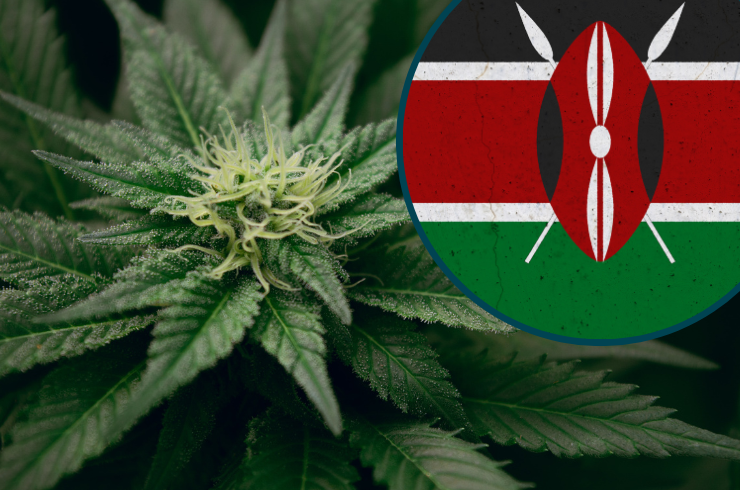
No, weed is not legal in Kenya. Cannabis, known almost universally in Kenya as bhang, is a controlled narcotic for recreational and medical use alike, and there is no decriminalised amount. What did change is the penalty.
A 2022 amendment cut the maximum sentence for possessing cannabis for your own use from ten years to five, and made a fine available instead of prison. This guide explains Kenya’s cannabis laws, what the penalties actually are now, where CBD sits, and the risk for visitors.

Is weed legal in Kenya for recreational use?
Recreational weed is illegal in Kenya, with no exception for personal use. Cannabis is controlled under the Narcotic Drugs and Psychotropic Substances (Control) Act, No. 4 of 1994, which is Chapter 245 of the Laws of Kenya. The Act was substantially amended by Act No. 4 of 2022, and that amended version is the law in force today.
There is no legal recreational market in Kenya and no tolerated quantity. Anyone found with cannabis can be prosecuted, and a conviction leaves a criminal record. Enforcement sits with the Directorate of Criminal Investigations, whose Anti-Narcotics Unit works the borders, the airports and the ports, and whose remit expressly includes finding and destroying cannabis plantations.
One point of vocabulary is worth knowing. Kenyans say bhang, the police say bhang, and the newspapers say bhang. The word does not appear anywhere in the statute, which refers only to cannabis, the cannabis plant and cannabis resin.
What are the penalties under Kenya weed laws?
Penalties under Kenya weed laws depend heavily on whether you can satisfy the court that the cannabis was for your own consumption. That single question separates a fine from a very long prison sentence.
Where the court accepts the cannabis was solely for personal use, the maximum is five years in prison or a fine of up to one hundred thousand shillings. This is the change most sources have not caught up with.
Before the 2022 amendment the same offence carried ten years, and the figure still appears in a good deal of published guidance, including some official travel advice. The Act also now allows a court to order a treatment programme instead, for a minimum of six months.
Once personal use is not established, the picture changes sharply. Larger quantities fall under the Act’s trafficking provision, which is drafted to catch possession as well as supply, and which sets penalties by weight. Those penalties run to decades in prison and fines in the tens of millions of shillings. Cultivating cannabis is a separate offence again, carrying a heavy fine or a long prison term.
It is worth being honest about how this has worked in practice. Because the trafficking provision turns partly on the market value of what was seized, people caught with modest amounts have received severe sentences. Cases reported before the 2022 amendment include long custodial terms for quantities worth only a few thousand shillings.
Penalties at a glance
| Offence | Governing law | General penalty |
|---|---|---|
| Possession where the court accepts it was solely for personal consumption | Cap. 245, as amended 2022 | Up to 5 years in prison or a fine of up to Ksh 100,000 |
| Possession or trafficking above that, graded by weight | Cap. 245 | Decades in prison and very large fines |
| Cultivation of a prohibited plant | Cap. 245 | A heavy fine or a long prison term |
| Use, or possession of a pipe or smoking utensil | Cap. 245, as amended 2022 | A fine and a custodial sentence |
Is medical marijuana legal in Kenya?
Medical marijuana is not available in Kenya. There is no programme, no patient register, no prescribing route and no dispensary, and no doctor in Kenya can lawfully prescribe cannabis for a medical condition.
The position is slightly more nuanced than a flat no, and the nuance matters. The Act contains exemption and licensing machinery capable in principle of permitting medical or scientific use, and the national drug authority has itself described the law as providing for medical and scientific use of cannabis. None of that has ever been turned into something a patient can use.
The courts have now been asked to change this and declined. In July 2026 the High Court dismissed a petition brought by Rastafari petitioners seeking a religious exemption, holding that the Act is a law of general application enacted to protect public health and that the petitioners had not first exhausted the licensing routes the Act provides.

The judge nonetheless said publicly that the status quo appeared untenable and called for a proper national conversation about cannabis policy.
Is CBD legal in Kenya?
There is no published Kenyan position on CBD, and that is the honest answer. Neither the Pharmacy and Poisons Board nor the national drug authority has issued guidance, a circular or a product classification covering cannabidiol. Any site telling you confidently that CBD is legal or illegal in Kenya is not working from a Kenyan source.
What can be said is that Kenyan law draws no distinction between hemp and cannabis and sets no THC threshold. The Act defines the cannabis plant as any plant of the genus, which leaves no obvious room for a low-THC carve-out. Industrial hemp has been the subject of repeated licensing claims and pilot proposals over the years, but no current government licensing framework could be verified.
For a traveller the practical advice is simple. Do not assume a CBD oil, balm or vape bought legally at home is treated as an ordinary consumer product on arrival in Kenya.
Can you smoke weed in Kenya as a tourist?
No, and a foreign passport offers no protection. Visitors are prosecuted under the same Act as residents, and there is no tourist allowance or tolerated setting, whether that is a beach, a private rental or a nightclub.
The UK Foreign, Commonwealth and Development Office warns in its Kenya travel advice that illegal drug use brings a heavy fine and a prison sentence, and that trafficking can mean life imprisonment. Note that its stated figure for possession reflects the pre-2022 law rather than the current maximum, which is a useful illustration of how far out of date published guidance on Kenya can be.
Airport and parcel interdiction is active rather than theoretical, and consular help is limited. An embassy can visit, pass messages and provide a list of lawyers. It cannot get charges dropped or arrange your release.
The bottom line on cannabis in Kenya
Weed is illegal in Kenya for both recreational and medical use, and nothing currently before parliament looks likely to change that. Personal possession now carries up to five years or a fine rather than the ten years widely quoted, but anything the court does not accept as personal use falls into a trafficking provision with far heavier consequences.
CBD has no published status, hemp has no separate legal category, and visitors are treated exactly as residents are. If you are travelling to Kenya, the only risk-free choice is to leave cannabis and CBD products at home.
Last reviewed: September 25, 2026. Cannabis laws change frequently, always verify current rules with official sources before you travel.


Sign up for bi-weekly updates, packed full of cannabis education, recipes, and tips. Your inbox will love it.