

 Merch
Merch Medical card
In the ever-changing world of law, policy and regulation, cannabis makes for an apt case study – often characterized by two steps forward, one step back, confusing half-measures and ultimately rules that don’t seem to make much sense. Germany, for example, legalized possession and home-growing in April 2024, and then stalled indefinitely on the commercial retail market that was supposed to follow.
The country now has legal weed but nowhere legitimate to buy it. Thailand, which built Asia’s first open cannabis market, reversed course in mid-2025, reclassifying it as a controlled herb that you need a prescription to buy. The Netherlands, contrary to popular belief, has only ever tolerated cannabis without ever fully legalizing it. And then there’s the United States, which has spent years cultivating (pun intended) one of the most tangled versions of all, and is about to make it even more tangled still.

Tangled Up in Green
The landmark 2018 Farm Bill was championed by GOP veteran and seasoned operator Mitch McConnell who, up until recently, had seemingly disappeared off the face of the earth. He is now back (supposedly working from home) with no current indication of when he may return to the Senate. There’s no doubt, however, that he’ll be keeping a close eye on the developments in Congress.
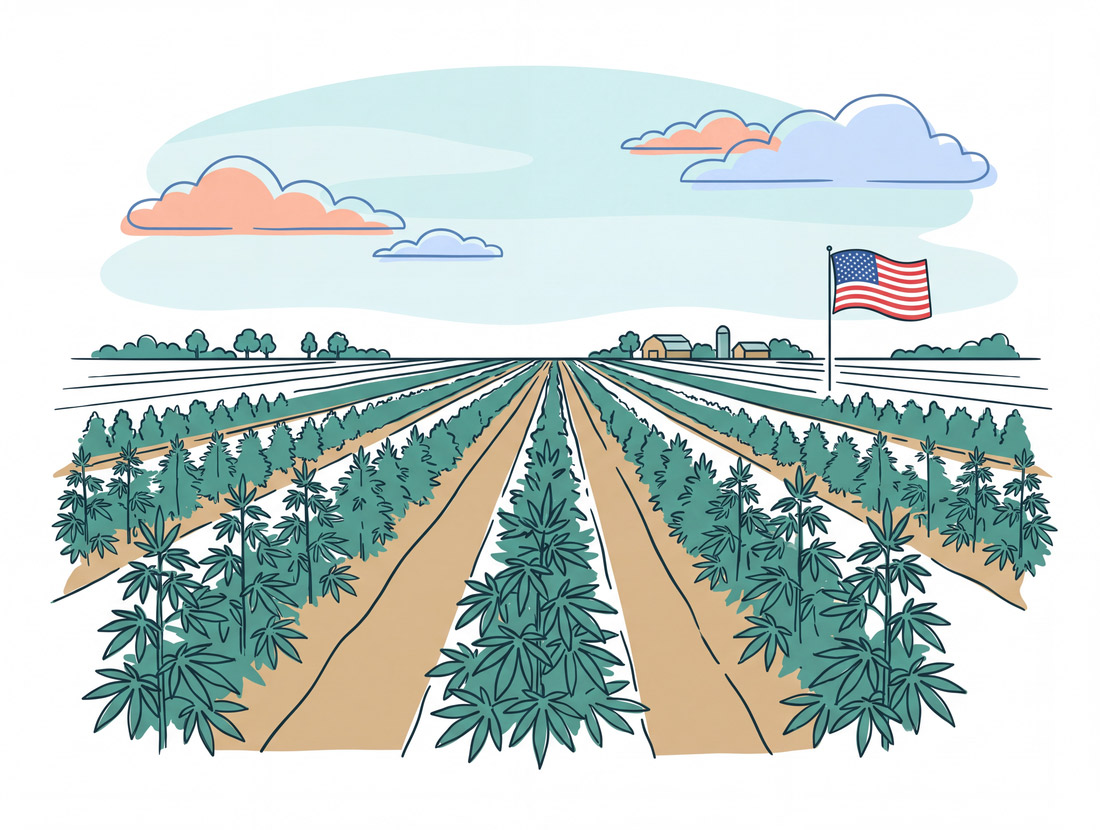
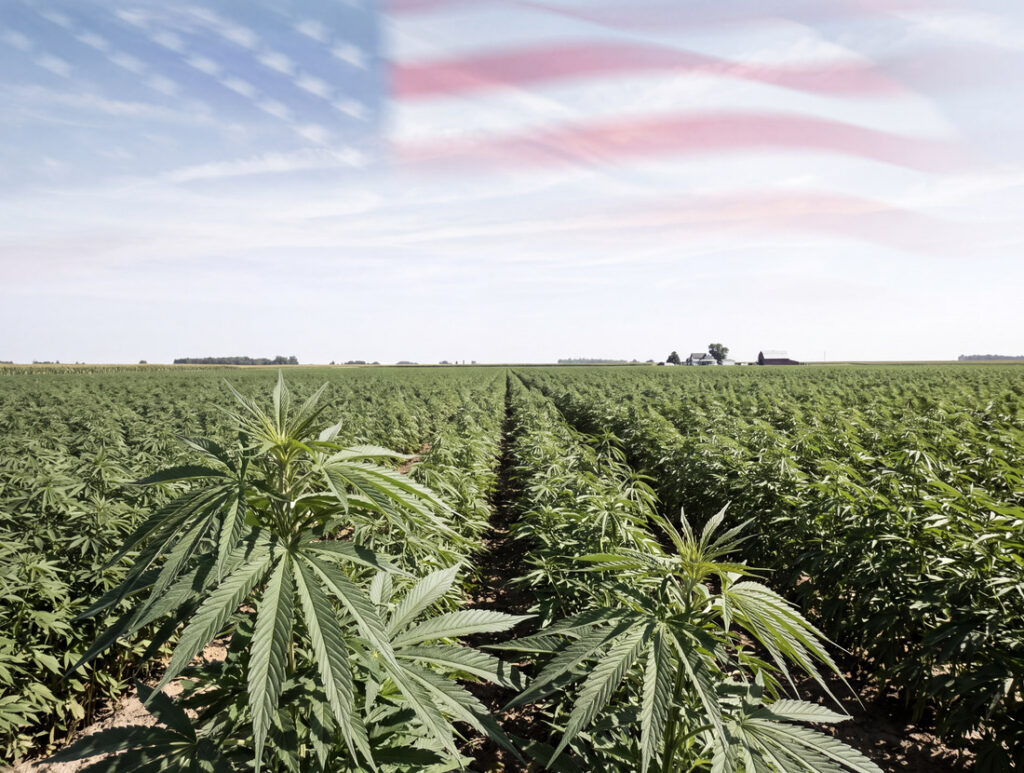
In essence, the 2018 bill legalized hemp by drawing a single, straightforward line: a cannabis plant was legal ‘hemp’ if it contained no more than 0.3% delta-9 THC by dry weight. Everything else was still marijuana. McConnell, who represents Kentucky and thus a huge population of Bluegrass State farmers, was thinking of agriculture, not weed. Yet with this bill, he unintentionally created a loophole big enough to house a multibillion-dollar industry.
Because the line was drawn only at delta-9 THC, anything intoxicating that wasn’t delta-9 fell into the legal definition of hemp. On cue, the ears of chemists and entrepreneurs across the country perked up. The result? A wave of products that were technically ‘hemp’ but still, for all intents and purposes, got people high: delta-8, delta-10, high-THCA flower, and hemp-derived THC drinks.
Put simply, an entire market grew in the gap between what the 2018 piece of legislation said, and what Congress – and Mitch McConnell – actually meant. Eight years later, this industry now faces its biggest hurdle yet, as McConnell attempts to close (or rather, slam shut) that gap.
Section 781 of the FY2026 Agriculture Appropriations Act rewrites the definition of hemp in three significant ways. First, it swaps the delta-9 standard for a ‘total THC’ standard that counts THCA as well, putting an end to the THCA-flower loophole. Second, it caps finished products at 0.4 milligrams of total THC per container – where ‘container’ means the innermost packaging in direct contact with the product, and the cap counts not just THC but any other cannabinoids with similar effects.
Third, it bans cannabinoids that can’t be produced naturally by the plant, or that are synthesized outside it (the delta-8 category). Since federal law defines hemp by cross-reference, anything that falls outside the new, far narrower definition drops back into being marijuana.
Hard to Explain
A policy that allows someone to get stoned from a random bottle of iced tea they bought in a gas station – without the correct age controls, testing or labeling that state-legal cannabis has to meet – should be scrutinized and, in my opinion, ultimately revised. That seems pretty uncontroversial, and I’d imagine plenty of reasonable people across the cannabis world knew that this side of the intoxicating-hemp free-for-all was one day going to come to an end.
But just because a policy change is right about a particular problem doesn’t mean it is also right about the solution. With the new rules, Congress is threatening hundreds of thousands of jobs, and ultimately applying a very straightforward and unfortunate approach to a very complex industry.
To understand some of this complexity, it’s worth considering the impact that the changes will have on CBD products. The Hemp Roundtable suggests that more than 90% of non-intoxicating CBD products contain more total THC than the new 0.4mg-per-container cap will allow. The ‘ban’ on intoxicating hemp will therefore catch a huge portion of ordinary wellness CBD – an issue that caused Trump, via Truth Social, to urge Congress to ‘fix’ the legislation to protect full spectrum CBD products.
This is the correct move – not just in order to protect thousands of American jobs, but also to recognize that just because a product contains more than 0.4mg of THC does not make it inherently dangerous, or comparable, to other products that fell outside the new legal definition of hemp.
Cannabis seeds also deserve consideration. Since the 2018 Farm Bill, seeds have been classified as legal hemp – formally confirmed by the DEA back in January 2022. Section 781 reverses, albeit quietly, this position. Under the new definition, a viable seed is excluded from ‘hemp’ – and therefore controlled as marijuana – if the plant it came from exceeded 0.3% total THC.

Since essentially every commercial cannabis seed on the market is bred from high-THC genetics, the practical result is that much of the seed and genetics trade becomes a Schedule I business overnight, with interstate shipment reclassified as federal drug trafficking.
It’s worth pausing for a moment and thinking about what that actually equates to. Sure, not everyone will agree with the federal legality of cannabis seeds. But a seed, of course, is not intoxicating. You cannot get high on it. It sits harmlessly in a packet until someone with skill, patience and roughly six months to spare grows it into a plant.
That process is time consuming, diligent, and, for many, often very rewarding. Treating that seed as legally equivalent to a high-THC vape is not regulation matched to risk, and the same goes for many of the CBD products set to be banned.
We the People
Another key issue, and one that seems to be too often overlooked, is that Section 781 was never debated on its own merits. The hemp language had been moving quietly through the regular agriculture-appropriations process in both chambers: it was Section 781 of the Senate committee’s bill (S. 2256), reported out by the Senate Appropriations Committee in July 2025, with a near-identical provision in the House bill.
That bill, on its own, never reached the Senate floor for a vote. Instead the language was folded into the must-pass package needed to end the longest government shutdown in history, where a vote against it was a vote to keep the government closed.
So a redefinition that reclassifies a multibillion-dollar industry became law without a single hearing dedicated to it, and without a standalone vote on the merits. On the Senate floor, the whole question was disposed of in a few minutes before a motion to table. Rand Paul rose to strip the provision out – ‘instead of a clean CR,’ he said, ‘this bill contains language that has been air-dropped in that will destroy hemp farming in Kentucky and across the United States’.
He also objected to the vehicle itself: ‘To add insult to injury, we are given this legislation in an appropriations bill. We have Senate rules against this.’ His colleagues voted 76 to 24 to table the amendment: not a judgment that the policy was sound, but a procedural motion to set it aside and move on.
This, it should go without saying, is not how the policy process should work. Regardless of one’s opinions on the issue, a $28 billion industry – tied to hundreds of thousands of jobs – should not have its legal foundations rewritten with a few minutes of floor time and no meaningful consultation.
To add to this, it would probably be fair to assume that a large number of the legislators who voted for the package could not, if pressed, explain the difference between delta-8 and delta-9, or between a seed and a clone, or why the 0.4mg cap sweeps in non-intoxicating CBD. So was the necessary expertise really involved in ensuring this process and outcome was the most sensible one? Probably not.

How Soon Is Now?
We’re in the middle of one of the most significant and most volatile periods the US cannabis industry has seen in decades, and no one is quite sure what will happen next. It might, nonetheless, be wise to consider some thoughts on what a sensible outcome might look like.
For a start, Congress should do now what it neglected in November: hold actual, in-depth hearings and debates, consult the industry and its stakeholders, and ultimately give this issue the attention and consideration it deserves. In doing so, an agreement might be reached which allows McConnell and co to regulate the genuinely dangerous consequences of the 2018 bill – the synthetics, the unlabeled gas-station intoxicants, the sales to minors – with the seriousness it deserves.
This agreement might also, however, distinguish these consequences from others which pose categorically different risks, and opportunities, to both the American economy and its people. It’s telling that even Jeff Merkley, speaking on the Senate floor as the measure passed, stated CBD ‘derived from hemp has been approved by the FDA for treating seizures. It is a legal medicine. We would wipe out an industry that we have spent more than a decade creating.’
A framework like this would also sit far more comfortably with the administration’s own direction of travel (and, perhaps, its business interests). In a December 2025 executive order, Trump directed the Justice Department to move medical marijuana toward Schedule III – a step the department began delivering in April 2026 and one which remains ongoing.
The same order warned that ‘some full-spectrum CBD products will once again be controlled as marijuana’ when Section 781 takes effect, and directed officials to work with the Congress to update the statutory definition so Americans could keep buying the full-spectrum CBD products they rely on. Both of these are reasonable proposals, and implementing them would be preferable to a simple, regressive, move back toward blanket prohibition.
Whether any fix happens is another matter. As of mid-August 2026, the picture is worryingly unsettled. Right now it looks as though most of Section 781’s restrictions will be delayed from November 12 to December 11 – though the ban on synthesized cannabinoids would still take effect in November – but that is not yet law, and will require the approval of the House and the President’s signature.
The next funding deadline falls on September 30, and a further delay could well be attached to whatever deal emerges there (or not). Several amendment bills are circulating, from outright repeal (Nancy Mace’s American Hemp Protection Act) through two-year delays to Andy Barr and Angie Craig’s Lawful Hemp Protection Act, which would regulate rather than ban.
None of these yet have a clear route to victory, and for an industry which seems to struggle to organize and lobby in the way it should, that might be a problem.


Sign up for bi-weekly updates, packed full of cannabis education, recipes, and tips. Your inbox will love it.