

 Merch
Merch Medical card
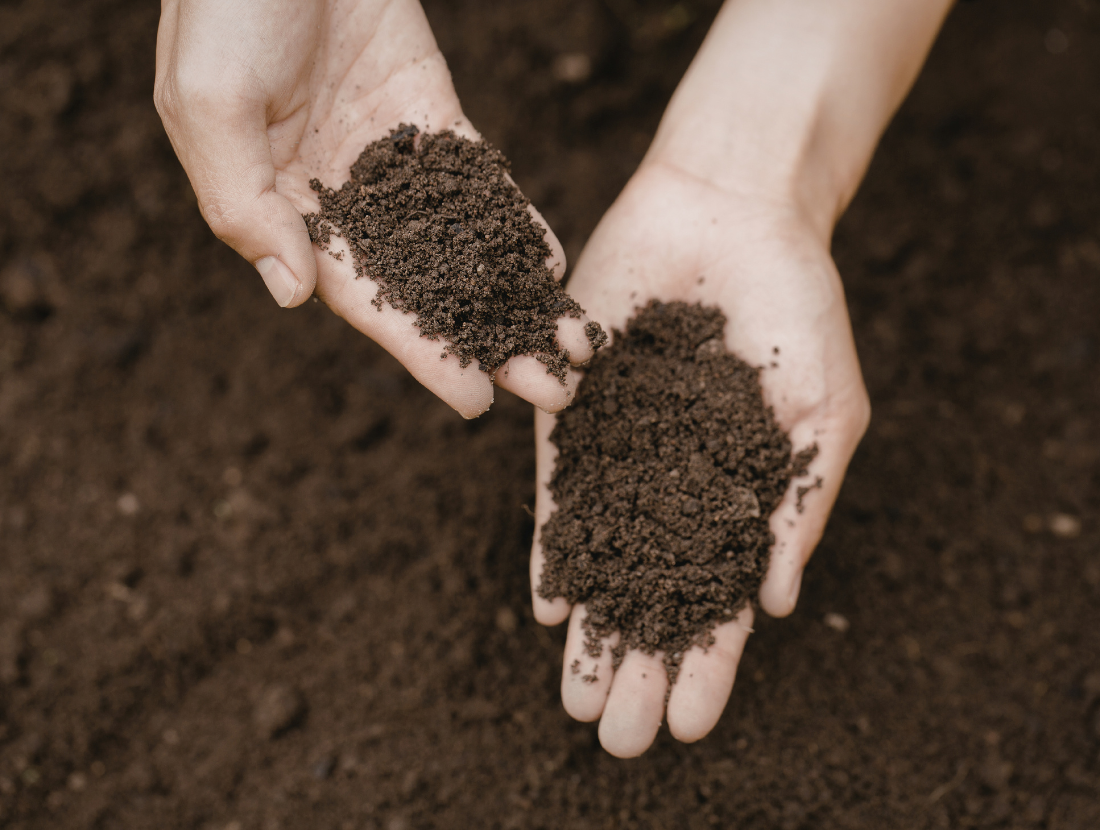
A federally funded field study found CBG concentrations were 3.7 times higher in cover-crop fields than in conventionally tilled ones. Peer-reviewed research is beginning to catch up to what craft growers have argued for years.
Soil condition changes what ends up in your cannabis. Living soil cannabis cultivation uses a biologically active growing medium, populated by fungi, bacteria, and other microorganisms, to cycle nutrients without relying on synthetic inputs. That distinction, long argued by craft cultivators, is now drawing peer-reviewed attention. A 2025 USDA-funded study published in the Journal of Medicinally Active Plants compared hemp grown in no-till cover-crop fields against hemp grown in conventionally tilled, biologically degraded fields. Researchers found CBG concentrations were 3.7 times higher in the cover-crop plots, while THC ran up to six times higher in degraded soils, and terpene profiles diverged measurably between the two conditions. The study’s authors called it the first published work to show direct differences in extract composition linked to soil management practices.
The science remains early-stage. Genetics remain the primary driver of cannabinoid and terpene expression. But a growing body of controlled research on cannabis-associated microbes suggests that soil biology modulates what genetics can produce, and that cultivators pursuing living soil cultivation who treat their substrate as inert are leaving something on the table.

What Is Living Soil Cannabis Cultivation?
Living soil is a biologically active growing medium populated by bacteria, fungi, protozoa, nematodes, and other organisms that form an interconnected nutrient-cycling ecosystem. The plant feeds the microbes. The microbes feed the plant. Soil microbiologist Dr. Elaine Ingham described this exchange as a “nutrient banking system,” in which microorganisms store and release minerals as plant demand dictates.
This distinguishes living soil from standard commercial peat-based mixes, which function as inert substrates requiring constant synthetic nutrient inputs, and from hydroponic systems, which bypass substrate entirely. The distinction matters for the research: most peer-reviewed cannabis-microbiome studies use controlled greenhouse or hydroponic conditions, and the leap from those findings to commercial-scale living soil outcomes is one the science has not yet validated.
Mycorrhizal Fungi and Cannabis: The Root-Zone Research
Arbuscular mycorrhizal fungi (AMF), particularly Rhizophagus irregularis and related species, are the most studied microbial players in cannabis cultivation. These fungi penetrate root cells, form arbuscular structures, and facilitate phosphorus and nitrogen exchange in return for plant-produced carbohydrates.
A 2022 randomized study in Frontiers in Plant Science put AMF against synthetic NPK fertilizer in a direct comparison. AMF-inoculated plants matched or exceeded NPK-fertilized controls for both biomass and CBD/THC concentrations. A 2023 controlled greenhouse trial across five cannabis cultivars found that AMF and bacterial consortia inoculation shifted phytocannabinoid profiles, with treated roots showing 19% greater mycorrhizal colonization.
The mechanistic reason to avoid high-phosphorus synthetic fertilizers in a living soil system comes directly from plant science: excess phosphorus suppresses AMF colonization. Growers who dose heavily with synthetic phosphorus sources can inadvertently collapse the very biology they’re trying to cultivate.
How Rhizobacteria Influence Cannabis Cannabinoid Profiles
Plant Growth-Promoting Rhizobacteria (PGPR) represent a second, emerging research focus within cannabis science. A 2019 perspective paper in Frontiers in Microbiology established the theoretical framework and noted how sparse the data was at the time. The field has moved considerably since.
A 2023 study in the Journal of Agricultural and Food Chemistry found that inoculating cannabis with Mucilaginibacter sp. at the vegetative stage increased total THC and CBD in flowers by approximately 11%, demonstrating that timing of inoculation matters. The most recent data comes from a 2026 study in Physiologia Plantarum, where four bacterial taxa colonized THC-dominant cultivars under hydroponic conditions. Researchers found CBGA increased by 27% while THC decreased by nearly 16%, shifting the cannabinoid profile toward acidic precursors. The hydroponic context is significant: it shows that microbial influence on cannabinoid pathways operates independently of soil, pointing toward mechanism rather than coincidence.
A 2021 review in the Journal of Cannabis Research described the relationship between soil microbiota manipulation and cannabis secondary metabolite production as “largely unexplored and unexploited.” The studies published since then are promising, but nearly all were conducted in controlled environments rather than field or commercial settings.
Organic Fertilization in Living Soil Cannabis: What the Research Shows
In organic cannabis cultivation, the assumption that more inputs produce better outcomes doesn’t hold at the flowering stage. A foundational 2017 study from the University of Guelph found that increasing organic fertilizer rates during flowering diluted THC/THCA and CBGA concentrations in cannabis. More organic did not mean more potent. Precision mattered.
A 2025 study in Plants offered a more recent comparison, finding that several compost-blend treatments matched or exceeded conventional NPK for hemp terpene and cannabinoid yields in the inflorescence. The consistent finding across the literature: organic fertilization can perform at parity with synthetic inputs under the right conditions, but it requires the same precision.
The Cannabis Soil Microbiome: Endophytes and Secondary Metabolites
Beyond root-zone microbes, the cannabis soil microbiome includes endophytes, microorganisms that colonize internal plant tissue, which also appear to influence secondary metabolite production. A 2020 review in Microorganisms examined how cannabis-associated microbial communities modulate cannabinoid compound concentrations, providing the broader conceptual scaffolding for the microbiome-secondary metabolite relationship. No-till cannabis cultivation, which preserves soil fungal networks that tillage disrupts, is one practical application of this research — and the 2025 Chacon et al. field study compared no-till cover-crop plots against conventionally tilled ones specifically because of this mechanistic rationale. The field remains in early characterization.


Living Soil Cannabis: Market Pricing and Consumer Demand
Soil-based cultivation held the largest revenue share of the cannabis cultivation market in 2025, at approximately 43.7%, driven partly by consumer preference for naturally grown products. The craft cannabis cultivation segment, estimated at $4.5 billion in 2024, has made living soil a core differentiator, with some craft cultivators pricing flower at twice the mainstream rate. Regenerative cannabis farming certifications, including the Sun+Earth program, have expanded into retail dispensary sections in Oregon and California, reflecting real market traction beyond grower positioning.
That premium reflects consumer perception and positioning as much as established quality metrics. Blinded sensory trials comparing living soil and conventionally grown cannabis at scale remain absent from the published literature. The scientific case for living soil is mechanistic and directional. It supports the approach without fully validating the marketing claims built on top of it.
Cultivators who want to work with their soil biology rather than against it have a growing evidence base to draw from. The most defensible case for living soil cannabis today is that mycorrhizal fungi and plant-growth-promoting rhizobacteria measurably influence cannabinoid and cannabis terpene expression in controlled conditions, that high-phosphorus synthetic inputs can suppress those organisms, and that soil condition in outdoor hemp correlates with meaningful differences in extract chemistry. That’s a foundation worth building on, and researchers are building.
Frequently Asked Questions
What is living soil cannabis cultivation?
Living soil cultivation is a method that maintains a biologically active growing medium populated by bacteria, fungi, nematodes, and other microorganisms. These organisms cycle nutrients to the plant in exchange for root-produced sugars, creating a self-sustaining ecosystem rather than relying on synthetic fertilizer inputs. The approach is modeled on natural soil biology, distinct from both peat-based substrates and hydroponic systems.
Does living soil increase THC or terpene content?
Some evidence suggests soil biology influences cannabinoid and terpene profiles, but the relationship is not fully established for commercial cultivation. A 2025 USDA-funded field study found significant differences in CBG, CBDA, and terpene content between hemp grown in cover-crop fields and conventionally tilled fields. Genetics remain the primary driver of cannabinoid expression; soil microbes appear to modulate expression within the genetic range.
What are mycorrhizal fungi and why do they matter for cannabis?
Mycorrhizal fungi, particularly arbuscular mycorrhizal fungi (AMF) like Rhizophagus irregularis, colonize plant roots and form structures that facilitate phosphorus and nitrogen exchange in return for plant-produced carbohydrates. Multiple controlled studies have found that AMF inoculation improves cannabis root mass, biomass, and cannabinoid concentrations compared to unfertilized controls, and can match synthetic NPK fertilizer for yield in certain conditions.
Do synthetic nutrients harm living soil?
High-phosphorus synthetic fertilizers are known to suppress mycorrhizal colonization in plants, which is one mechanistic reason why living soil practitioners minimize or avoid them. Research also shows that excessive organic fertilizer during the flowering stage can dilute cannabinoid concentrations, so precision matters regardless of input type. The issue is not organic versus synthetic in absolute terms, but biological compatibility and calibration.
Is living soil cannabis better quality?
Consumer and cultivator preference for living soil cannabis is measurable in market pricing, but blinded sensory trials and large-scale clinical comparisons are currently absent from the published literature. The peer-reviewed evidence shows that soil microbes can influence cannabinoid and terpene profiles in controlled settings. Claiming definitively superior quality goes beyond what the current science supports.


Sign up for bi-weekly updates, packed full of cannabis education, recipes, and tips. Your inbox will love it.