

 Merch
Merch Medical card
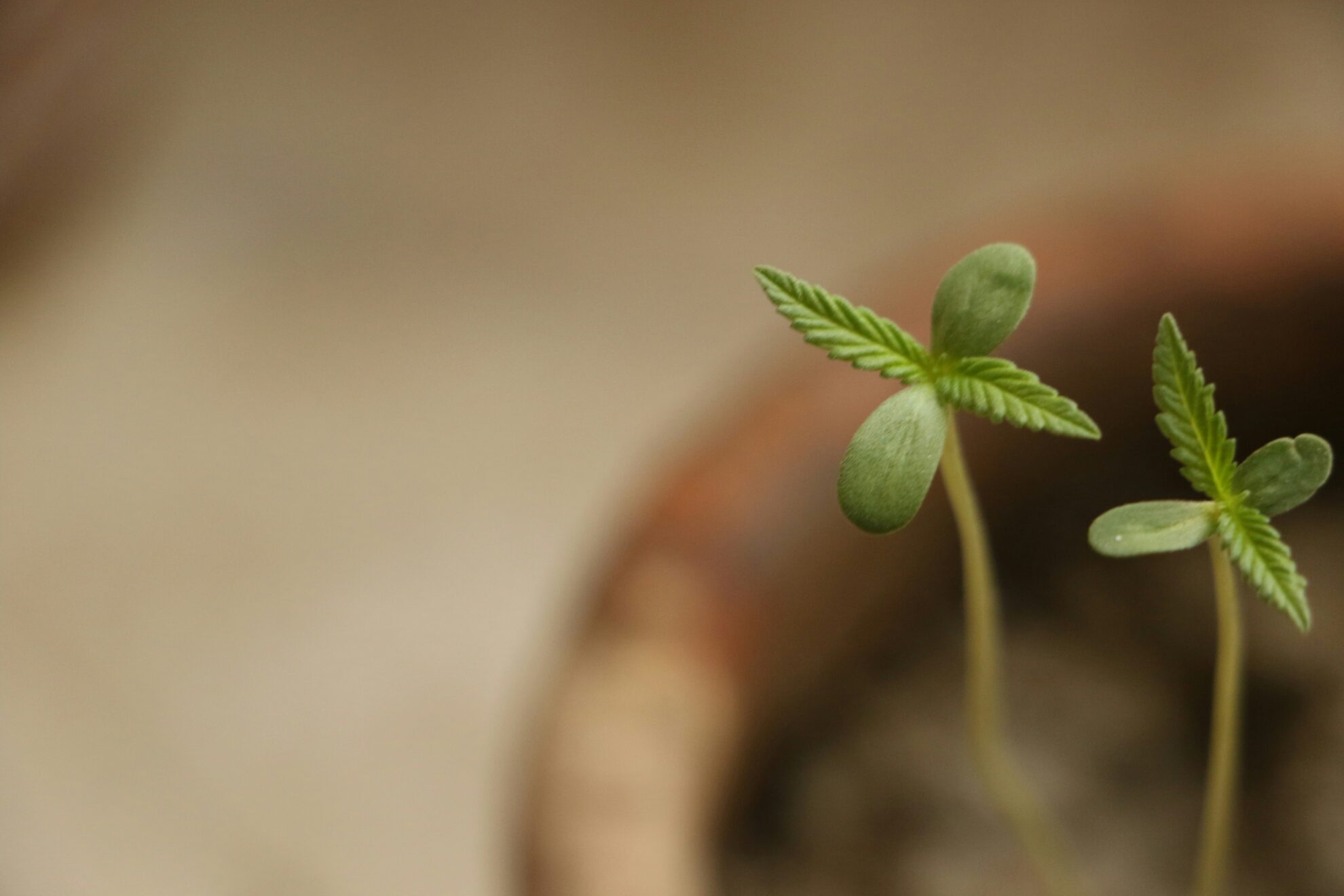
A practical, science-informed guide to germinating cannabis seeds, minimizing transplant shock, and successfully starting plants directly in soil for healthy, vigorous growth.
Knowing how to germinate cannabis seeds successfully is the foundation of every good grow, and fortunately, researchers have studied it in real detail. There’s also a moment every grower knows: the tiny white tip of a taproot pushing out of a seed coat for the very first time. It’s one of the most satisfying sights in cultivation. The data gives us clear, usable numbers for temperature, humidity, depth, and timing, so whether you’re starting a few pots on a patio or setting up a bigger outdoor bed, these fundamentals will put your plants on the best possible trajectory from day one.
Stage 1

How to Prepare Seeds and Growing Medium for Germination
Before anything goes into soil, a little preparation makes a big difference. Start with quality genetics from a reputable source. Research on hemp seed maturity shows a direct connection between how fully developed a seed is at harvest and how well it germinates, so underdeveloped or poorly stored seeds are a predictable source of frustration.
Understanding the ideal conditions for cannabis seed germination starts with temperature. For your growing medium, aim for moisture without sogginess. The germination zone works best at around 70–90% relative humidity, which is easy to maintain under a humidity dome or a simple plastic cover over your tray.
Key numbers
Research on cardinal temperatures for hemp germination confirms that cannabis seeds can sprout across roughly 10–30°C (50–86°F), but the sweet spot is 20–26°C (68–79°F). Temperatures in the mid-20s Celsius produce the fastest, most uniform emergence.
Optional: seed priming for experienced growers
Seed priming is a technique where seeds are soaked in a dilute solution before planting to give germination a head start. A peer-reviewed germination protocol using 1% hydrogen peroxide demonstrated rapid, efficient cannabis seed germination with strong results. Separately, research on oxidative stress and hemp germination found that priming with dilute H2O2 and micronutrients can speed up emergence and improve germination percentage. Gibberellin pretreatments have also shown promise for improving germination speed and early seedling vigor. These are optional advanced techniques, not essentials for a first grow.
Stage 2
Sprouting Methods: Paper Towel, Plugs, and Direct Sowing
There’s no single right answer here. Each method has real trade-offs worth understanding before you commit.
| Method | Best for | Key advantage | Main trade-off |
|---|---|---|---|
| Paper towel | Beginners, testing seed viability | Visual confirmation of taproot before soil commitment | Fragile taproot must be handled during transfer |
| Starter plugs / propagation cubes | Indoor and greenhouse grows | Minimal root handling; easy transplant into containers | Requires purchasing plug media; timing the transplant window matters |
| Direct sow | Outdoor beds, low-labor setups | No taproot handling, no transplant shock | Stand variability; harder to control environment |
Under ideal conditions, radicle emergence from paper towel or plug methods can happen in as little as one to three days. Some seeds take up to seven days, particularly at lower temperatures. Direct sowing cannabis seeds into a prepared outdoor bed can match or outperform transplanting when soil conditions are good, with typical field stand rates around 60–80%, according to guidance on direct seeding cannabis outdoors. For outdoor growers who’ve done the soil prep work, it’s hard to beat for simplicity.
Stage 3
How Deep to Plant Cannabis Seeds
Plant cannabis seeds 0.25–0.5 inch deep (1–2 cm) in most substrates. Too shallow and the seed dries out or gets displaced. Too deep and the seedling exhausts its energy reserves before it can break the surface.
Cultivation guidance focused specifically on cannabis seed depth recommends planting at roughly 0.25–0.5 inch deep, and additional sourcing on ideal planting depth confirms that around 1–2 cm works across a range of substrates, from coco coir to amended outdoor soil. Cover lightly, water gently, and keep your target temperature and humidity consistent. Under good conditions, expect to see the first signs of emergence within two to seven days.

Stage 4
Transplanting Cannabis Seedlings and Preventing Transplant Shock
If you started seeds in plugs or small starter cells, transplant timing makes a real difference. Research on autoflower hemp transplanting stress compared direct seeding with transplants at different ages and found that earlier transplants, before roots became heavily bound in the plug, caused less growth disruption than later moves. Waiting too long creates root-binding, which compounds transplant shock and can set back the vegetative timeline noticeably.
When it’s time to transplant, keep these steps in mind:
- Disturb the roots as little as possible during the move
- Keep the growing medium consistently moist before and immediately after transplanting
- Match the temperature and light environment of the new location as closely as you can
- Avoid dramatic shifts in humidity or airflow in the first 48 hours after the move
Cannabis transplant shock, when it does happen, typically shows up as temporary wilting, a slight yellowing of lower leaves, or a brief growth stall. With the right conditions, most plants bounce back within a few days.
Stage 5
Early Vegetative Growth and Hardening Off Outdoor Plants
Whether your plants were direct-sown or transplanted, the first week of vegetative growth sets the tone for everything that follows. A few habits make this phase easier:
- Space plants appropriately from the start to reduce competition for light and nutrients
- Protect seedlings from strong wind and heavy rain while they’re establishing
- For indoor grows, increase light intensity gradually rather than going full-power immediately
- Water carefully: let the top inch of your growing medium dry out between waterings to encourage deep root development
For outdoor direct-sown plants that were started indoors before moving outside, a brief hardening-off period of five to seven days helps them adjust to direct sun, wind, and temperature fluctuation without the added stress of a sudden environmental change.
The first two weeks of a cannabis plant’s life shape its root architecture, stem strength, and overall resilience. Nail cannabis seed germination at this stage and you’re setting up a plant that enters the vegetative stretch already thriving. Give your seeds the right temperature, the right depth, the right moisture, and a gentle hand at transplant, and you’ll be rewarded with the kind of vigorous starts that make the rest of the grow a genuine pleasure.


Sign up for bi-weekly updates, packed full of cannabis education, recipes, and tips. Your inbox will love it.