

 Merch
Merch Medical card
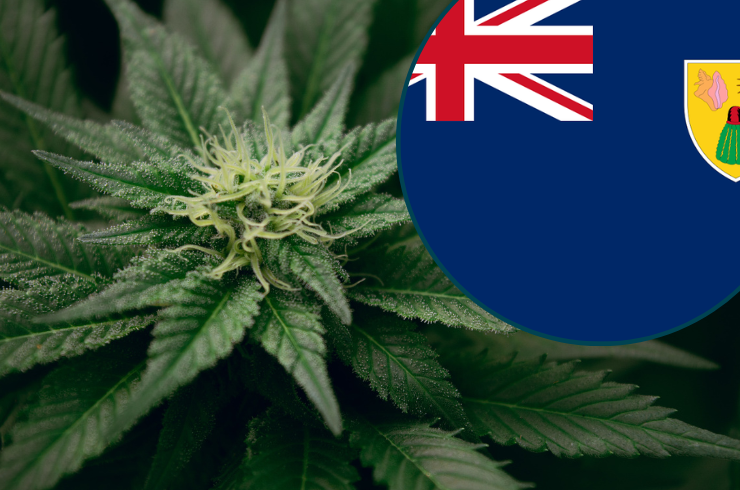
Quick answer: no. Cannabis and cannabis resin are Class B controlled drugs in the Turks and Caicos Islands, and there is no medical programme, no decriminalised amount and no tourist exemption. Simple possession can draw up to 3 years and a fine of up to 40,000 US dollars on summary conviction, rising to 7 years on indictment. CBD is prohibited at the border alongside it.
What the law actually says
Cannabis is controlled by the Control of Drugs Ordinance, Ordinance 4 of 1976, now consolidated as Chapter 03.14 of the Revised Laws and amended most recently by Ordinance 14 of 2016. Schedule 1, Part II, paragraph 1 lists “cannabis and cannabis resin” by name, and section 3(1) makes anything in Part II a Class B drug.

Two points of confusion are worth clearing up immediately, because both circulate widely.
Cannabis is Class B, not Class A. At least one prominent Turks and Caicos tourism site states that cannabis is the highest classification in the islands. It is not, and that site is not a government source.
The Control of Drugs (Trafficking) Ordinance does not create cannabis offences. That was Chapter 35, Ordinance 13 of 1988, and it dealt only with confiscation and asset recovery. Its provisions were replaced by the Proceeds of Crime Ordinance, Ordinance 12 of 2007. Cannabis charges are brought under the Control of Drugs Ordinance.
Penalties for cannabis possession in Turks and Caicos
Simple possession is triable either way, which is what gives it such a wide range. On summary conviction in the Magistrate’s Court it carries up to 3 years and a fine of up to 40,000 US dollars under section 6(2). On indictment in the Supreme Court it carries up to 7 years and an unlimited fine.
Possession with intent to supply moves to section 6(3), where the summary maximum is 4 years and a 50,000 dollar fine, and the Supreme Court maximum is 15 years and an unlimited fine. Producing or supplying cannabis sits at the same level under section 5(2).
Cultivating a cannabis plant is its own offence under section 9, and the summary penalty is actually higher than for possession with intent: up to 5 years and a fine of up to 75,000 US dollars, with 10 years available on indictment.
The islands use the US dollar, so every figure above is in the currency most visitors are already carrying.
Penalties at a glance
| Offence | Section | Summary conviction | On indictment |
|---|---|---|---|
| Possession | 6(2) | Up to 3 years and/or 40,000 USD | Up to 7 years and/or unlimited fine |
| Possession with intent to supply | 6(3) | Up to 4 years and/or 50,000 USD | Up to 15 years and/or unlimited fine |
| Production | 5(2)(a)-(b) | Up to 4 years and/or 50,000 USD | Up to 15 years and/or unlimited fine |
| Supply or offering to supply | 5(2)(c)-(e) | Up to 4 years and/or 50,000 USD | Up to 15 years and/or unlimited fine |
| Cultivating a cannabis plant | 9 | Up to 5 years and/or 75,000 USD | Up to 10 years and/or unlimited fine |
All penalties are set by Schedule 4 of the Control of Drugs Ordinance for Class B drugs. Note that an older edition of the Revised Laws numbered this table Schedule 3, so secondary sources citing Schedule 3 are working from the superseded 2009 consolidation.
The four-ounce figure is a bail rule, not a legal limit
The one weight threshold in the Ordinance is widely misreported as a decriminalisation line or a trafficking trigger. It is neither.
Section 35(1) requires a defendant charged with a drug offence to provide a bail surety of at least 50,000 US dollars. Section 35(3) disapplies that requirement where the charge is possession of cannabis and the quantity is not more than four ounces.
That is the whole of it: four ounces is the point below which you escape a mandatory 50,000 dollar surety, and it changes nothing about whether you are charged or what sentence you face.
There is no provision anywhere in the Ordinance deeming possession of any quantity to be possession for supply, so the islands have no statutory trafficking presumption by weight at all.
What actually happens to a tourist caught with a small amount
Statutory maximums and real sentences are very different things, and the honest answer sits between them.
The Royal Turks and Caicos Islands Police Force reported a marijuana possession case in which the defendant was arrested on 28 December 2024, appeared in court on 17 February 2025, pleaded guilty, and was fined 650 US dollars with 30 days’ imprisonment in default. That is a routine first possession outcome in the Magistrate’s Court, and it sits a long way below the 3-year, 40,000 dollar ceiling.
What it still produces is a criminal conviction in a British Overseas Territory, an arrest record, and a court appearance that may fall weeks after the arrest. Neither the Ordinance nor police practice offers a caution, a diversion programme or a drug-treatment alternative, so there is no administrative route that avoids the court.
One widely repeated claim deserves correcting here. The Grand Turk cruise-passenger arrests that circulate as evidence of harsh drug enforcement were ammunition cases brought under the islands’ firearms law, not cannabis cases.
The US State Department’s current travel advisory warns specifically about firearms and ammunition at the airport, not about drugs. No verified cruise-passenger cannabis arrest turned up in the public record.
Can you smoke weed in Turks and Caicos?
No. There is no lawful place to consume cannabis in the islands, no tolerated zone, and no distinction between a resort, a villa rental, a beach or a public street. Consumption is prosecuted through the possession offence, since you have to possess it to smoke it.
There is equally no legal supply. Buying cannabis means dealing with an unlicensed seller, which exposes the buyer to a possession charge and the seller to the supply tier at section 5(2), and a visitor arranging a purchase has no recourse if the transaction goes wrong.
The UK Foreign, Commonwealth and Development Office states in its Turks and Caicos travel advice, updated in August 2026, that travellers should not become involved with drugs of any kind, that there are severe penalties for possession of even a small amount, and that a person could be arrested and face fines of up to 5,000 US dollars and 2 years imprisonment.
Those figures do not match anything in Schedule 4, so treat the FCDO line as an official warning about severity rather than as a statement of the statutory maximum.
Is CBD legal in Turks and Caicos?
No, and this is the rule most travellers break without realising it.
The Turks and Caicos Islands Border Force lists cannabis-infused products, cannabidiol derivatives and any oils containing cannabidiol among the items that may not be brought into the islands, and warns that prohibited goods will be confiscated or re-exported at the owner’s expense, that a severe fine may be imposed, and that the traveller may be prosecuted.
Note how the prohibition operates. CBD is not named in Schedule 1 of the Ordinance, so it is not a listed Class B substance in its own right. It is stopped at the border as a cannabis derivative under customs powers.
The practical outcome is the same: a CBD oil, balm, gummy or vape cartridge bought lawfully in the United States, Canada or the UK becomes a prohibited import on arrival, and there is no THC percentage that makes it acceptable.
Prescription medicines are worth checking separately, since the same Border Force list flags certain medications as restricted.
Is there medical cannabis in Turks and Caicos?
No. The islands operate no medical cannabis programme, no patient register, no licence class and no import route. The Ordinance’s general authorisation machinery exists – section 13 lets doctors, dentists, vets and pharmacists prescribe and supply controlled drugs, section 4(2) allows import and export under licence, and section 30 lets the Governor make licensing regulations – but none of it has ever been used to create a cannabis pathway.
A medical cannabis card or prescription issued elsewhere carries no weight, and the Border Force prohibition on cannabis-infused products makes no exception for medical users.
Why Cayman and Bermuda reforms do not apply here
Turks and Caicos is a British Overseas Territory, and competing articles frequently treat that as a single legal regime. It is not. Each territory legislates for itself, and nothing enacted in another one has any effect in the Turks and Caicos Islands.
The Cayman Islands, for comparison, has permitted medical cannabis since May 2017 and held a referendum in 2025 in which a majority voted for decriminalising limited quantities. None of that reaches the Turks and Caicos, where the most recent change to the Control of Drugs Ordinance was in 2016 and cannabis remains a Class B drug with the penalties set out above.
As of September 2026 there is no publicly announced Turks and Caicos bill, consultation or government proposal to decriminalise cannabis, create a medical framework or permit CBD.
Before you travel
Two official pages are worth reading directly rather than through a summary. The Attorney General’s Chambers publishes the full statute, including every penalty figure quoted here, as the Control of Drugs Ordinance, and the Border Force prohibited and restricted items list sets out what may not be brought into the islands, CBD included.
One caveat on currency: the consolidated text of the Ordinance is current as at 31 March 2018, so any amendment passed since then would not appear in it.
Last reviewed: September 17, 2026.


Sign up for bi-weekly updates, packed full of cannabis education, recipes, and tips. Your inbox will love it.