 Merch
 Medical card

America’s partial rescheduling of marijuana was meant to bring state medical programmes in from the cold. Instead, the DEA is now deciding which of them count as medicine, and a deadline this weekend could split state markets in two. In this edition: that fight, Germany’s version of it, a door the FDA has opened that CBD may not fit through, and Britain’s cannabinoid order.
Who decides what counts as medical cannabis?
When the Justice Department moved state-licensed medical marijuana into Schedule III in April, it was widely read as Washington finally accepting what most states had done years earlier. The fine print told a different story. Rescheduling covered only marijuana handled under a qualifying state medical licence, plus FDA-approved products, and it came with a condition: businesses would need a federal registration from the Drug Enforcement Administration (DEA). Seven months on, that registration process is turning the DEA into the judge of what a state medical cannabis programme is, and on Sunday 29 November it may start splitting state markets in two.


A closed loop
Businesses that applied for registration in the 60 days after the April rule (28 April to 26 June) are “timely applicants” and can keep operating while the DEA considers their files. On 30 October, the DEA published guidance that added a catch: timely applicants and registrants may only buy from and sell to each other. Dealing with anyone outside that circle “could be potential grounds” for refusing an application or revoking a registration, and businesses were given until 29 November to rearrange their supply chains. The DEA says the document does not have the force of law. Few businesses will want to test that.
The difficulty is that state cannabis markets are sealed within state borders. A dispensary that loses its usual supplier cannot simply order from another state. On 18 November, three operators from Utah, Arizona and Oklahoma petitioned the federal appeals court in Washington, arguing that the deadline “ignores the realities of state markets”, where a state “may not have enough timely operators to satisfy its needs”. They say the rule will cost one company around $276,000 a month in sales, push another into insolvency and force a third to cut 70% of its workforce. A day later, four Pennsylvania operators filed a second challenge: they registered their dispensaries early but not their manufacturing arms, and say the rule would stop their own growers supplying their own shops. The court has joined the two cases, and the companies have asked it to pause the deadline. No ruling had been issued at the time of writing.
How big is the gap? The DEA’s list of timely applicants, which counts applications by location rather than by company, gives a rough picture. According to an independent count of the list dated 10 November, Pennsylvania, a medical-only state, had 181 dispensary applications, against about 185 dispensaries operating there. Oklahoma had 939, against roughly 1,350 licensed dispensaries. Illinois shows how timing alone can shut businesses out. Nearly all of its 55 medical dispensaries applied, but the federal window closed in June, and only in September did the state let all its dispensaries opt in to serving patients. By 1 November, 191 Illinois stores were licensed to sell medical cannabis. Most of them could never have been “timely”. (The DEA’s own copy of the list was unavailable on its website when we checked on 23 November.)
A federal test of state medicine
The first registrations, announced on 30 October, went to more than 900 dispensaries in seven states: Alabama, Florida, Mississippi, South Dakota, Texas, Virginia and West Virginia. All seven run medical-only programmes. At the same time, according to orders seen by Marijuana Moment, the DEA has moved to refuse applications from businesses in California, Delaware, Washington DC, Illinois, North Dakota and Oregon, and earlier in Minnesota. The reasons quoted concern the design of state law, not the conduct of any business. Because California does not require patients to obtain a physician’s recommendation, the DEA says it “cannot register” dispensaries operating under California law. In Illinois, where the same businesses can serve both medical and adult-use customers, the DEA says the system fails to provide “robust protections” against diversion. The agency also invokes the 1961 Single Convention on Narcotic Drugs and its requirement for “medical prescriptions”.
That is a significant shift. For more than a decade, an annual spending rider has barred the Justice Department from interfering with state medical cannabis programmes, and the Senate’s draft 2027 budget, posted on 12 November, would renew it. But the rider protects states with medical cannabis laws; it does not settle which state systems the DEA will treat as medical. Through registration, a federal enforcement agency is now answering that question programme by programme, using criteria, such as physician certification and separation from adult-use sales, that most states never had to meet. Businesses can contest the orders, so none of this is final. But the direction is clear enough that the Cannabis Regulators Association, which represents state regulators, has warned that patients in some states could find their dispensaries short of product, or closed, once the deadline passes.
There is an irony in Illinois. On 12 November, the state began requiring intoxicating hemp products to be sold only through licensed cannabis dispensaries (see below): the same dispensaries whose mixed medical and adult-use model the DEA considers too porous to count as medical.
Germany, from the other side
Germany is arguing over the same boundary from the opposite direction. Since April 2024, when cannabis was taken out of the country’s narcotics law, doctors have been able to prescribe it on an ordinary prescription, and online platforms have made prescriptions easy to obtain. In an interview with Handelsblatt published on 18 November, the federal drug commissioner, Hendrik Streeck, said medical cannabis was being misused “to a considerable extent” as recreational cannabis, and claimed imports had risen from 21 tonnes to more than 300 tonnes this year. The official figures call for some caution: Germany’s medicines regulator, BfArM, has reported roughly 200 tonnes of imports for 2025 and a record 67.6 tonnes for the first quarter of 2026, so 300 tonnes would need the rest of the year to keep pace. A bill to end online first prescriptions and ban mail-order sales of cannabis flower has been stuck in the Bundestag’s health committee since December 2025, and Streeck said he hoped for a solution next year. (Reports that he backed recreational sales through pharmacies were disputed by his office.)
What it means
In both countries, “medical cannabis” is turning out to be less a fixed category than a regulatory line, and whoever draws that line holds considerable power. Germany’s government worries its line has become too easy to cross. In the United States, rescheduling was meant to reduce federal interference in state medicine; instead it has given a federal enforcement agency a say over what state medicine looks like. The appeals court may yet pause the deadline. But the larger question will outlast 29 November: when a state says a product is medicine, does Washington agree?
In brief
The FDA opens a door, but will CBD fit through it? On 17 November, the FDA proposed, for the first time, to use a power it has held since 1994: to declare that an ingredient approved as a drug may still be sold as a dietary supplement. The first candidate is NAC (N-acetyl-L-cysteine), a drug since 1963 that has been sold as a supplement since at least 1991. The same exclusion has kept CBD out of US supplements since Epidiolex, a CBD-based epilepsy medicine, was approved in 2018, so parts of the industry have greeted the proposal as a possible route for CBD. The test the FDA has set suggests otherwise. An ingredient must have “adequate safeguards” as a supplement, and allowing it must be unlikely to impede drug development. NAC passed the second test largely on history: three decades of supplement sales alongside an approved drug, with no apparent harm to research. CBD has no such record, and in 2023 the FDA concluded that existing supplement rules were “not appropriate” for it, citing potential harm to the liver, interactions with medicines and possible harm to the male reproductive system. Europe offers little comfort: on 5 November, the EU Court of Justice ruled that CBD foods cannot be certified organic while they remain unauthorised novel foods, and the European Food Safety Authority’s provisional safe intake is about 2mg a day for adults. Australia allowed pharmacist sales of low-dose CBD in 2021, but no product has reportedly been approved for that route. Comments on the NAC proposal close on 19 January.
Britain’s cannabinoid order clears the Commons. The order we examined last time, which would make HHC, two forms of THCA and nine other cannabinoids Class B drugs alongside new opioid controls, was approved by a Commons committee on 16 November and by the House the next day. The policing minister, Sarah Jones, told MPs that THCA “is easily converted into THC”. The 14-minute debate did not touch on CBD products, so whether traces of THCA in full-spectrum CBD oil will count towards the 1mg limit for exempt products remains unanswered. The order still needs approval from the Lords, and comes into force 28 days after it is made.
Hemp moves into the dispensary. On 12 November, Illinois and Missouri began treating intoxicating hemp products with more than 0.4mg of THC per container as cannabis, to be sold only by licensed dispensaries (Missouri has exempted beverages until 11 December, when wider federal restrictions take effect). The same day, the first part of the federal redefinition of hemp came into force, excluding products containing cannabinoids the plant cannot naturally produce. In Illinois, a hemp trade association sought to block the state law, but on 19 November Judge Martha Pacold refused a temporary restraining order, ruling from the bench without prejudice; the challenge continues. Rather than banning these products outright, as Texas has tried to do, both states have folded them into existing cannabis markets. Federal judges have so far disagreed, at the preliminary stage, on whether such laws unlawfully burden out-of-state businesses: a court in Ohio paused that state’s law, while courts in Texas and Virginia declined to.


Sources & Further Reading
- DEA Diversion Control Division, “DEA Medical Marijuana Timely Applicant Information” (30 October 2026): the counterparty rule and the 29 November deadline. PDF
- Standard Wellness Utah et al. v. DEA, petition for review and stay motion, DC Circuit No. 26-1324 (filed 18 November 2026). DocumentCloud
- Marijuana Moment, “DEA is rejecting medical marijuana businesses that want federal rescheduling protections in multiple states” (11 November 2026). Marijuana Moment
- Washington Times, “Regulators say DEA has excluded them ahead of medical marijuana deadline” (20 November 2026). Washington Times
- WeedPress, “DEA’s timely-applicant list by the numbers” (count of the 10 November file): the independent count of applications by state. WeedPress
- Illinois Department of Financial and Professional Regulation, medical cannabis expansion (10 September 2026), and the state’s dispensary count as of 1 November. IDFPR · cannabis.illinois.gov
- FDA, “Rulemaking to Provide That N-acetyl-L-cysteine Is Not Excluded from the Dietary Supplement Definition”, proposed rule, Docket FDA-2025-N-2699 (17 November 2026). Federal Register (public inspection)
- Court of Justice of the European Union, Case C-495/25, Syndicat professionnel du chanvre, press release 159/26 (5 November 2026). CURIA
- Hansard, Delegated Legislation Committee: Draft Misuse of Drugs Act 1971 (Amendment) Order 2026 (16 November 2026). Hansard
- Deutsches Ärzteblatt, “Drogenbeauftragter offen für Cannabis-Verkauf in Apotheken” (19 November 2026), reporting the Handelsblatt interview, with Pharmazeutische Zeitung’s follow-up (20 November 2026). Ärzteblatt · PZ
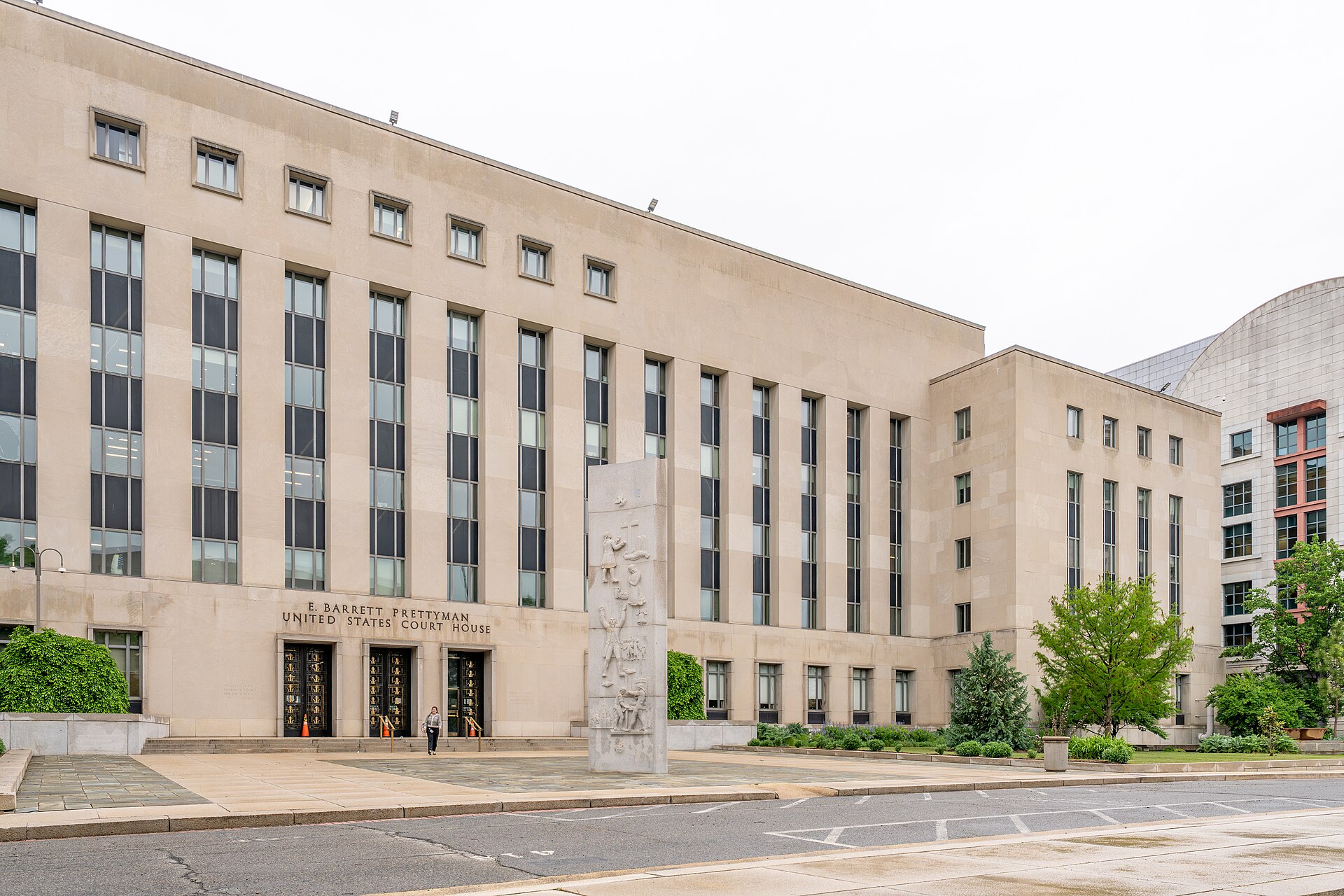
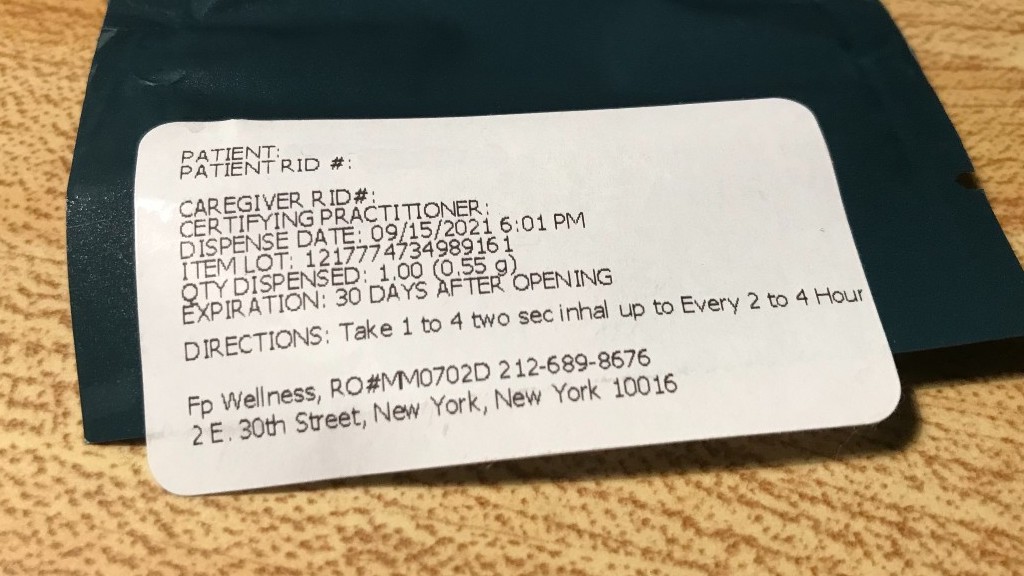
Featured image: the E. Barrett Prettyman United States Courthouse in Washington, DC, by Ajay Suresh, via Wikimedia Commons, licensed under CC BY 4.0. Medical cannabis dispensing label, by Spaceboyjosh, via Wikimedia Commons, licensed under CC BY-SA 4.0.


Sign up for bi-weekly updates, packed full of cannabis education, recipes, and tips. Your inbox will love it.