

 Merch
 Medical card
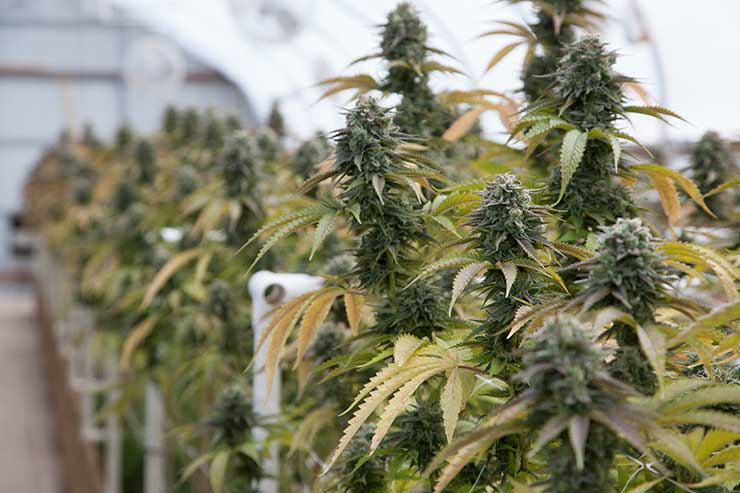
What exactly is a dried hemp flower? In Great Britain, it is a controlled drug whatever its THC content. In the European Union, it may soon be recognised as an agricultural product. In the United States, from December, its legal status will depend less on how it was grown than on how much THC ends up in the finished product.
On 19 October, EU governments agreed their negotiating position on reforms to the rules that organise Europe’s agricultural markets. Under it, the hemp sector “would cover all hemp plant parts”, the Council said. Across the Atlantic, the federal redefinition of hemp takes effect on 12 November and 11 December, and Illinois’s own hemp law on 12 November.

Three different kinds of decision
The EU text is a proposal, and an agricultural one. It would bring raw hemp, seeds and “other plant parts”, the customs category that covers flowers and leaves, within EU market rules, provided they come from certified seed of varieties with no more than 0.3% Δ9-THC. The rules would be “without prejudice” to national laws on how hemp products are used, including for “the protection of public health and public security”. A final text still needs agreement with the European Parliament, whose agriculture committee is due to vote in early December, according to its legislative tracker.
The US change is enacted federal law about controlled substances. As we’re probably all aware of by now, a November 2025 spending law rewrites the definition of hemp that separates it from marijuana. From 12 November, products with synthesised or non-natural cannabinoids fall outside it. From 11 December, the plant limit counts total THC, including THCA, which converts to THC when heated, and finished products are capped at 0.4 milligrams of THC and similar cannabinoids per container. This marks the biggest policy shift since the introduction of the so-called Farm Bill in 2018.
Illinois is regulating a retail market. Its Hemp Act adopts the same 0.4 milligram threshold. Products above it are “considered ‘cannabis'”, which can be sold lawfully only through the state’s licensed cannabis system.
So the EU proposal concerns what counts as a farm product, Washington’s law what counts as a controlled drug, and Illinois’s which shops may sell what. Even the shared 0.3% does different things: the EU proposal applies it to a variety’s Δ9-THC content, the US to total THC, and only the US adds a per-package cap.
What the treaty body now says
All three sit beneath the 1961 UN Single Convention, which defines cannabis as “the flowering or fruiting tops” of the plant and exempts cultivation “exclusively for industrial purposes (fibre and seed) or horticultural purposes”. During the UN’s 2019–20 review of cannabis, the International Narcotics Control Board (INCB), which monitors the treaties, told governments in written answers that growing hemp for CBD extraction “cannot be considered as being ‘for industrial purposes'”.
Its report for 2025, published this year, is more permissive. Citing the official commentary on the Convention, the Board says growing low-THC hemp “for the extraction of cannabinoids that are not internationally controlled is, similarly to industrial cultivation, exempted from the controls”, provided THC produced as a by-product is controlled and reported. Of 45 countries that described why they grow hemp, 20 listed producing “dried flowering tops”.
So the treaty body no longer treats hemp grown for its cannabinoids as an obvious breach. But its reasoning concerns cultivation; whether the flowering tops can then be sold as a consumer product, under a treaty that defines them as cannabis, the report does not say. The Council’s text relies instead on the EU Court of Justice’s 2020 Kanavape judgment, which accepted that a literal reading of the Convention might make whole-plant CBD a “drug”, but read the treaty in light of its aim of protecting health, noting that the CBD in question did not appear to have any psychotropic or harmful effect. That is a purposive argument, not a settled one. Ironically, in 2020 EU states on the UN drugs commission voted against exempting CBD preparations below 0.2% THC, calling that limit “not supported by scientific evidence”; now EU governments propose writing their own threshold into farm law.
One glut, two responses
The INCB report also points to a common cause. “Overproduction of cannabidiol has led to falling prices and the illicit manufacture of semi-synthetic cannabinoids,” it warns: intoxicants made by chemically converting CBD. That is, in essence, the American delta-8 story.
Washington’s answer is to draw hemp’s boundary so tightly that little intoxicating material remains inside it. The EU proposal goes the other way: widen the lawful agricultural market, tighten controls at the farm through certified seed and mandatory checks, and leave consumer use to national governments.
What it means
First, definitions are doing the work of regulation here. Neither system has built a detailed regime for hemp consumer products; each draws a line and lets existing law do the rest. In Illinois, that hands intoxicating products to the licensed cannabis market; in the EU, the proposal would leave 27 national approaches beneath one agricultural rule.
Second, the EU’s proposed harmonisation may be a little thinner than it looks. If adopted, it would mean a flower could be a lawful farm product in one member state and restricted at the till in another, the kind of free-movement dispute that produced Kanavape (a fascinating legal story, if you have the time).

Third, Britain risks drifting further from its neighbours. Great Britain still licenses hemp at 0.2% THC, the figure set in the Misuse of Drugs (Fees) Regulations 2010, which had not been amended when we checked on 26 October, although the government said in February 2025 that it intends to move to 0.3%. Flowers and leaves remain controlled parts of the plant. Even in Northern Ireland, which follows parts of EU farm law under the Windsor Framework, officials told the Assembly that importing flowers would still need a Home Office licence.
The real disagreement is not about a THC number but about what hemp is: a crop with a manageable drug risk, or a drug source that happens to grow in fields. The EU proposal would give the first answer to farmers and hand the second to national governments. The US has chosen the second. Neither has settled what matters most to consumers, which is what happens to the flower once it leaves the farm.
Virginia, and the value of a cannabis licence… before it even exists
On 22 October, federal prosecutors unsealed an indictment against Louise Lucas, 82, president pro tempore of Virginia’s Senate and chair of its Finance and Appropriations Committee (along with six others). Lucas faces five of the eight counts, including racketeering conspiracy, conspiracy to distribute marijuana and conspiracy to commit honest-services fraud. In a statement reported by the Washington Blade, she said the government had been “wielded against” her and added: “I will not be intimidated. I will not be bullied. And I will not back down.” (The charges are allegations, and she is therefore presumed innocent).
Most of the indictment concerns alleged unlicensed sales from cannabis shops, but one strand illustrates a wider problem in how cannabis markets are built. Virginia legalised adult possession in 2021, in a bill Lucas co-sponsored, but deferred retail sales, which are now due to begin in July 2027. In the meantime, the indictment says, licences “were anticipated to be very valuable given the expected amount of revenue to be generated by marijuana sales.”
Prosecutors allege that in August 2022, before any adult-use licence could be issued, Lucas paid $750,000 for full ownership of Mama’s Chicken LLC, “the shell holding company for which [a co-conspirator] and LOUISE LUCAS expected to obtain a Virginia recreational marijuana license”. According to the indictment, the deal provided for a $525,000 refund if no licence was obtained by the end of 2025, and Lucas did not report the interest on her financial disclosure forms. It quotes her telling two fellow legislators in March 2026: “we trying to disqualify somebody until he pays me back my money.”
Scarcity creates value before a market exists
Interestingly, the alleged 2022 deal was made when Virginia had no adult-use licensing rules at all (the rules that now apply were enacted only this year). Prosecutors allege that Lucas sought to influence cannabis legislation, but the indictment does not show, and we therefore won’t suggest, that any particular provision of the 2026 law resulted from the alleged scheme. Whatever the outcome of the case however, the alleged deal points to something that does not depend on wrongdoing. When a state promises a legal market but delays it, limits licences and leaves key rules for later, a licence acquires value long before anything is sold, and that value turns on decisions not yet made. Anyone with influence over those decisions has a stake in them, and a trade in expected licences can grow where disclosure rules may not reach.
Virginia’s new licensing law, enacted through this year’s budget, has proper safeguards. It requires ownership to be traced “to the ultimate beneficial owners”, needs board approval for licence transfers, and uses lotteries where qualified applicants outnumber licences. It also builds in scarcity, capping retail licences at 350 and giving existing medical processors and some hemp businesses a route to convert. And on conflicts of interest it draws a line – members and employees of the Cannabis Control Authority’s board are barred from licence interests, while other officials, including legislators, need only disclose theirs on the application.
That is not unusual. New Jersey bars its governor, Senate President and Assembly Speaker from interests in cannabis licensees, but not ordinary legislators. Yet the risk is real: a Maryland delegate pleaded guilty in 2020 to taking bribes, including for backing legislation that could help a company seeking a medical cannabis licence.
The lesson is not that licensing is inherently corrupt, or that caps are always wrong. It is that the more value a state creates through scarcity and delay, the more carefully it must guard the process that allocates it. Policy options might include extending bars on licence interests to legislators and their families, cooling-off periods for officials who shape the rules, disclosure of pre-licence investment deals, and a shorter gap between legalisation and licensing. Virginia’s regulators are drafting their rules now.
In brief
Idaho votes on who may legalise drugs. On 3 November, Idaho voters will decide HJR 4, a constitutional amendment providing that “only the legislature” may legalise “marijuana, narcotics, or other psychoactive substances”, removing the citizen-initiative route. Lawmakers approved it in March 2025. In the official voter pamphlet, supporters say such decisions are “too important to be made lightly”; opponents that the amendment “would take power away from the people”. “Other psychoactive substances” is not defined, meaning its reach could extend well beyond cannabis.
The FDA turns supplement law on a psychoactive mushroom. A warning letter posted on 20 October tells Toronto-based Psyched Wellness that its Amanita muscaria products are adulterated supplements: the mushroom and compounds including muscimol are “new dietary ingredients” lacking adequate safety evidence. It follows a similar letter last year. As hemp-derived THC leaves the shelves, regulators are tackling unscheduled substitutes product by product, through food law rather than drug scheduling.


Sign up for bi-weekly updates, packed full of cannabis education, recipes, and tips. Your inbox will love it.